How to Cook If No Electricity: A Practical Off-Grid Guide
Learn practical, safe off-grid cooking methods for power outages. Discover heat sources, gear, and step-by-step approaches to ready meals without electricity.


You can cook without electricity by using off-grid heat sources such as a gas or propane stove, charcoal grill, wood-fire, or solar cooker. Plan your meals, assemble sturdy cookware, and use indirect heat for simmering and baking. This guide shows safe setups, essential gear, and simple steps to get meals on the table without power.
Why cooking without electricity matters
According to Cooking Tips, learning how to cook if no electricity is essential for resilience during outages, camping trips, or emergency preparedness. Power failures can last hours or days, and having reliable methods keeps meals safe, affordable, and tasty. This article explores practical off-grid cooking, focusing on safety, simple heat sources, and versatile techniques that work in kitchens, backyards, or campsites. You’ll learn to adapt familiar recipes, avoid common mistakes, and build confidence using tools you already own. Whether you’re preparing for a storm, a campground visit, or a bug-out plan, mastering no-electricity cooking helps you maintain nutrition and comfort with minimal equipment.
First, recognize that no-electricity cooking isn’t about magic devices—it’s about using heat sources you can control, planning meals that cook efficiently, and keeping safety at the forefront. When you say you want to learn how to cook if no electricity, you’re choosing reliability and independence. You’ll discover a repertoire of techniques, from direct heat grilling to indirect baking, that let you finish meals with quality flavors. This approach aligns with practical cooking tips designed for home cooks who value steady results, even when the grid goes offline.
Off-grid cooking frequently requested scenarios
In emergencies, many households rely on portable stoves or grills. For campers and RV owners, no-electricity cooking expands options beyond the stove. In community kitchens, coal or wood-fired ovens provide robust flavor. The core idea is consistent: choose heat sources you can safely manage, and plan meals that don’t require constant power or refrigeration. This section introduces common situations and how to adapt, so you’ll be prepared regardless of where you’re cooking. The emphasis remains practical, not flashy, with a focus on food safety, appropriate equipment, and straightforward recipes.
Core safety principles you must follow
Cooking without electricity introduces potential hazards—open flames, carbon monoxide, burns, and improper food storage. Always cook in well-ventilated spaces, keep a fire extinguisher handy, and use heat-resistant gloves. Never leave a lit stove or grill unattended, especially around children or pets. When evaluating any heat source, consider fuel storage, wind direction, and the proximity of flammable materials. Safe handling also includes checking cookware for damage and ensuring you have stable surfaces for pans and Dutch ovens. By embracing these fundamentals, you’ll minimize risk while maintaining flavorful results.
Heat sources: what works and where to use them
Off-grid cooking relies on controlled heat sources you can rely on without electricity. A propane or butane stove is convenient indoors with ventilation. Charcoal grills or wood-fired ovens excel for roasting and baking with smoky depth. Solar cookers offer a clean, silent option during sunny days, though they require planning. A cranking camp stove is useful for camping or patios, while a gas grill can substitute for a kitchen range outdoors. Each method has its sweet spot: stoves for weeknight meals, grills for grilling and roasting, and solar for slow-cooked dishes when the sun shines.
Essential cookware and tools for no-electricity cooking
The right tools make no-electricity cooking feasible and enjoyable. Cast iron skillets and Dutch ovens perform well on any heat source and retain heat for even cooking. Heavy-gauge aluminum pots, lids with tight-fitting seals, and sturdy tongs help manage heat and prevent scorching. A long-handled spatula, heat-resistant gloves, and a fireproof surface are practical safety upgrades. For solar cooking, use reflective panels to maximize sun exposure. Keep a digital thermometer as a backup to ensure foods reach safe temperatures even when monitoring by sight becomes challenging.
A practical no-electricity menu: meal ideas for a day
Here is sample day-of no-electricity cooking that demonstrates how to plan breakfasts, lunches, and dinners without power. Breakfast can be oats simmered over a camp stove with dried fruit and nuts. Lunch may be a hearty bean tortilla warmed on a skillet, with greens sautéed in a hot pan. Dinner options include roasted vegetables cooked in a Dutch oven placed on indirect heat, or a slow simmered soup that adapts to available ingredients. Snacks can rely on trail mix, canned beans, or roasted nuts. The key is flexible ingredients and clear pacing, so you’re not waiting on a single appliance. Adjust portions according to appetite and the number of travelers.
Techniques to maximize flavor when cooking off-grid
Mastery of heat management makes a big difference. Learn to build a hot zone for searing, then move pots to cooler zones to simmer. Indirect heating, lid usage, and consistent stirring prevent scorching. Proper seasoning—salt, pepper, dried herbs, and aromatics—elevates simple dishes without electricity. If you’re using a solar cooker, position it to track the sun, rotate the pot for even exposure, and avoid opening the lid too often. These techniques help you achieve bold flavors with minimal equipment.
Tools & Materials
- Portable gas or propane stove(Ventilated area; keep fuel canisters away from heat)
- Charcoal grill or charcoal and lighter(Have a safe starter and enough ventilation)
- Dutch oven or cast-iron skillet(Suitable for oven-like heat and indirect cooking)
- Heat-resistant gloves(Protect hands when handling hot cookware)
- Long-handled tongs(Grip and turn food safely)
- Fire-safe surface or stand(Prevent heat damage to countertops)
- Lid for pots(Traps heat for efficient cooking)
- Thermometer (food-safe)(Optional, helps ensure safe temperatures)
- Ventilation measure (smoke vent or window)(Avoid smoke buildup in enclosed spaces)
- Water and cleaning supplies(Safe cleanup after cooking)
Steps
Estimated time: Total time: 60-120 minutes
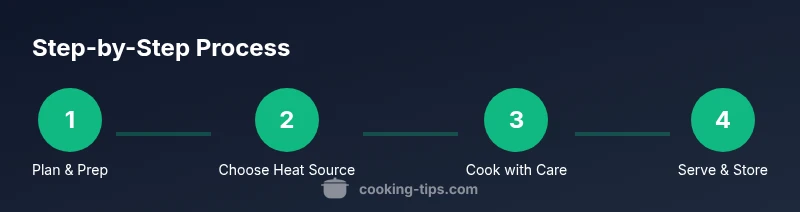
- 1
Plan and gather
Identify meals that require minimal active cooking and maximum passive heat. Gather all tools and ingredients before lighting any heat source to avoid mid-cook trips.
Tip: Prepare a rough timeline so you don’t overcook or undercook foods. - 2
Choose your heat source
Decide whether you’ll use a stove, grill, or solar cooker based on your environment and weather. Ensure ventilation and fire safety gear are in place.
Tip: If indoors, use a stove with good exhaust; outdoors, a grill gives stable heat. - 3
Preheat safely
Preheat cookware on a designated hot zone, avoiding direct contact with flames for delicate foods. Use lids to trap heat and reduce fuel use.
Tip: Keep covers tight to conserve energy and maintain even cooking. - 4
Cook with indirect heat
Move pots off the hottest area after searing; use cooler zones to simmer soups and stews. Stir occasionally to prevent sticking.
Tip: Monitor heat by adjusting lid position and pot distance from flames. - 5
Check doneness safely
Use a thermometer if available and rely on sight and texture for vegetables and grains. Let foods rest briefly after cooking to finish carryover heat.
Tip: If unsure, err on the side of longer cooking to ensure safety. - 6
Clean up and store safely
Cool foods in a safe area away from heat sources; sanitize surfaces and tools. Store leftovers promptly to prevent bacterial growth.
Tip: Label containers with dates to track freshness.
Quick Answers
Can I cook indoors without electricity?
Yes, you can cook indoors if you have a safe heat source like a gas stove or a properly vented grill. Open flames should be used with caution and good ventilation to prevent smoke buildup and carbon monoxide exposure.
Yes—use a vented stove or grill, with proper ventilation to avoid smoke and gas buildup.
What’s the safest heat source for indoor cooking without electricity?
Gas stoves indoors, with adequate ventilation, are generally safest for no-electricity cooking. Do not use charcoal grills inside living spaces due to carbon monoxide risk. Always follow manufacturer safety guidelines.
Gas stoves are best indoors with ventilation; charcoal grills should stay outside.
Can I bake or roast without electricity?
Yes. Dutch ovens or cast iron on indirect heat, or solar ovens on sunny days, can bake or roast foods. Plan longer cook times and monitor heat carefully to avoid scorching.
You can bake with a Dutch oven over indirect heat or with a solar oven when sunny.
How do I keep food safe without electricity?
Keep foods out of the danger zone by using coolers or cool spaces when possible, refrigerate leftovers promptly if you have a cooler with ice packs, and reheat to safe temperatures before serving.
Store leftovers in a cooler if needed and reheat thoroughly before eating.
What are budget-friendly off-grid cooking options?
Use a portable stove with inexpensive fuel, a Dutch oven for versatility, and affordable canned goods. Plan meals around staple ingredients you already stock to minimize extra purchases.
Budget-friendly options include a portable stove, a Dutch oven, and pantry staples.
Is solar cooking reliable in all weather?
Solar cookers work best with sunny weather and require some planning. They’re ideal for slow-cooked meals when sun is available and should be paired with backup heat sources for cloudy days.
Solar cookers are great on sunny days but have backup options for cloudy conditions.
Watch Video
Top Takeaways
- Plan meals around stable heat sources
- Prioritize safety with ventilation and timing
- Use indirect heat and lids to conserve energy
- Choose versatile cookware for multiple tasks
- Practice now to stay prepared during outages