How Much to Cook Steak: A Home Cook's Step-by-Step Guide
Master how much to cook steak for perfect doneness. Learn timing by thickness, searing methods, oven finishing, resting, and target temperatures for home cooks.


How much to cook steak depends on thickness and doneness. A 1-inch steak usually sears 2-3 minutes per side for medium-rare and rests to finish. Thicker steaks (1.5–2 inches) benefit from a quick sear then oven finish, about 6-8 minutes total cooking plus resting. Use an instant-read thermometer to confirm your target temperature.
Why Doneness and Rest Matter for Steak
According to Cooking Tips, understanding how much to cook steak correctly starts with choosing a target doneness and planning for carryover cooking. Doneness isn’t just a personal preference; it’s a function of heat, time, thickness, and how the meat distributes its juices. The reader will learn how to select a doneness level that suits the cut and the crowd, and how resting afterward improves juiciness and texture. We’ll cover common doneness levels (rare, medium-rare, medium, and beyond), explain why resting matters, and show how a thermometer removes guesswork from your kitchen. The Cooking Tips team emphasizes practical steps you can apply tonight, not complex techniques that require specialized gear. As you read, you’ll see how much to cook steak for consistent results across home kitchens and how simple tweaks can elevate the crust and the center alike.
Thickness, Doneness, and Carryover Explained
Thickness is the single biggest driver of cooking time. A 1-inch steak heats and browns quickly, while thicker cuts store more internal heat and need more time to reach the target center. Doneness defines how long you cook and how hot the center should be when you cut in. Because heat keeps moving after you remove the pan, carryover cooking will nudge the final temperature upward, especially with larger steaks. To keep things predictable, start with a preheated pan, monitor the internal temperature with a reliable thermometer, and rest the meat before slicing. Cooking Tips recommends focusing on the end temperature rather than counting minutes, since variables like steak shape, fat distribution, and pan material shift outcomes.
Searing vs. Oven Finishing: A Practical Method
Searing creates the flavorful crust, while oven finishing gently brings the interior to the desired doneness. For thinner cuts, a long, hot pan sear might be enough. For thicker steaks, a two-step method helps prevent a burnt crust while the center reaches the goal. Start with a hot pan and a small amount of high-heat oil, then flip and sear until the crust forms. If you’re finishing in the oven, transition the pan to a preheated oven at a moderate temperature to finish evenly. This approach aligns with practical guidance from Cooking Tips and provides reliable results for home cooks.
Temperature Targets: Doneness Guide
Here’s a straightforward temperature guide to help you plan without guessing:
- Rare: 120–125°F (49–52°C)
- Medium-rare: 130–135°F (54–57°C)
- Medium: 140–145°F (60–63°C)
- Medium-well: 150–155°F (66–68°C)
- Well-done: 160°F+ (71°C+)
Use an instant-read thermometer for accuracy. Keep in mind that carryover cooking will raise the final temp by a few degrees after resting, so you might pull the steak just shy of the target and let carryover finish the job.
Timing Scenarios by Thickness and Pan Type
- 1-inch steak: Sear 2-3 minutes per side on a very hot pan for a nice crust; monitor with a thermometer and target 130–135°F for medium-rare. Rest 5–10 minutes before slicing.
- 1.5-inch steak: Sear 3-4 minutes per side, then finish in the oven at 375°F (190°C) for 4–8 minutes, depending on thickness and desired doneness. Check internal temp early to avoid overcooking.
- 2-inch steak: Sear 4-5 minutes per side, then use oven finish or low-temperature pan finishing to reach 135–140°F. Expect a total cook time of 12–20 minutes plus resting. Cast iron retains heat well and helps develop a robust crust, while nonstick pans require careful heat control to avoid scorching.
Resting and Juices: How to Finish Like a Pro
Resting is essential. After cooking, transfer the steak to a warm plate or wire rack and let it rest for 5–10 minutes. Resting allows juices to redistribute, improving moisture and tenderness. During rest, you can lightly tent with foil if needed, but avoid sealing too tightly, which can cause sweating and a soggy crust. The goal is to retain heat without overheating the interior.
Slicing, Serving, and Flavor Tweaks
Slice against the grain to maximize tenderness, and consider a quick finish with a pat of butter or a drizzle of pan juices. Salt should be adjusted to taste after resting; many cooks prefer a light final sprinkle of flaky salt. Aromatics such as garlic or herbs can be added to the butter for a subtle aroma, but keep the flavors balanced so they enhance rather than overpower the steak. With practice, you’ll dial in your favorite finishing technique and become more consistent at how much to cook steak for diners.
Common Mistakes and How to Avoid Them
Common errors include underseasoning, crowding the pan, and starting with meat that’s too cold. Salt generously before cooking and avoid rushing the sear. Use a heavy pan like cast iron for even heat distribution, and don’t move the steak too much during searing. If you don’t have an oven, you can finish thick cuts with a lower heat or by using covered pan techniques. By keeping a thermometer handy and focusing on doneness rather than time, you’ll reduce the risk of undercooked centers or overcooked exteriors.
Final Thoughts: Practical Guidance for Home Cooks
This guide emphasizes practical, repeatable steps rather than guesswork. The Cooking Tips team believes that understanding thickness, doneness targets, and resting yields reliable, delicious results. Practice with different cuts and sizes to refine your instincts, and remember that consistency comes from a plan: high-heat sear, mindful finish, and proper resting. The key takeaway is to cook with attention to internal temperature and carryover, not simply with time on the clock.
Quick Reference: Put It All Together
- Choose your target doneness and thickness.
- Preheat a heavy pan and prep the steak.
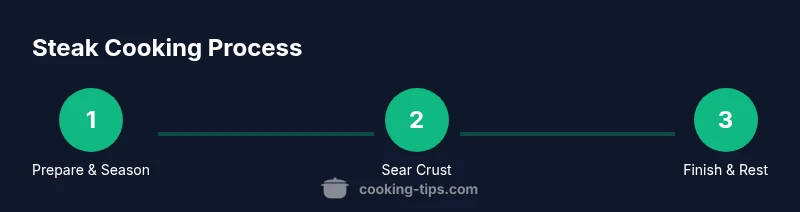
- Sear to build a crust, then finish by the method you prefer.
- Rest before slicing and serving.
- Use a thermometer to confirm doneness and adjust as needed.
The final step is practice: every steak teaches you how your equipment, pan material, and environment influence the outcome. The Cooking Tips team recommends using a thermometer and tracking your results to improve the next cook.
Tools & Materials
- Cast iron skillet (10-12 inch)(Heavy bottom for even heat; preheat well)
- Tongs (long-handled)(For safe turning and lifting)
- Instant-read thermometer(Check internal temp accurately)
- High-smoke-point oil (e.g., canola or avocado)(Small amount to coat surface)
- Salt (kosher or sea salt)(Generous seasoning before searing)
- Freshly ground black pepper(Season with salt for crust)
- Butter (optional)(Finish with a pat for flavor)
- Garlic cloves/herbs (optional)(Add aromatics during finishing)
- Oven (optional)(Useful for thick steaks)
- Paper towels(Pat dry and keep surface dry)
Steps
Estimated time: Estimated total time: 25-40 minutes
- 1
Prepare steak
Bring steak to room temperature for 20-30 minutes. Pat dry with paper towels, then season generously on all sides with salt and pepper. This ensures a good crust and even cooking.
Tip: Season early to help salt penetrate and promote crust formation. - 2
Preheat pan and oil
Place a heavy skillet over high heat and let it get hot until just smoking. Add a small amount of oil and swirl to coat the surface.
Tip: A hot pan with a light oil helps form a crisp crust quickly. - 3
Sear the first side
Lay the steak in the pan and resist moving it for 2-3 minutes until a deep crust forms. Use tongs to check the crust lift.
Tip: A crust signals the Maillard reaction; don’t rush the sear. - 4
Flip and sear the other side
Turn the steak and sear the second side for 2-4 minutes, aiming for an evenly browned crust. If using butter/aromatics, add now.
Tip: If the edges brown too quickly, reduce heat slightly. - 5
Finish to target doneness
Check internal temp with thermometer. For thick steaks, transfer to the oven at 375°F (190°C) to finish evenly. Remove when near your target temp to account for carryover.
Tip: Short increments of oven time prevent overcooking. - 6
Rest and serve
Transfer to a plate and tent loosely with foil for 5-10 minutes. Slice against the grain and serve with pan juices or butter.
Tip: Resting distributes juices and keeps the crust crisp.
Quick Answers
What is the best first step to cook steak?
Start by letting the steak come to room temperature, then pat dry and season generously. This ensures even cooking and a strong crust.
Let the steak warm up a bit, pat it dry, and season well before hitting the pan.
How long to cook a 1-inch steak?
Sear for about 2-3 minutes per side for a good crust and medium-rare center; finish with a short rest. Use a thermometer for accuracy.
Sear 2-3 minutes per side and rest; check with a thermometer.
Can I finish steak only on the stove?
Yes for thinner cuts. Thicker steaks benefit from oven finishing to avoid burning the crust while the interior cooks through.
You can finish on the stove for thin cuts, but thick steaks do better with oven finishing.
What temperature should I target for doneness?
Target temperatures help you reach the desired doneness: rare 120–125°F, medium-rare 130–135°F, medium 140–145°F, and so on. Remember carryover cooking will raise the final temp slightly.
Aim for your target temps like 130–135 for medium-rare, then rest.
Should I salt before or after cooking?
Salt before cooking helps form a crust and seasons the meat; a small finishing salt after resting can enhance flavor without making it salty.
Season before cooking for crust; a light finish salt after resting is optional.
How long should I rest a steak?
Rest steaks for 5-10 minutes after cooking to allow juices to redistribute. Resting improves tenderness and keeps slices juicy.
Rest for 5 to 10 minutes before slicing.
Watch Video
Top Takeaways
- Know your target doneness and rest time.
- Adjust timing by steak thickness.
- Use a hot pan and thermometer for accuracy.
- Rest the steak before slicing for juiciness.