How Long to Cook Chicken in the Oven: Time by Cut and Temperature
Learn reliable oven cooking times for chicken by cut, temperature, and doneness checks. This guide from Cooking Tips covers bone-in vs. boneless, skin-on vs skinless, rest times, and practical tips for juicy, safely cooked poultry.


In the oven, chicken cooks fastest when you start with a hot but not scorching oven. For most home cooks, preheat to 375°F for bone-in pieces (thighs, drumsticks) and boneless breasts; cook times range from 20-45 minutes depending on cut and size. Always confirm doneness with an internal thermometer to 165°F and let the meat rest a few minutes for juiciness. Cooking Tips recommends checking in at the 20-minute mark and adjusting as needed.
Understanding Oven Cooking Time for Chicken
Cooking chicken in the oven is a balance between heat, time, and the size of the pieces. The goal is to drive heat into the thickest portions without drying out the outer surface. The Cooking Tips team has found that the best results come from starting with a moderate oven temperature, using a rack to promote air circulation, and ensuring the chicken is patted dry before seasoning. By understanding the relationship between cut type (bone-in vs. boneless) and thickness, you can estimate a reliable range rather than chasing a single magic minute. This approach also helps you adapt on busy weeknights when you grab whatever you have on hand. According to Cooking Tips, the key to consistency is planning for a safe internal temperature and a short, comfortable rest period after removal from the oven.
Key Factors That Influence Cooking Time
Several variables determine how long chicken spends in the oven. First, the cut matters: bone-in pieces generally need more time than boneless; dark meat often cooks a bit slower than white meat due to higher fat content. Second, the thickness of the meat drives heat penetration; a breast portion that’s 1 inch thick will finish faster than the same cut that’s 2 inches thick. Third, whether the skin is on or off affects heat transfer and moisture loss. Fourth, the oven’s accuracy and how you position the rack can alter cooking speed. Lastly, starting with a dry surface (pat-dried) helps the spices adhere and crackling skin form. By considering these factors, you can tailor your roast to your specific chicken portions and oven. The practical takeaway is to choose a target temperature, then use an internal thermometer to confirm doneness rather than solely relying on time.
Temperature Guidelines: 350°F, 375°F, 425°F
Temperature choices influence both cooking time and texture. A moderate 350°F will yield even results with gentle browning, while 375°F accelerates cook time for most standard portions. For crisper skin or faster results, 425°F is effective, but it requires closer monitoring to avoid drying out the exterior before the interior reaches 165°F. As a general rule, boneless, skin-on breast portions roast around 20-30 minutes at 375°F, bone-in thighs or drumsticks take roughly 30-45 minutes at 375°F, and larger bone-in portions may approach 45-60 minutes at 350-375°F. Always verify doneness with a meat thermometer to reach 165°F, and remember resting time helps the juices redistribute for better flavor and moisture.
Prep for Even Roasting: Dry, Season, and Truss
Starting with dry surfaces ensures even browning and better texture. Pat the chicken dry with paper towels, then brush lightly with oil to promote crispness. Season generously with salt, pepper, and any preferred spices or herbs. If you’re roasting a whole chicken, truss the legs to promote uniform cooking. For cuts, arrange skin-side up if you want extra browning, or place skin-side down for juicier results in lean portions. Using a rack elevates the meat for better heat circulation, which helps cook evenly from all sides, reducing hot spots.
Time by Cut and Weight: Quick Reference
- Boneless skinless breasts (6–8 oz each): 20–30 minutes at 375°F
- Boneless skin-on thighs (6–8 oz): 25–35 minutes at 375°F
- Bone-in chicken thighs (bone-in but skin-on): 35–45 minutes at 375°F
- Bone-in drumsticks or thighs (2–3 pieces): 35–45 minutes at 350–375°F
- Whole chicken (4–5 lb): 1 hour 15 minutes to 1 hour 30 minutes at 375°F
Note: These are general ranges. Always check internal temperature with a thermometer for 165°F and adjust as needed based on your oven’s performance and piece size. Resting for 5–10 minutes after removal helps juices redistribute for tastier results.
Step-by-Step Roasting Method
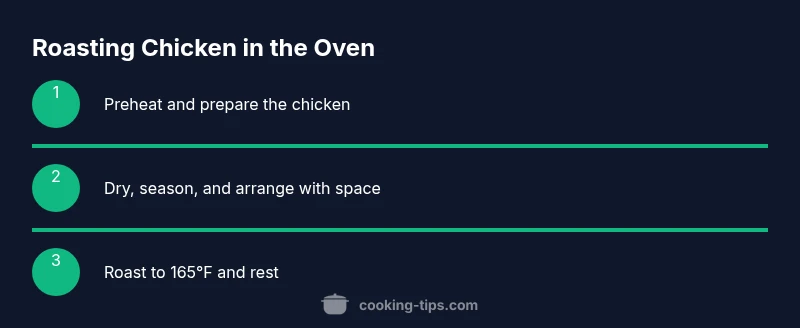
- Preheat and prepare: Preheat the oven to 375°F (or 350–425°F depending on your plan). Line a tray with parchment and place a rack if available. Why: air circulation yields even browning and prevents soggy bottoms.
- Dry and season: Pat dry the chicken pieces, brush with a light coat of oil, and season well. Why: moisture on the surface can trap steam, hindering browning.
- Arrange with space: Place pieces on the rack or tray with at least ½ inch of space between them. Why: space allows hot air to circulate and cook evenly.
- Roast and monitor: Put the tray in the oven and roast until the thickest part registers 165°F. Check early at 20 minutes for smaller cuts, then re-check every 5–10 minutes. Why: timing varies with size and cut, so thermometer checks prevent under or overcooking.
- Rest before serving: Remove from heat and tent loosely with foil for 5–10 minutes. Why: resting redistributes juices and keeps the meat tender.
- Serve or hold: Slice or serve immediately, or keep warm in a low oven if you’re timing multiple dishes. Why: carried heat continues to cook slightly after removal; resting ensures juiciness.
Doneness Tests and Resting for Juiciness
Relying on time alone isn’t enough. Always use a reliable instant-read thermometer to confirm 165°F at the thickest part. For bone-in pieces, check near the bone for the final temperature. Resting is essential; it lets juices redistribute and prevents juices from running out when you slice. If juices run pink or you see opaque, firm texture, give it another couple of minutes and re-check. A properly rested chicken looks moist, with a slight pinkish hue near the bone in some cases but not in the meat’s center.
Common Mistakes and How to Fix Them
Overcrowding the pan stops air from circulating and leads to uneven doneness. Use a rack if possible and avoid stacking pieces. Cooking at too high a temperature without monitoring can dry out the exterior before the interior finishes; keep an eye on the thermometer and consider lowering the heat toward the end if the exterior browns too quickly. Skipping the resting step leaves juices on the cutting board; always rest for 5–10 minutes. Finally, starting from cold meat or unevenly sized pieces can cause uneven cooking—trim or pound larger pieces to balance thickness. Cooking Tips emphasizes planning with uniform pieces for reliable results.
Practical Tips for Consistent Results
- Use a meat thermometer and aim for 165°F internal temperature every time.
- Pat dry before seasoning and use a light coating of oil for crisp skin.
- Rest meat after roasting to maximize juiciness.
- If you rotate trays halfway through cooking, you’ll achieve more even browning.
- For crispier skin, finish under broil for 1–2 minutes, watching carefully to avoid burning.
Tools & Materials
- Oven-safe roasting pan with rack(Prefer a rack to elevate the chicken for even air circulation.)
- Meat thermometer (instant-read)(Check thickest part; aim for 165°F.)
- Kitchen tongs(For safe handling when turning pieces.)
- Paper towels(Pat dry chicken thoroughly before seasoning.)
- Aluminum foil or lid(Use for resting if you don’t have a loose foil tent.)
Steps
Estimated time: 35-60 minutes
- 1
Preheat and prepare
Preheat the oven to the chosen temperature (375°F is versatile). Line a tray and place a rack if you have one. Dry hands and dry the chicken thoroughly; this improves browning and texture.
Tip: Starting with dry skin helps develop a crisp exterior. - 2
Dry and season
Pat the chicken dry with paper towels. Brush with a light coating of oil and season generously with salt, pepper, and herbs or spices of your choice.
Tip: Salt helps retain moisture and enhances flavor when it seeps into the surface during roasting. - 3
Arrange with space
Place pieces on the rack or tray with at least 1/2 inch of space between them. This ensures even heat exposure and browning on all sides.
Tip: Avoid overcrowding; hot air should circulate freely. - 4
Roast and monitor
Roast until the thickest part reaches 165°F. Smaller cuts may finish earlier, so start checking at about 20 minutes for breasts and 30 minutes for thighs.
Tip: Use the thermometer rather than time alone to decide when it’s done. - 5
Rest and finish
Remove from oven and rest the chicken for 5–10 minutes under a loose tent of foil to keep juices in.
Tip: Resting makes the meat juicier and easier to slice. - 6
Serve or hold
Slice and serve immediately, or keep warm on a low setting if needed to coordinate with sides.
Tip: Even after resting, avoid letting it sit too long or it will cool and lose juiciness.
Quick Answers
Do I need to cover the chicken while roasting?
Covering can trap steam and soften the surface; many cooks roast uncovered for browning, then cover briefly if you’re worried about drying out an especially lean piece. If you cover, remove the cover in the last 5–10 minutes for browning.
Roast uncovered for browning, and uncover near the end if needed for color.
Is it better to roast with skin on or skin off?
Skin-on helps retain moisture and provides browning; skin-off can be useful for lean cuts or if you prefer less fat. You can start skin-on and remove the skin midway if you want a crisper exterior without the extra fat.
Skin on gives juicier meat and a crisp finish; you can remove it later if you want less fat.
Can I roast multiple pieces of different sizes at once?
Yes, but expect some variance in doneness. Use a thermometer and check the thickest piece first, then rest everything together to balance temps.
Roasting mixed sizes works; just check the largest piece first and adjust times as needed.
How long should chicken rest after cooking?
Rest for 5–10 minutes after removing from the oven. This lets juices redistribute and improves flavor and juiciness.
Rest the chicken for 5 to 10 minutes for the juiciest slices.
What internal temperature proves safety?
The safe minimum internal temperature for chicken is 165°F in the thickest part. Use a thermometer to verify.
165 degrees Fahrenheit is the safe target; check with a thermometer.
Watch Video
Top Takeaways
- Check doneness with a thermometer to 165°F.
- Use a rack for even heat exposure and browning.
- Rest the meat 5–10 minutes before slicing.
- Avoid overcrowding; space pieces for uniform cooking.