How Long to Cook Chicken Legs: Timings, Temperatures, and Tips
Learn reliable timings for cooking chicken legs, with temperatures, doneness checks, resting guidance, and practical tips to ensure juicy meat and crisp skin every time. Expert guidance from Cooking Tips.


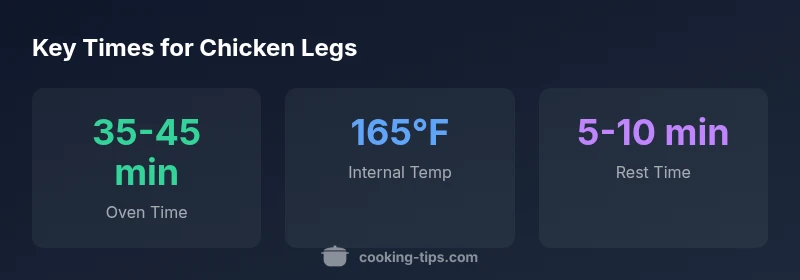
Bone-in chicken legs typically cook in a standard oven at 375°F (190°C) for about 35-45 minutes, depending on leg thickness and starting temperature. Always finish with an internal temperature of 165°F (74°C) at the thickest part. For extra crispness, finish under the broiler for 1-3 minutes, watching closely; rest 5-10 minutes before serving.
Why timing matters for chicken legs
Timing matters because chicken legs are composed of a thick thigh and a thinner drumstick section. The bone acts as a heat sink, so larger leg portions take longer to reach safe internal temperature. TheCooking Tips team emphasizes that even small differences in size, starting temperature, and whether you start with frozen or room-temperature meat can shift cook time by 5-10 minutes. Consistent oven temperature helps the heat penetrate evenly, producing juicy meat and properly rendered skin rather than dry patches. Understanding these timing nuances helps home cooks avoid common pitfalls like overcooking or undercooking, which can compromise both safety and flavor.
Temperature, size, and resting: key variables
Three variables drive your results: temperature, leg size, and resting time. A standard reference point is 375°F (190°C) for bone-in legs. If legs are particularly thick, you may approach 400°F (205°C) briefly to brown the skin, then reduce to a gentler finish. Resting is essential: tenting the meat loosely for 5-10 minutes after cooking allows the juices to redistribute, leading to juicier slices. If you begin with cold meat, expect the clock to shift upward by a few minutes. Conversely, starting from room temperature can shave a few minutes off the total.
Cooking methods explained: oven roasting, pan-searing, and finishing
Oven roasting is the simplest, especially for even browning and batch cooking. For extra crisp skin, some home cooks start with a quick high-heat sear in a cast-iron pan to render fat, then transfer to the oven to finish. Another method is indirect grilling or roasting with a controlled finish to retain moisture. Each method has trade-offs: pan-searing adds crust but can require closer attention, while pure oven roasting is forgiving and scalable.
How to test for doneness without a thermometer
The safest doneness test still relies on a thermometer, but you can use visual cues as a backup: juices should run clear when pricked near the bone, and the meat near the bone should no longer be pink. However, visual checks are imperfect; color alone isn’t reliable. If you lack a thermometer, plan for a longer cook time by 5-10 minutes and check for firm, not jiggly, texture. Use a combination of time guidelines and careful observation for best results.
Practical tips for crisp skin and juicy meat
- Pat the skin dry before seasoning to improve browning; moisture on the surface stalls crust formation.
- Season generously with salt, pepper, and a light coating of oil to promote even browning.
- Place the legs on a rack or directly on a wire sheet to allow air circulation underneath for uniform crisping.
- If skin isn’t crisp enough after the initial cook, a brief finish under the broiler can help, keeping a close eye to avoid burning.
- Resting is non-negotiable: don’t skip it, as it preserves juiciness by redistributing juices.
Common mistakes and how to fix them
- Overcrowding the pan leads to steaming rather than browning. Cook in batches if needed or use a larger sheet pan.
- Cooking straight from frozen dramatically increases cook time and risk of uneven doneness. Thaw or plan for longer cooking with even heat.
- Relying on time alone without checking internal temperature can produce undercooked or overcooked results. Use a thermometer when possible to verify 165°F (74°C).
dataTablePositionSlugCTASpaceBuff
dataTableTagWriterUsed
notesOnThinnerSections
Cook times and temperatures by method
| Cooking Method | Estimated Time Range | Best Temperature | Notes |
|---|---|---|---|
| Oven roast (bone-in) | 35-45 minutes | 375°F (190°C) | Rest 5-10 minutes after cooking |
| Sear then oven finish (bone-in) | 25-35 minutes total | Initial sear on medium-high; finish 350-400°F (175-205°C) | Crisp skin, good for batch cooking |
| Grill (bone-in) | 30-40 minutes | 350-400°F (175-205°C) | Indirect heat recommended |
| Skillet finish (bone-in) | 20-30 minutes | Medium heat to finish | Monitor closely to avoid burning skin |
Quick Answers
What is the recommended oven temperature for chicken legs?
A common starting point is 375°F (190°C) for bone-in chicken legs. If you want crisper skin, you can finish with a quick burst under the broiler or raise the oven to 400°F for the last 5 minutes, watching closely.
Most cooks start at 375°F, then finish under the broiler if you want crisper skin.
Should I thaw chicken legs before cooking or cook from frozen?
Thawing is recommended for even cooking and predictable results. If you’re pressed for time, cook from thawed, not frozen, and allow for extra 5-15 minutes depending on size. Always verify doneness with a thermometer.
Thaw first for best results; if you’re in a hurry, cook with extra time and check doneness with a thermometer.
Is it better to cook skin-on or skinless chicken legs?
Skin-on legs tend to stay juicier and browner due to fat rendering. Skinless legs cook faster and can dry out more easily, so adjust time and moisture accordingly.
Skin-on is usually more forgiving and tastier because of rendered fat.
How can I tell when chicken legs are done without a thermometer?
Look for clear juices, no pink near the bone, and firm meat with a slight bounce. Use time as a guide, but temperature remains the most reliable indicator.
Check that the juices run clear and the meat near the bone is not pink.
Can I cook chicken legs on a grill or skillet the same way as in the oven?
Yes, but you’ll need indirect heat and longer cooking time on the grill, or a two-step approach on the stove: sear then finish in the oven. Grilling adds smoky flavor and may require extra turning.
You can use grill or skillet with a two-step method to mimic oven results.
What resting time is ideal after cooking chicken legs?
Rest for 5-10 minutes after cooking. This helps redistribute juices and keeps the meat moist when sliced.
Give the meat a 5-10 minute rest to keep it juicy.
“A thermometer is the most reliable tool for chicken leg doneness; combine it with mindful resting and controlled browning to maximize juiciness and texture.”
Top Takeaways
- Start with bone-in chicken legs at 375°F (190°C) for reliable results
- Aim for 165°F (74°C) internal temperature for safety
- Let meat rest 5-10 minutes before serving for juiciness
- Resting and finishing methods (broil/grill) can improve skin crispness
- Use a rack and avoid overcrowding for even browning