How to Cook Chicken Breast in the Oven: Timings, Temps, and Tips
Master oven-baked chicken breast timings with temps, doneness checks, and rest times. Learn straightforward steps, avoid common mistakes, and serve juicy, safe chicken every time.


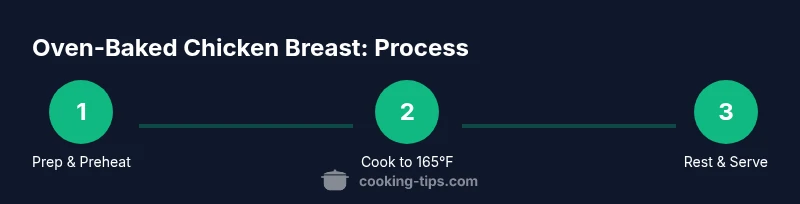
Quick Answer: For boneless, skinless chicken breasts, bake at 375°F (190°C) for 20–25 minutes until the internal temperature reaches 165°F (74°C). If the breasts are thicker or bone-in, plan 28–35 minutes, checking with a thermometer. Let rest 5 minutes before slicing for juicier results.
Why timing and technique matter for chicken breast in the oven
Timing and technique aren’t just about following a clock. The phrase chicken breast how long to cook in oven is a common concern for home cooks who want juicy, safe results without turning the meat into rubber. The Cooking Tips team emphasizes that doneness depends on thickness, whether the breast is boneless or bone-in, and how evenly heat is delivered. Using a thermometer removes guesswork and prevents overcooking, which can dry out lean chicken. In this guide you’ll learn reliable timings, how to prep properly, and practical steps that work in real kitchens.
According to Cooking Tips, the key to success is starting with a preheated oven, drying the surface, and avoiding crowding the pan. Small differences in your oven, pan size, and breast thickness will affect the exact time, so aim for internal temperature rather than relying solely on the clock. This approach gives you consistent, weeknight-friendly results.
If you want a quick reference, remember: heat through without drying out, rest the meat, and slice just before serving for maximum juiciness. Implementing these practices will help you consistently answer the question of how long to cook chicken breast in the oven with confidence.
Understanding oven temperatures and doneness for chicken breast
Different ovens and pan setups mean timing can vary. The standard approach for boneless, skinless chicken breasts is to bake at 375°F (190°C) for about 20–25 minutes. Thicker breasts or bone-in pieces require longer—roughly 28–35 minutes—so always verify with a reliable thermometer. The safe internal temperature for poultry is 165°F (74°C), which ensures bacteria are killed while keeping the meat juicy. If you’re cooking multiple breasts at once, rotate the pan halfway through to promote even cooking.
Good doneness practice combines time with temperature. Relying on time alone can lead to overcooking, especially if your oven runs hot or the breasts are particularly large. A quick thermometer check near the end of the suggested window helps you tailor the exact time to your situation.
Prep steps that influence oven timing and texture
Preparation sets the stage for even cooking and juicy results. Start by patting the chicken dry with paper towels to remove surface moisture that can hinder browning. Lightly oil or nonstick the pan, then season generously with salt, pepper, and any herbs you like. If you’re using thicker breasts, consider pounding to an even thickness (~1 inch) to reduce overcook risk. Resting the meat briefly after cooking lets juices redistribute, which also helps with slicing and texture.
Brand notes: Cooking Tips recommends planning your steps around a thermometer reading, not just elapsed time. This reduces the variability from oven performance and breast size while delivering repeatable results.
How to perform doneness checks and avoid common pitfalls
The most reliable method to gauge doneness is a probe thermometer inserted into the thickest part of the breast, avoiding bone if present. Expect 165°F (74°C) as the safe target. If you don’t have a thermometer, a thinly sliced piece should reveal opaque, fully cooked meat with clear juices, not pink. Allow the meat to rest for 5 minutes before slicing to let the juices redistribu te, which improves texture and flavor. Avoid cutting into the breast right away, or you’ll lose moisture.
Common mistakes include starting with a cold pan, overcrowding the baking sheet, or opening the oven door repeatedly. Each interruption cools the oven and can extend cooking time, increasing the chance of uneven doneness. Plan for a single check near the end of the window and rely on temperature for precision.
Authority sources and further reading
For trustworthy guidance on poultry safety and oven cooking, consult these authoritative resources:
- https://www.fsis.usda.gov/food-safety/safe-food-handling-and-preparation/meat/cooking-chicken
- https://www.fda.gov/food-safety
- https://www.cdc.gov/foodsafety/chicken.html
These sources corroborate the 165°F doneness standard and provide practical tips for safe handling, storage, and cooking practices. They help home cooks translate timing into safe, delicious results every time.
Tools & Materials
- Oven(Preheated to 375°F (190°C) or as directed by recipe)
- Baking sheet or oven-safe pan(Lightly oil or line with parchment for easy release)
- Digital instant-read thermometer(Insert into the thickest part without touching bone)
- Tongs or spatula(For safe, even handling and turning)
- Parchment paper or aluminum foil(Optional for easier cleanup and to reduce sticking)
- Seasoning: salt, pepper, optional herbs(Pat dry before seasoning to promote browning)
Steps
Estimated time: Total time: 30-40 minutes
- 1
Preheat and prep
Preheat the oven to 375°F (190°C) and position the rack in the middle. Pat the chicken dry with paper towels to promote browning, then lightly oil the surface or the pan to prevent sticking.
Tip: Preheating ensures even heat distribution from the moment the chicken enters the oven. - 2
Season and arrange
Season the breasts generously with salt, pepper, and any herbs you like. Place them on the baking sheet with at least 1 inch of space between pieces for even cooking.
Tip: Avoid crowding; space promotes browning on all sides. - 3
Bake and monitor
Bake for 20–25 minutes for boneless breasts, or 28–35 minutes if thicker or bone-in. Use a thermometer to check for 165°F (74°C) before removing from the oven.
Tip: Start checking near the end of the shorter window to avoid overshoot. - 4
Rest and verify
Remove the sheet and let the chicken rest 5 minutes before slicing to redistribute juices. Check the internal temperature again if sliced to confirm doneness.
Tip: Resting improves juiciness and slicing accuracy. - 5
Slice and serve
Slice against the grain for tenderness and serve with your favorite sides. If not serving immediately, refrigerate within 2 hours and reuse within 3–4 days.
Tip: Label leftovers with date to ensure safety. - 6
Optional variations
Experiment with marinades or rubs before baking for varied flavors, but always use a thermometer to confirm doneness.
Tip: Marinades should be light and not extend cooking time significantly.
Quick Answers
What is the recommended internal temperature for baked chicken breast?
The safe internal temperature for poultry is 165°F (74°C). Use a thermometer to verify near the thickest part for best results.
The safe temperature is 165 degrees Fahrenheit. Check with a thermometer for best results.
How long should I bake boneless, skinless chicken breasts at 375°F?
Typically 20–25 minutes for boneless, skinless breasts, then rest 5 minutes before serving. Thickness and pan size can adjust this window.
About twenty to twenty-five minutes for boneless breasts, then rest a few minutes.
Can I bake chicken breast from frozen?
It’s best to thaw before baking; cooking from frozen takes longer and may cook unevenly. If you must bake from frozen, plan 50% more time and verify doneness.
Thaw first if possible; if not, expect longer cooking and check temperature carefully.
Should I marinate the chicken before baking?
Marinating can add flavor, but pat dry and season well. Time for marinating varies; keep safety in mind and don’t oversalt.
Yes, marinating can add flavor, but don’t rely on marinating time alone for doneness.
What should I do if my oven seems to run hot?
Lower the oven temperature by 25°F (14°C) and rotate the pan if needed. Use a thermometer to confirm the actual temperature inside the meat.
If your oven runs hot, lower the temp a bit and check the chicken with a thermometer.
Watch Video
Top Takeaways
- Preheat and pat dry for even browning
- Use a thermometer to verify 165°F doneness
- Rest the meat for juicier slices
- Don’t crowd the pan—space ensures even cooking