How Long to Cook Chicken Thighs: A Practical Guide
Learn exact times and temperatures for cooking chicken thighs across oven, stovetop, and grill with practical tips for juicy, safe results.


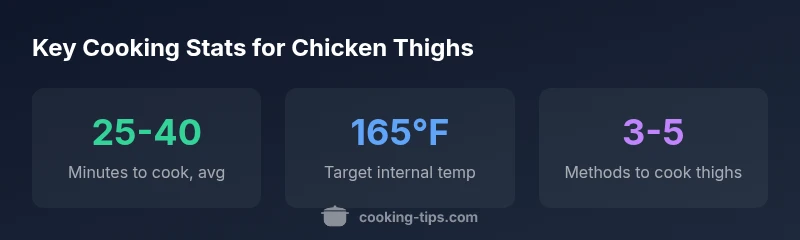
The typical answer to how long to cook chicken thighs depends on cut and method. Bone-in, skin-on thighs usually need about 35-45 minutes in a conventional oven set to 400°F, while boneless, skinless thighs finish faster in the range of 20-30 minutes. On the stovetop, sear 6-8 minutes per side and finish with a brief bake or simmer to reach 165°F internal temperature. For grilling, plan 10-15 minutes total on indirect heat, turning halfway. Regardless of method, aim for 165°F internal temperature and allow a short rest to lock in juices.
How long to cook chicken thighs by method
When you ask how long to cook chicken thighs, the answer isn’t a single number. It depends on whether you’re using bone-in or boneless cuts, skin-on or skinless, and which cooking method you choose. The goal is to reach a safe internal temperature while maintaining juiciness and texture. For many home cooks, bone-in, skin-on thighs are forgiving and flavorful, and they tend to require longer cook times than boneless cuts. If you’re planning weeknight dinners, you’ll want a reliable baseline: bone-in skin-on thighs typically need a longer window, while boneless skinless thighs finish quicker. Regardless of cut, the most consistent way to verify doneness is to monitor the internal temperature, targeting around 165°F (74°C) and allowing for a brief rest to redistribute juices. This section unpacks times by method and cut so you can plan with confidence and reduce guesswork when you cook chicken thighs.
Oven cooking times and temps
Oven cooking is the most foolproof method for even results with chicken thighs. For bone-in, skin-on thighs, plan about 35-45 minutes at a steady 400°F; for boneless, skinless thighs, 20-30 minutes at 375-425°F, depending on thickness. Preheat your oven, pat the thighs dry, and arrange them on a baking sheet or in a shallow roasting pan with a rack to promote air circulation. For crisper skin on bone-in thighs, start on a high heat for the first 10 minutes, then reduce to maintain moisture. Keep in mind that every oven behaves a little differently, so use the thermometer to confirm doneness rather than relying on time alone.
Stovetop methods: skillet sear then finish in oven
A common approach to control texture is to sear thighs on the stovetop first, then finish in the oven to reach the target internal temperature without drying out. For bone-in, skin-on thighs, sear skin-side down for 4-6 minutes until deeply bronzed, flip, and transfer to a 350-400°F oven for 8-12 more minutes. Boneless, skinless thighs often need 6-8 minutes total on the stove, followed by a brief oven finish of 5-8 minutes if thickness requires it. The combination of a good sear and gentle finish creates a juicy interior with a crisp exterior.
Grilling chicken thighs: times and tips
Grilling adds a smoky flavor and a slightly different timing dynamic. For bone-in, skin-on thighs, grill over medium heat (about 350-400°F) for roughly 10-15 minutes total, turning every 5 minutes to prevent scorching. For boneless thighs, plan 6-8 minutes total, flipping halfway. If using direct high heat, monitor closely to avoid flare-ups and uneven browning. Resting briefly after grill helps juices redisperse and improves overall mouthfeel. Remember to clean and oil the grates to prevent sticking.
Doneness testing and resting for juiciness
Thermometer-guided doneness is the gold standard. Check the thickest part near the center of the thigh without touching bone for bone-in cuts. Pull the meat from the heat when it reaches 160-162°F and let it rest for 5 minutes; carryover heat will carry it to around 165°F. Boneless thighs can hit 165°F a bit earlier, so start checking sooner. Resting is essential for juiciness, as it allows juices to redistribute and prevents a dry bite.
Practical tips to ensure even cooking and browning
Key practical tips include: patting the thighs dry to optimize browning, spacing them at least 1 inch apart on a rack or sheet pan, and using a preheated pan or grill surface. If you’re pan-searing, use a high-smoke-point oil (like canola or avocado) and avoid crowding. For thicker thighs, consider pounding to uniform thickness or finishing in the oven after a brief sear to ensure even doneness throughout.
Flavor boosters and seasoning strategies
Season generously with salt and a mix of spices that suit your dish. Salt helps with surface browning and moisture retention. Consider a quick dry rub with paprika, garlic powder, and black pepper for color and aroma. If you have time, a light marinade (even 15-30 minutes) can infuse extra flavor without adding significant cook time. For heartier flavor, finish with a finishing butter baste or a splash of citrus for brightness.
Meal prep and batch cooking considerations
When prepping thighs in advance, you can brine lightly or marinate for a short period, then cook, cool, and refrigerate for up to 3-4 days. For longer storage, freeze cooked thighs in airtight containers and reheat gently to avoid drying. Plan to reheat to about 165°F, not far beyond that, to maintain moisture. Batch cooking works well with sides like roasted vegetables or grains, creating well-rounded meals with minimal daily effort.
Troubleshooting common issues when cooking thighs
If thighs come out dry, adjust by reducing cook time slightly or adding a marinade that includes some oil. If they’re undercooked near the bone, return them to heat or rest longer. Uneven cooking is often caused by thickness variance; consider pounding thicker portions to uniform thickness or separating very thick thighs from thinner ones for more predictable results. Always verify with a thermometer for best results.
Comparison of chicken thigh cooking methods
| Cooking Method | Typical Time Range | Approx Internal Temp | Notes |
|---|---|---|---|
| Oven roasted bone-in skin-on | 35-45 minutes | 165-175°F | Preheat to 425°F for crisp skin |
| Oven roasted boneless skinless | 20-30 minutes | 165°F | Pat dry and oil for browning |
| Skillet finish with oven | 6-8 minutes per side, then 8-12 minutes in oven | 165-175°F | Cast-iron for even browning |
| Grilled bone-in skin-on | 10-15 minutes total | 165-175°F | Indirect heat recommended |
| Stovetop-only (boneless) | 12-18 minutes total | 165°F | Maintain medium heat to avoid scorching |
Quick Answers
What is the safest internal temperature for chicken thighs?
The safe internal temperature for all chicken thighs is 165°F (74°C). Use a thermometer to check the thickest part and rest for several minutes before serving.
Cook to 165 degrees and rest for the best texture and safety.
Should I use bone-in or boneless thighs for best results?
Bone-in thighs stay juicier and can be more forgiving of small timing errors. Boneless thighs cook faster but can dry out if overcooked.
Bone-in is more forgiving; boneless cooks faster but needs careful timing.
Can I cook chicken thighs from frozen?
Cooking from frozen is possible but will take longer and may cook unevenly. If possible, thaw briefly for more even results.
Thawing first is best for even cooking; if not, expect longer time.
Is it necessary to sear before baking?
Searing adds color and flavor, but you can bake directly and still achieve good results. Sear if you want crisper skin.
Searing helps flavor and color, but isn’t strictly required.
How should I rest the thighs after cooking?
Rest thighs for about 5 minutes after cooking to let juices redistribute. Slice against the grain to maximize tenderness.
Rest for a few minutes to keep the juices in.
What are common mistakes to avoid with chicken thighs?
Overcrowding the pan, using insufficient heat, and relying only on time without checking internal temperature are common errors. Use a thermometer for accuracy.
Avoid crowding and always check the thermometer.
“Juicy, safe chicken thighs come from consistent heat and a precise finish. Use a thermometer and resting time to lock in juices.”
Top Takeaways
- Cook to 165°F and rest before serving
- Bone-in thighs deliver more forgiving juiciness
- Weight/thickness affects time; use a thermometer
- Sear for flavor; finish with gentle heat to avoid dryness
- Plan time by method, not just by cut