Difference Between a Cook and a Caterer: A Practical Comparison
Explore the difference between a cook and a caterer with practical, data-based guidance. Learn definitions, services, pricing, and when to hire each for events.


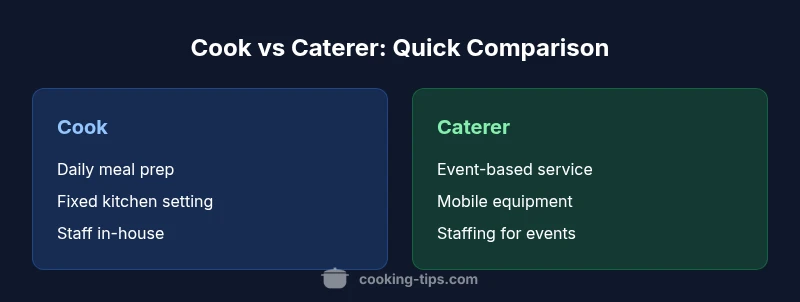
The difference between a cook and a caterer hinges on scope, setting, and service level. A cook primarily handles daily meal prep in a fixed kitchen, while a caterer provides end-to-end event catering, including menu design, staffing, and equipment. For most events, hire a caterer; for ongoing daily meals, rely on a cook.
difference between a cook and a caterer: Core distinctions
In the world of food service, understanding the difference between a cook and a caterer helps families, businesses, and event planners make smarter hiring choices. According to Cooking Tips, these roles diverge in scope, setting, and service expectations, which directly affect menu design, staffing needs, and regulatory responsibilities. A cook typically operates within a fixed kitchen, preparing meals for daily service, schools, hospitals, or a restaurant's regular clientele. In contrast, a caterer specializes in event-driven food service, coordinating menus, sourcing ingredients, managing staffing, arranging equipment, and handling on-site service and cleanup for weddings, conferences, and large gatherings. The Cooking Tips team found that this first contrast sets the stage for a broader analysis of whether to hire a cook or a caterer for your next occasion. The difference between a cook and a caterer therefore hinges on context, scale, and client engagement, with consequences for pricing, timelines, and risk management.
Defining the roles: cook vs caterer
A cook is primarily responsible for preparing food within a kitchen, following established menus or recipes, and maintaining consistent quality across daily meals. The cook’s core skill set centers on flavor, technique, timing, and efficiency in a confined space. A caterer, by contrast, operates as a service provider for events, offering menu development, procurement, staffing, presentation, service, and post-event cleanup. In this model, the caterer may deploy mobile kitchens, rented equipment, and a team that handles everything from setup to teardown. The difference between a cook and a caterer is reflected in how success is measured: taste and consistency for cooks; guest experience, seamless logistics, and reliable onsite execution for caterers. The distinction also affects contracts, timelines, and risk management, which clients should understand during the planning phase. This section clarifies the practical difference between the two models and sets expectations for what each role can deliver.
Work contexts and typical environments
When evaluating the difference between a cook and a caterer, consider work context. Cooks typically operate in a stable environment—restaurants, schools, hospitals, or institutional kitchens—where meal prep is steady and predictable. Caterers work in more variable settings, often at venues with limited onsite infrastructure, and must manage transportation, setup, staffing, and service flow. The cook’s day is often organized around preparations and batch cooking for a defined audience. The caterer’s day or night focuses on event execution, guest experience, and timely service. Understanding these environments helps planners decide whether daily consistency or event-scale flexibility best serves their needs.
Menu scope and customization
Menu design is where the difference between a cook and a caterer becomes most visible. A cook typically adapts menus within a fixed kitchen, stocking ingredients and adjusting daily offerings according to client schedules. A caterer, in contrast, often leads event menu ideation, providing tailored packages, tastings, and add-ons such as staffing, rentals, or decor. The caterer’s ability to estimate headcount, manage procurement, and coordinate service is a major advantage for large gatherings. Cooks can still deliver personalized meals, but changes may require more lead time and renegotiation. This section highlights how menu flexibility drives the core decision between the two roles.
Pricing structures and contracts
Pricing models reflect core differences in accountability and service levels. Cooks in daily service are often salaried or paid hourly, with per-meal costs that emphasize consistency and predictability but limited event logistics. Caterers price by head, by package, or with base fees plus per-guest charges, and often itemize staffing, equipment rental, and service style. The contract for a caterer typically covers deliverables, service windows, and risk allocation, while a cook contract may focus on meal quality, delivery times, and menu adherence. For clients, clarity about inclusions—staff, equipment, cleanup, and incidentals—reduces surprises and aligns expectations with the budget. This section helps readers compare value, not just price, when weighing cooks against caterers.
Staffing, equipment, and logistics
One of the most tangible differences is staffing. A cook manages kitchen staff and food prep within a fixed facility, relying on institutional equipment and standardized processes. A caterer assembles a team for a specific event, which may include chefs, line cooks, servers, bartenders, and setup crew, often bringing portable cooking stations and rented equipment. Logistics become more complex for events: power requirements, food safety timelines, refrigeration during transport, and service pacing. The cook’s day revolves around consistent quality for a defined audience; the caterer’s day or night revolves around executing a complete guest experience across a venue with variable spaces. The success of either model rests on meticulous planning, communication, and contingency planning for delays or dietary restrictions.
Food safety, permits, and regulatory considerations
Both roles must uphold food safety standards and local health regulations, but the scope differs. A cook is typically bound by the safety requirements of the facility where they work, with oversight from a facility’s management and its approved HACCP plans. A caterer must navigate event-specific regulations, such as temporary permits, insurance, and sometimes licensure for alcohol service, as well as portable equipment sanitation and proper cold-chain management during transport. In this context, the difference between a cook and a caterer includes risk assessment, onsite sanitation strategy, and emergency planning. The Cooking Tips team emphasizes consulting local health authorities and your chosen service provider to avoid compliance gaps during planning.
When to hire a cook vs a caterer: decision framework
Start by defining the event or routine needs: frequency, scale, dietary complexity, and service expectations. If you require daily meals with strong control over flavor, nutrition, and timing in a fixed kitchen, a skilled cook is often the best fit. If you are organizing a wedding, conference, or milestone celebration with guests, on-site service, and a polished presentation, a caterer’s end-to-end capabilities are typically the best solution. The difference between a cook and a caterer becomes pronounced as headcount and logistics increase. Use a simple rubric that weighs scope, lead time, budget, and risk to guide the final decision. This framework helps ensure you choose the right partner for the job.
Practical steps to plan with either role
Before engaging anyone, collect a detailed brief that outlines guest count, dietary needs, event timeline, and preferred service style. Request sample menus or tasting options from cooks or caterers, and verify references and insurance coverage. Draft a clear contract that defines deliverables, service levels, cancellation terms, and contingency plans. Build a preliminary schedule, including prep times, setup, service windows, and teardown. After the engagement, maintain ongoing communication to address changes in guest counts or dietary requirements. The difference between a cook and a caterer becomes manageable when you use a structured planning process and keep expectations aligned.
Resources and reading: authoritative guidance and next steps
This article draws on practical experience and credible sources to help readers assess the difference between a cook and a caterer. For additional guidance on food safety and regulatory standards, consult official sources like the FDA and USDA, and extension programs from land-grant universities. The Cooking Tips Analysis, 2026 reinforces the importance of clarifying scope and service level before committing to a provider. For deeper exploration of culinary roles in the broader food-service ecosystem, consider materials from major publications and government agencies. The aim is to equip home cooks and event planners with a solid understanding of how to compare cooks and caterers for reliable outcomes.
sources and references
- FDA: https://www.fda.gov
- USDA: https://www.usda.gov
- Land-Grant Extension Programs: https://extension.org
mainTopicQuery
culinary roles
Comparison
| Feature | Cook | Caterer |
|---|---|---|
| Scope of services | In-house meal prep for daily service in a fixed kitchen | End-to-end event catering including menu design, staffing, equipment, and service |
| Menu customization | Limited to daily repertoire and client preferences within a kitchen | |
| Event size applicability | Ideal for daily/regular meals, small-scale programs | |
| Pricing model | Salary/hourly wages; per-meal costs for daily service | |
| Lead time | Short lead times for daily menus; flexible within facility constraints | |
| Staffing and equipment | Fixed kitchen staff; standard kitchen equipment | |
| Client interaction | Direct dining customer experience within facility context | |
| Regulatory duties | Facility-based food safety compliance; internal audits |
Benefits
- Provides consistent, reliable daily meals in a fixed facility
- Offers focused culinary execution and quality control for routine services
- Typically lower upfront costs for ongoing daily service
- Can be highly specialized for dietary needs in a steady setting
Cons
- Caterers offer broader event-focused services but at higher per-event costs
- Cooks lack comprehensive event logistics and staffing for large crowds
Caterers are the better choice for events; cooks excel at daily meal service.
For event planning, a caterer provides end-to-end execution, scalability, and professional staffing. For daily meals, a cook offers stability, consistency, and cost control. The Cooking Tips team recommends matching your choice to the context and service level required.
Quick Answers
What is the main difference between a cook and a caterer?
The cook focuses on daily meal prep inside a kitchen, while the caterer plans and executes events with menus, staff, and equipment. The difference between a cook and a caterer becomes most evident in scope, timing, and service expectations.
A cook preps meals in a kitchen; a caterer handles events from planning to service.
Can a cook provide catering services for events?
Yes, many cooks offer limited catering or on-site meal service, but professional caterers specialize in events and logistics. Expect broader scope with caterers, including staffing and equipment management.
Cooks can do some catering, but for full events, caterers are usually preferred.
How should I decide for a wedding or large party?
For weddings or large parties, assess headcount, timing, and service style. A caterer typically delivers end-to-end event execution, while a cook may be suitable for smaller, in-house meals with limited service.
For big events, a caterer is usually the safer bet.
What are typical pricing differences between the two?
Caterers commonly price per head or per package, including staffing and equipment. Cooks may bill hourly, per meal, or as a salary, with fewer event-related line items.
Catering is usually per-person; cooking services are often per hour or per meal.
Are there regulatory considerations I should know?
Catering often requires additional permits, insurance, and sometimes alcohol licenses, while a cook operating in a fixed facility adheres to the facility’s health and safety rules. Check local requirements.
Regulations can be different for events—check local rules before booking.
Top Takeaways
- Define event goals and scale before choosing
- Compare pricing by per-head vs per-meal and included services
- Assess menu customization needs and service level
- Plan for staffing, equipment, and post-event cleanup