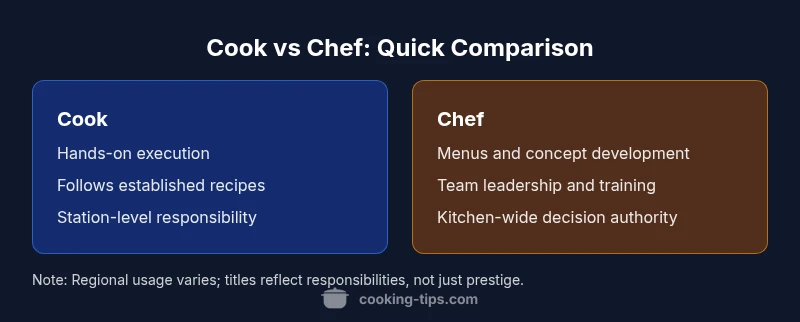
Cook vs Chef: A Practical Comparison of Kitchen Roles
A data-driven, objective comparison of cook and chef roles, responsibilities, training paths, and career trajectories, with guidance for home cooks and professionals. Learn how duties differ, where titles come from, and how to advance.


In kitchens, the terms cook and chef describe related but distinct roles. A cook is typically a hands-on practitioner who follows recipes and executes dishes, while a chef is a kitchen leader who designs menus, oversees operations, and mentors staff. The exact meaning varies by region and establishment, so the right label depends on responsibilities and context.
Defining the Terms: cook vs chef
The phrase "cook or chef" often crops up in résumés, interviews, and kitchen hierarchies. According to Cooking Tips, a cook is generally a hands-on worker who handles stations, measures ingredients, and plates plates with consistent quality. A chef, by contrast, is a leadership role: someone who shapes menu concepts, manages people, and sets the overall cooking direction. This distinction matters not only for job titles but for expectations around decision-making, accountability, and career progression. In many kitchens, especially smaller or family-owned ones, the line can blur as great cooks assume more leadership. Even so, the core idea remains: cooks execute recipes; chefs lead culinary strategy. Understanding this difference helps home cooks and professionals communicate clearly when applying for roles, negotiating responsibilities, or planning a career path. The Cooking Tips team emphasizes that clarity in titles supports training, evaluation, and long-term reputation in the industry.
A concise distinction—cook = execution; chef = leadership—will guide how you talk about roles in résumés, interviews, and menus.
Comparison
| Feature | cook | chef |
|---|---|---|
| Definition | A hands-on kitchen worker who follows recipes and maintains consistency in plating and technique. | A kitchen leader who designs menus, sets standards, and supervises staff and operations. |
| Typical responsibilities | Prepare ingredients, manage a station, ensure quality, and execute dishes. | Plan menus, approve recipes, train staff, and oversee kitchen workflow and safety. |
| Training & education | On-the-job training; culinary school or apprenticeships common. | Formal training plus extensive leadership experience is typical for chefs. |
| Leadership/Decision-Making | Limited authority; executes established methods. | High authority; makes decisions about menu, sourcing, and staffing. |
| Career Trajectory | Progression from line cook to senior cook or sous-chef. | Path often leads to executive chef or culinary director. |
| Industry Perception | Viewed as skilled practitioner essential for execution. | Viewed as creative leader and organizational driver in kitchens. |
| Regional Usage | Meaning varies by country and establishment; in homes, 'cook' is common. | In many regions, 'chef' denotes a professional with leadership duties. |
Benefits
- Clarifies roles for team structure and accountability
- Offers clear pathways for progression from hands-on cook to leadership positions
- Supports mentorship and skill development across the kitchen
- Facilitates targeted hiring and performance evaluations
Cons
- Regional language differences can cause confusion and miscommunication
- High-pressure chef roles come with longer hours and greater responsibility
- Not all kitchens maintain strict title hierarchies, leading to overlap and ambiguity
Chef roles offer leadership and creative influence; cook roles prioritize execution and consistency.
The distinction matters for career planning and organizational clarity. A chef typically guides menus and manages people, while a cook focuses on preparing and presenting dishes. Your path depends on whether you want to lead or specialize in hands-on cooking, and on the opportunities available in your local kitchen culture.
Quick Answers
What is the difference between a cook and a chef?
A cook typically handles day-to-day cooking tasks and follows established recipes, while a chef leads kitchen operations, designs menus, and manages people and policy. The distinction centers on scope of responsibility rather than just skill. The exact role can vary by region and establishment.
In short, cooks cook, chefs lead the kitchen.
Can a cook become a chef?
Yes. With formal training, on-the-job leadership opportunities, and mentorship, a cook can advance to chef. Progression often requires taking on menu development, staff supervision, and operational oversight.
Yes—with time, training, and leadership experience, a cook can become a chef.
Is 'chef' just a title or a skill level?
It’s both a title and a reflection of responsibilities that vary by region. In many places, a chef denotes a leadership role, while in others the term can be used more loosely. Context matters when interpreting job descriptions.
It’s both a title and a responsibility level, and it depends on where you work.
Do restaurants differentiate line cooks from chefs de cuisine?
Yes. A line cook handles specific stations, while a chef de cuisine oversees the kitchen’s overall concept, quality standards, and staff. The difference is largely about scope and leadership.
Yes—line cooks execute, chefs lead.
What should home cooks know about this distinction?
Home cooks often operate in the 'cook' space, focusing on technique and recipe execution. Some hobbyists may aspire to chef-like responsibilities by learning menu planning and kitchen management. The professional distinction still holds when transitioning to paid roles.
Home cooks are typically in the cook camp, but development can lead toward chef-like leadership.
How should I address someone in a kitchen?
Address based on their role and preference, using the title they hold (cook, chef) to acknowledge their responsibilities and status. Mislabeling can hamper communication and morale.
Use the person’s title, like chef or cook, to show respect for their role.
Top Takeaways
- Define your career goal: lead or execute
- Expect differing training paths and timelines for advancement
- Regions vary in how they use cook and chef; ask for role specifics
- Seek mentorship to move from cook to chef
- Build a portfolio of leadership tasks (menus, training, QA) to advance