Difference Between a Cook and a Chef: Key Distinctions
Explore the difference between a cook and a chef, focusing on training, responsibilities, leadership, and career paths. An analytical guide from Cooking Tips to help home cooks understand roles in professional kitchens.


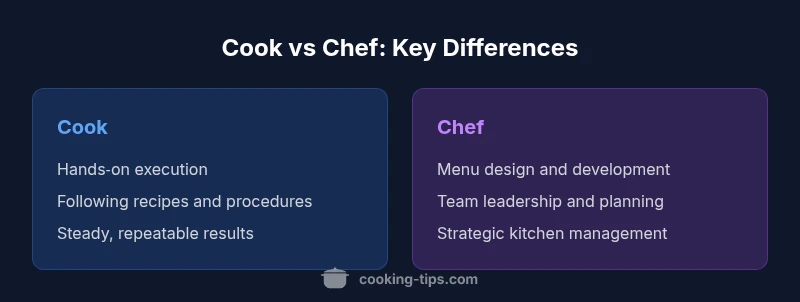
Definition: The difference between a cook and a chef hinges on scope, authority, and responsibility. A cook typically follows recipes and kitchen procedures, focusing on hands‑on food preparation. A chef leads menu development, mentors staff, designs workflows, and drives culinary strategy across service periods.
The Core Difference Between a Cook and a Chef
The difference between a cook and a chef can be subtle in day‑to‑day tasks, yet meaningful in career implications. At its heart, the distinction is about scope, authority, and influence. A cook usually operates within the confines of established recipes and procedures, ensuring consistency and speed during service. A chef, by contrast, occupies a broader leadership role that encompasses menu design, kitchen organization, and mentoring staff. In many kitchens, a chef sets culinary standards, periodizes training, and translates culinary concepts into actionable plans for the entire team. For home cooks reading this article, the distinction is a framework to evaluate opportunities for growth, responsibility, and impact on the dining experience. According to Cooking Tips, the difference between a cook and a chef also reflects how much strategic thinking and people management a person is prepared to take on. This lens helps clarify goals and next steps in a kitchen career.
Historical Context and Training Pathways
The pathways into cooking roles have evolved with professional kitchens. Traditional apprenticeship models and mentor-based learning offered a clear way to acquire skills on the job. In modern settings, several routes exist, including formal culinary schools, certificate programs, and paid internships. The choice often depends on geographic norms, kitchen type, and personal timelines. While some regions emphasize hands‑on experience above all, others value structured curricula that cover technique, sanitation, recipe development, and cost control. For the home cook, understanding these pathways helps map a realistic plan, whether pursuing a formal credential or building experience through entry‑level kitchen roles. The Cooking Tips team notes that real-world competence often outpaces credential prestige, but formal training can accelerate progress for those who want leadership positions.
Daily Responsibilities: From Prep to Menu Design
A cook’s day centers on execution: mise en place, recipe replication, batch cooking, and ensuring consistency across plates. Time management, speed, and accuracy are critical during service. A chef’s day expands to planning and oversight: selecting seasonal ingredients, collaborating with suppliers, translating concept into plate, and supervising the kitchen’s workflow. The chef also allocates tasks, reviews results, and mentors cooks and sous‑chefs. In practice, both roles require discipline and taste memory, but the chef’s scope extends into culinary creativity, process optimization, and cross‑department communication. For home cooks seeking clarity, this difference translates into the level of influence you want over menus, training, and kitchen culture.
Leadership and Team Dynamics
Leadership in a kitchen is as much about people as it is about food. A cook typically coordinates teammates to maintain station efficiency, while a chef leads shifts, assigns responsibilities, and evaluates performance. Strong chefs foster a positive kitchen climate, handle conflict, and communicate vision to the team. This dynamic includes mentoring junior staff, promoting cross‑training, and building a culture of safety and accountability. Understanding these dynamics helps aspiring culinary professionals decide whether to pursue the role that emphasizes hands‑on craft or leadership, because people management is a core component of sustained kitchen success.
Skill Sets: Technique, Palate, and Creativity
Technique remains foundational for both cooks and chefs, but emphasis diverges. Cooks refine knife skills, timing, heat control, and precision with sauces and stocks. Chefs push technique toward innovation, balancing tradition with modern trends, while developing a refined palate capable of evaluating seasoning, texture, and balance across a menu. Creativity becomes more central for chefs, who translate concepts into seasonal menus, plating narratives, and service storytelling. Home cooks can adopt a chef mindset by studying flavor profiles, practicing consistent plate presentation, and experimenting with new techniques in a controlled way.
Education and Certification: Do You Need Formal Training?
The debate between on‑the‑job learning and formal schooling continues in kitchens worldwide. Some regions prize hands‑on experience as the gateway to advancement, while others require credentials for supervisory roles. Formal programs teach foundational techniques, sanitation standards, cost control, and management principles. In many careers, a hybrid approach—earn a credential and supplement with practical work—proves effective. Cooking Tips analysis shows that while credentials can open doors, demonstrated competence, leadership ability, and reliable performance often carry more weight with employers and diners alike.
Career Trajectories in Different Kitchens
Kitchens vary by size, concept, and service model, shaping career paths. In large hotel or resort kitchens, a chef might oversee multiple stations, lead a culinary team, and work closely with menu development and cost control. In smaller independent restaurants, the head chef may juggle menu design with hands‑on cooking and operations management. In institutional kitchens, such as schools or hospitals, leadership roles require balancing nutrition guidelines with kitchen efficiency. For home cooks, the takeaway is that opportunities exist across settings, but the required balance of technique, leadership, and business sense shifts with the environment.
Work-Life Balance and Career Pace
Work hours in professional kitchens can be demanding, with busy service periods and rotating shifts. Cooks often face intense peak times, while chefs shoulder strategic obligations that can extend beyond service. This reality influences job satisfaction and career longevity. Understanding this balance helps you decide how much leadership responsibility you’re prepared to accept, and whether you prefer a predictable schedule or a role that combines craft with ongoing planning and coordination. Dining professionals across the industry emphasize sustainable practices, mentorship, and clear expectations to support long‑term careers.
Common Misconceptions Debunked
A frequent myth is that all chefs are born leaders or that cooks cannot influence menus. In truth, leadership emerges from experience, training, and the ability to guide a team toward a shared vision. Another misconception is that chefs always work alone in the kitchen; collaboration with sous‑chefs, pastry teams, and service staff is a daily reality. Recognizing these nuances helps readers approach their own careers with a realistic plan, align expectations with the kitchen type, and pursue opportunities that match their strengths and goals.
Practical Translation for Home Cooks: Applying Chef Mindset in Everyday Cooking
Home cooks can adopt chef‑level habits without working in a restaurant. Start with a clear plan for meals, seasonality, and cost management. Practice recipe interpretation, plate presentation, and consistency in technique. Build leadership skills by coordinating family or guest cooks, sharing knowledge, and organizing a simple system for grocery budgeting and task delegation. By translating professional concepts into home practice, you gain practical advantages in flavor, efficiency, and enjoyment at the stove.
Making Your Decision: Aligning Pathways With Personal Goals
Choosing between the cook path and the chef path comes down to your desired scope, leadership ambition, and the environments in which you want to work. If your goals center on hands‑on craft, consistency, and rapid advancement through skill mastery, a cook track offers a solid foundation. If you want to shape menus, lead teams, and assume broad kitchen responsibility, the chef track provides a longer horizon but with greater opportunities for impact. Reflect on your strengths, learning style, and preferred work culture to make a strategic choice that fits your life.
Comparison
| Feature | Cook | Chef |
|---|---|---|
| Education/Training | On‑the‑job learning with short or informal programs | Formal culinary training plus mentorship and ongoing development |
| Scope of Responsibilities | Hands‑on cooking and station execution | Menu design, kitchen planning, staff leadership |
| Menu Design & Creativity | Limited influence on menu concepts | Leads concept development and seasonal changes |
| Leadership & Team Management | Coordinates peers; limited supervisory duties | Directs teams, assigns tasks, evaluates performance |
| Workload & Hours | Shift‑based execution with peak service times | High‑level planning; long hours during menu cycles |
| Career Path | Line cook → supervisor → kitchen roles | Sous‑chef → head chef → possible executive roles |
| Compensation Context | Often solid base pay with growth tied to role | Potentially higher ceiling with leadership responsibility |
| Work Environment | Fast‑paced, structured, execution focus | Creative, high‑pressure, leadership‑driven |
Benefits
- Cooks can rapidly build practical kitchen skills through hands‑on work
- Chefs influence menus, quality, and team culture
- Both paths offer opportunities for advancement in larger kitchens
- Formal training can accelerate entry into leadership roles for chefs
Cons
- Chefs face higher stress and longer hours in peak service periods
- Cooks may encounter a lower ceiling in some small kitchens
- Career growth can be uneven in smaller establishments
Chef leadership is the more advanced path; cooks provide essential hands‑on craft.
Choose chef if you seek menu influence and team leadership. Pick cook if you want to deepen technique and practical kitchen execution while planning future growth toward leadership.
Quick Answers
What is the primary difference between a cook and a chef?
The primary difference lies in scope and leadership. A cook focuses on hands‑on preparation, while a chef leads menu design, staff, and kitchen operations. Leadership and strategic responsibilities set chefs apart.
The main difference is leadership and scope: chefs lead menus and teams; cooks execute recipes and keep the kitchen running smoothly.
Do cooks require formal training?
Not always. Cooks often learn on the job, through apprenticeships or short programs. Formal training can help, but strong hands‑on experience and consistency are highly valued in many kitchens.
Cooks don’t always need formal schooling, but hands‑on experience matters a lot.
Can a cook become a chef without culinary school?
Yes. A cook can become a chef through progressive roles, mentorship, demonstrated leadership, and a track record of successful menu execution. Formal credentials help, but experience and results often matter more.
Absolutely—experience, leadership, and proven results often beat credentials alone.
How do responsibilities differ in a restaurant vs home kitchen?
In a restaurant, chefs manage menus, costs, and staff across shifts; cooks focus on day‑to‑day prep. At home, the distinction blurs, but the same principles apply: leadership vs execution, planning vs perform.
Restaurants demand leadership and planning; home kitchens mainly involve practice and consistency.
Is certification necessary to become a chef?
Certification is not strictly required to become a chef, but it can open doors, validate skills, and help in job interviews. Real‑world cooking ability and leadership experience remain crucial.
Not always required, but it can help you stand out.
What skills differentiate leaders from line cooks?
Leaders develop menu concepts, budgeting, training, and team motivation. Line cooks master technique, consistency, and efficient service. The two skill sets complement each other in a successful kitchen.
Leaders plan and guide; line cooks execute with precision.
Top Takeaways
- Define your goal: hands‑on craft vs leadership.
- Chefs shape menus and mentor staff; cooks execute.
- Formal training helps, but experience often matters most.
- Kitchen size and concept influence career paths.
- Translate professional traits to home cooking for practical growth.