Difference Between a Chef and a Baker: A Practical Comparison
Discover the difference between a chef and a baker, including training paths, day-to-day duties, and career trajectories. This analytical guide helps home cooks understand each role and decide which culinary path aligns with their passions and skills.


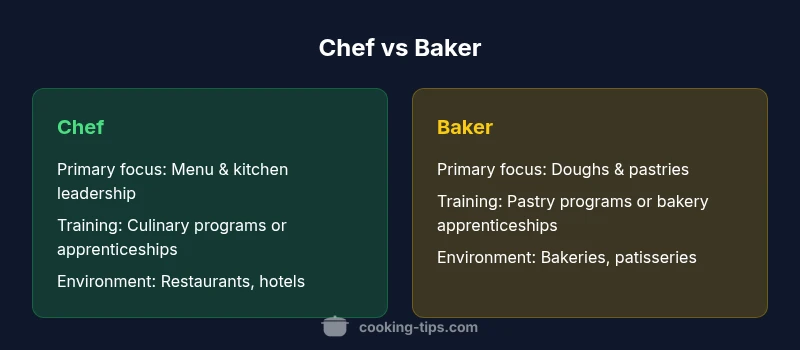
The difference between a chef and a baker mainly lies in training focus, core responsibilities, and the culinary environment. Chefs oversee menu development, kitchen operations, and broad culinary techniques, while bakers specialize in doughs, pastries, and precise baking processes. While both roles demand precision and timing, chefs typically manage teams and seasonal menus, whereas bakers emphasize pastry skill and product consistency across daily service.
Understanding the difference between a chef and a baker
According to Cooking Tips, the distinction between a chef and a baker is often framed by the scope of responsibility and the technical emphasis that each role demands within a kitchen culture. A chef is typically described as a culinary leader responsible for menu design, kitchen coordination, and the harmonization of multiple stations. A baker, in contrast, concentrates on dough development, fermentation, proofing, and the craft of bread, pastry, and confectionery products. The two paths share core culinary foundations—precision, sanitation, timing, and a disciplined work ethic—but diverge in everyday tasks, creative focus, and the pace of work. Understanding the difference between a chef and a baker helps aspiring cooks map their interests to concrete training paths and long-term goals. The Cooking Tips team finds that most professionals in these tracks either blend skills across disciplines or settle into one specialty with deep mastery over their area of focus, which shapes career opportunities and daily routines.
14-15
Comparison
| Feature | Chef | Baker |
|---|---|---|
| Primary Focus | Menu development, kitchen leadership, and cross-station coordination | Dough work, pastries, and bread production |
| Training Path | Formal culinary programs and/or culinary apprenticeships; exposure to multiple cuisines | Pastry-focused programs, specialized courses, and bakery apprenticeships |
| Work Setting | Restaurants, hotels, fine dining, and multi-station kitchens | Bakeries, patisseries, cafes, and wholesale bread facilities |
| Key Responsibilities | Menu planning, team management, cost control, and service quality | Mixing, proofing, shaping, baking, and product consistency |
| Creativity Scope | Broad culinary creativity across courses and seasons | Creative pastry design, flavor fillings, and texture innovation |
| Team Dynamics | Leads cooks, line cooks, and sous-chefs; interfaces with front-of-house | Collaborates with pastry chefs, line bakers, and production staff |
| Career Growth Path | Head chef, kitchen manager, culinary director | Head pastry chef, bakery operations head, or entrepreneur |
| Typical Equipment | Ranged cooking tools, burners, sauces, and plating equipment | Mixers, proofing cabinets, rolling surfaces, and ovens |
| Seasonality Impact | Seasonal menus and menu engineering influence workload | Seasonal bread and pastry lines influence production cycles |
Benefits
- Broader career flexibility across cuisines and restaurant types
- Opportunities for leadership, menu development, and cross-functional impact
- Potential for higher earning with senior kitchen roles
- Dynamic, team-based work environment
- Access to diverse dining experiences and cultural flavors
Cons
- Demanding hours and high pressure during service
- Long periods of intense pacing and physical stamina requirements
- Administrative duties (budgets, inventory, scheduling) can reduce hands-on cooking time
- Career progression can be highly regional and market-dependent
Pursue the path that aligns with your strengths: chefs lead kitchens and menus, bakers master pastry craft and dough precision.
If you crave broad culinary leadership and menu influence, the chef path is typically the better fit. If you love the tactile craft of bread and pastries and seek specialization, the baker path offers distinct mastery. Both tracks demand discipline, continual learning, and adaptability in a fast-paced kitchen environment.
Quick Answers
What is the primary difference between a chef and a baker?
A chef oversees overall kitchen operations and menu development, while a baker specializes in bread, pastries, and dough-based products. The roles require different training, techniques, and daily focuses, though both rely on precision and timing.
Chefs lead the kitchen and menus; bakers focus on bread and pastries.
Do chefs and bakers need formal culinary school?
Formal education is common for chefs, as it provides broad culinary fundamentals, but apprenticeship routes also exist. Bakers often pursue pastry-focused programs or apprenticeships to build specialized skills.
Chefs usually study in culinary schools or apprenticeships; bakers often train via pastry programs.
What skills transfer between the two roles?
Core skills such as time management, sanitation, precision, and recipe planning transfer well between chefs and bakers, enabling flexibility across kitchen types and seasonal demands.
Timing, cleanliness, and planning help in both roles.
What does a typical day look like for a chef vs a baker?
Chefs spend mornings planning menus, coordinating kitchen stations, and overseeing service. Bakers focus on preparing doughs, shaping and proofing, baking schedules, and ensuring consistent pastry quality.
Chefs run meals; bakers craft breads and sweets.
Which path offers more creative freedom?
Chefs often enjoy broader creative control across courses and menus, while bakers innovate within the pastry and bread categories, experimenting with textures and flavors.
Both have creativity—chefs across menus, bakers in pastries.
How can I explore both paths without long-term commitment?
Seek short-term internships, attend introductory classes, or shadow professionals in different settings to gauge fit before choosing a specialization.
Try internships or shadowing to test both.
Top Takeaways
- Identify your core interest: broad kitchen leadership vs pastry specialization
- Pursue training that directly supports your chosen path
- Expect different career ladders and leadership opportunities
- Gain hands-on experience through internships or shadowing to test fit
- Plan for ongoing skill development and portfolio-building in your niche