Difference Between Cook and Bake: An Analytical Guide
A rigorous, practical look at the difference between cook and bake, exploring heat, moisture, textures, and decision-making for everyday meals.


Cook and bake describe two distinct heat methods in everyday cooking. Cooking usually uses direct or moist heat on a stove, grill, or skillet, shaping foods through sautéing, boiling, or simmering. Baking relies on dry, even heat inside an oven to transform batter or dough into finished textures. Knowing these differences helps choose the right method for texture and flavor.
Defining terms: the difference between cook and bake
In everyday cooking, the words cook and bake describe two broad ways foods are brought to readiness, but they belong to different heat strategies. The phrase difference between cook and bake matters because it signals how heat is applied, how moisture moves, and what textures you can expect. At a high level, cooking typically relies on moisture or direct contact heat on the stovetop, while baking relies on surrounding dry heat inside an oven. For home cooks, recognizing this distinction helps you plan meals that reach the right tenderness, aroma, and crust without guesswork. The Cooking Tips team emphasizes that context matters: a skillet meal may finish with a sauce glaze (cooking), whereas a crusty loaf or a casserole with a golden top is usually baked. Throughout this guide, we’ll unpack the mechanics, provide practical examples, and offer a framework you can use to decide quickly whether your dish should be cooked or baked.
Heat transfer and how it shapes outcomes
Heat transfer is the invisible engine behind every cook vs bake decision. On the stove or grill, conduction and convective heat move directly through pan surfaces and surrounding air, often delivering rapid moisture loss or infusion. In cooking, moisture control is a frequent goal; simmering keeps liquids present, while sautéing reduces moisture to concentrate flavor. Baking, by contrast, relies on dry heat surrounding the food, with the oven acting as a stable chamber that drives moisture to leave the interior gradually and forms crusts through browning. This difference explains why bread rises and dries on top in an oven, while a pan-seared chicken breast stays juicy on the inside but may develop a crisp exterior. Understanding these heat transfer principles helps you predict texture and tenderness, adjust cooking times, and choose the best method for every ingredient. The takeaway is practical: match your chosen method to the temperature regime, moisture environment, and desired crust or crumb.
Food categories: when cooking applies vs baking applies
Cooking shines with foods that benefit from moisture, quick surface reactions, or sauce development. Think vegetables sautéed to caramelize, seafood given a light glaze, or eggs scrambled to a custardy texture. Baking is ideal for batters and doughs that rely on structure and dry heat to set, such as breads, muffins, casseroles with a crust, or custards that rely on a gentle bake to set evenly. These general categories aren’t exclusive—many dishes combine both approaches—but recognizing the core fit helps you design menus with consistent textures and predictable outcomes. According to Cooking Tips, recognizing the distinction upfront reduces guesswork when grocery shopping or planning a weekly dinner plan.
Tools, temperatures, and timing
Your toolkit shapes what you can achieve with cook vs bake. A wide skillet, a nonstick pan, and a simmering pot support moist-heat cooking, where timing dictates tenderness and moisture retention. Ovens and baking sheets are optimized for dry-heat environments, enabling even browning and crust formation through convection and radiant heat. Temperature control matters more in baking: small deviations can alter crumb structure or rise. In cooking, timing often centers on reaching a texture or doneness (e.g., al dente vegetables, medium-rare proteins). The key rule of thumb is to select heat sources that align with your target texture: moist, flexible interiors for cooking; crisp, browned exteriors and even crumb for baking.
Recipe structure and adaptation: converting between methods
Recipes are written with a specific method in mind, but kitchen creativity allows translation between cook and bake. When converting a baked recipe to stovetop cooking, reduce dry heat exposure and add moisture to mimic baking’s environment, watching for moisture loss and texture changes. Conversely, turning a stovetop dish into an oven bake often requires ensuring a stable crust or set interior, possibly by adjusting fat content or creating a controlled sauce-to-dry-heat ratio. Pay attention to pan size, vessel material, and airflow in ovens to avoid uneven results. The goal is to preserve the intended texture while leveraging the strengths of the chosen method.
Time, temperature, and texture outcomes
Time and temperature are the levers that determine texture in both methods. Bake times tend to be longer and more uniform due to even heat surrounding the food, with browning driven by Maillard reactions at higher dry-heat levels. Cooked dishes depend on surface reactions and moisture behavior, where shorter bursts of heat can suspend cooked-through textures with varied juiciness. Knowing typical temperature ranges for common baked goods (180–220°C) and stove-top preparations (low to medium heat adjusted per pan) helps you predict outcomes more reliably. This understanding reduces overcooking, undercooking, and texture surprises, supporting repeatable, satisfying results.
Common mistakes and how to fix them
A frequent error is assuming all browning is the same—baked goods should develop crusts through consistent dry heat, while over-crisping a pan-seared item can dry the interior. Another pitfall is neglecting moisture balance in baking recipes, where too much liquid yields dense textures. Conversely, cooks may over-rely on high heat, causing exterior browning before interior doneness. Fixes include checking oven calibration, using thermometer checks for internal doneness, and adjusting pan placement for even heat distribution. For home cooks, small tweaks—like adding a brief rest period after cooking or covering with foil to trap moisture—can dramatically improve results.
Practical decision framework: quick-start guide
Use this framework before you start: (1) Identify texture target (crisp crust vs. juicy interior). (2) Consider moisture needs (dry bake vs moist cook). (3) Check equipment availability (oven vs stovetop). (4) Estimate time constraints and plan accordingly. If you want crust and structure, bake; if you want quick sear or sauce development, cook. Remember, most dishes can be approached from either method with thoughtful adjustments to heat, moisture, and timing. This framework helps you decide in seconds while keeping your kitchen efficient and reliable.
Real-world scenarios: case studies
Scenario A: You want crusty roasted vegetables. A bake method in the oven produces even browning and a crisp exterior, especially with a light oil coating. Scenario B: You need a quick weeknight protein with a pan sauce. Cooking on the stove allows rapid heat manipulation and a flavorful reduction. Scenario C: A cornbread-like dish that benefits from a crumb structure benefits from baking. Across these examples, the difference between cook and bake guides texture, moisture, and timing. Cooking Tips analysis shows that choosing the right heat strategy reduces guesswork and improves outcomes.
Authoritative sources and references
- https://www.usda.gov
- https://www.fda.gov
- https://extension.illinois.edu (University extension pages often host practical cooking guidance)
Practical tips for everyday meals
- Start with the texture you want and pick the method that best achieves it.
- Calibrate your oven and pan materials for consistent results.
- Don’t fear combining methods: sear first, then finish in the oven to combine the benefits of both approaches.
- Use a thermometer and a timer to avoid guesswork, especially for proteins and baked goods.
- Record adjustments you make so you can repeat successful outcomes in future meals.
Comparison
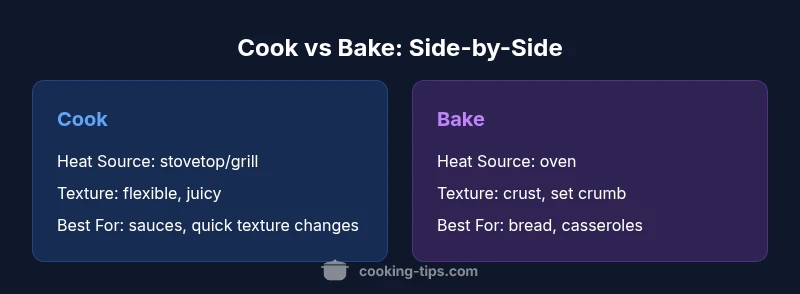
| Feature | Cook Method (Stove/Skillet) | Bake Method (Oven) |
|---|---|---|
| Heat Source | Direct or moist heat from stove, grill, or pan | Dry heat within an enclosed oven using ambient air |
| Primary Mechanism | Moist heat, surface reactions, contact transfer | Dry heat, browning, crust formation, and structure via Maillard reactions |
| Typical Textures | Juicy interiors, seared surfaces, infused sauces | Crusty exteriors, even crumb, set interiors |
| Best for | Sautéed vegetables, quick-cinish proteins, sauces | Breads, pastries, casseroles, custards |
| Typical Temperature Range | Low to medium heat, variable depending on dish | Moderate to high heat, stable oven temperature (often 180–220°C) |
Benefits
- Clarifies cooking choices and texture outcomes
- Helps plan meals with predictable moisture and browning
- Improves recipe execution and repeatability
- Supports better timing and pacing in the kitchen
Cons
- May oversimplify a broad set of techniques
- Does not cover all methods (grilling, steaming, etc.)
- Temperature ranges vary by ingredient and equipment
Cook and bake are complementary methods that, when understood, empower precise texture control.
In practice, use bake for crust and structure with dry heat, and cook for moisture, quick transformations, and sauce development. The two approaches—and knowing when to apply each—lead to consistent, delicious results.
Quick Answers
What is the core difference between cook and bake?
The core difference is the heat environment: cooking uses moist or direct heat on surfaces, while baking uses dry heat inside an oven to set structure and texture. This distinction guides texture, moisture, and timing decisions.
In short, cooking uses moisture and direct heat; baking uses dry heat in an oven for structure.
Can you bake on the stovetop?
Stovetop methods can mimic baking outcomes by using covered pans and oven-like environments on the stove, but true baking relies on enclosed dry heat in an oven. You can achieve crusts and set interiors with careful moisture management and controlled heat.
You can simulate baking on the stove with covered pans and precise heat, but true baking needs an oven.
What foods are best suited for baking versus cooking?
Baking is ideal for batters and doughs—bread, cakes, muffins—and dishes needing crusts, like casseroles. Cooking suits leafy greens, seafood, eggs, and quick-sautéed proteins where moisture retention and rapid flavor development matter.
Bake for breads and crusty dishes; cook for greens, seafood, and quick-protein meals.
How do time and temperature differ between the methods?
Baking typically uses a stable oven temperature and longer, uniform cooking times to set structure. Cooking varies widely with heat intensity and moisture, often finishing faster and with more texture variation.
Oven baking is more consistent in time and temperature; stovetop cooking varies more and finishes quicker.
Is roasting considered baking?
Roasting is a type of baking that uses dry heat, typically at higher temperatures, and is often applied to vegetables or meat to develop browning and a robust crust.
Roasting is a baking method using dry heat at higher temps.
Top Takeaways
- Know when to use moist vs dry heat
- Match method to texture goals (crisp crust vs juicy interior)
- Calibrate heat and timing for reliable results
- Leverage both methods for versatile meal planning