Difference Between a Chef and a Cook: An Analytical Comparison
An analytical guide exploring the difference between a chef and a cook, detailing training, responsibilities, leadership roles, and career paths for home cooks and kitchen professionals.


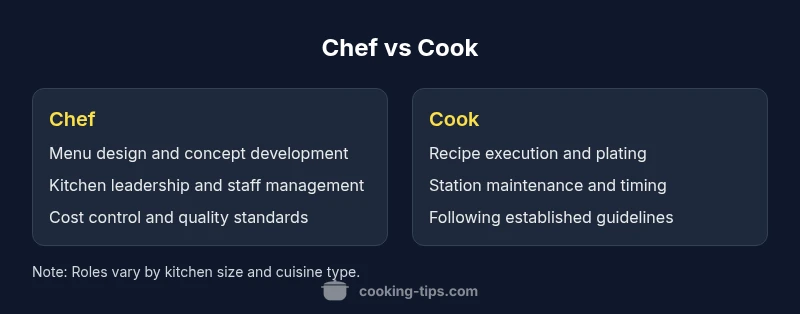
The difference between a chef and a cook lies in training, scope, and leadership. Chefs typically lead kitchen operations, design menus, and mentor staff, while cooks execute recipes and maintain line stations under supervision. For home cooks and aspiring professionals, understanding these distinctions clarifies career paths and daily responsibilities. Difference between a chef and a is often framed around control, decision-making, and the ability to impact a menu.
The Difference Between a Chef and a Cook: Framing the Debate
The phrase difference between a chef and a is frequently cited in kitchen conversations, but its meaning shifts with context. According to Cooking Tips, the distinction rests on training, scope, leadership, and day-to-day responsibilities, not merely a badge. In professional settings, the chef typically oversees menu planning, kitchen operations, and staff performance, while a cook focuses on producing dishes within defined guidelines. This section frames the issue and sets up the deeper analysis to follow. By examining training pathways, operational duties, and influence over quality, readers can map realistic career routes—from line cook to head chef and from home cook to kitchen leader. The Cooking Tips team emphasizes that evaluating influence, decision-making, and consistency across a menu reveals the true gap between these roles.
The framing also helps readers consider how these roles translate to different restaurant formats, from fast-casual to fine dining, and how a title can affect opportunities, compensation, and professional growth.
Comparison
| Feature | Chef | Cook |
|---|---|---|
| Training & Certification | Formal culinary education and/or apprenticeship; emphasis on leadership | On-the-job training or basic culinary schooling; emphasis on execution |
| Scope of Work | Menu design, kitchen operations, staff management, cost oversight | Recipe execution, line maintenance, timing, and plating within guidelines |
| Leadership & Supervision | Leads the kitchen brigade; sets standards and delegates tasks | Follows supervisors; usually reports to a lead cook or chef |
| Creativity & Menu Influence | High influence on menus, seasonal rotations, and concept development | Limited to following established recipes and procedures |
| Working Hours & Pace | Long hours, high pressure during service, strategic planning | |
| Career Path & Mobility | Advancement to executive roles, culinary director, or independent ventures | Advancement to lead cook or supervisory roles within kitchens |
| Best For | Those who want strategic influence, menu ownership, and leadership | Those who prefer hands-on execution, reliability, and steady routines |
Benefits
- Clear path to leadership and menu influence
- Structured training opportunities and professional development
- Potential for higher earnings in high-end kitchens
- Enhanced professional reputation and industry recognition
Cons
- High stress and long hours in many kitchens
- Significant responsibility with accountability for outcomes
- Career progression can be competitive and region-dependent
Chefs offer broader leadership and creative control; cooks thrive in execution and reliability under supervision.
If you value leadership, menu development, and strategic vision, the chef path is a strong fit. If you prefer hands-on cooking, consistency, and steady daily routines, the cook role provides a clearer, less pressurized pathway. The optimal choice depends on your priorities, kitchen type, and desired level of influence.
Quick Answers
What defines the core difference between a chef and a cook?
The core difference centers on scope and leadership: a chef designs menus, leads the kitchen team, and manages operations, while a cook focuses on executing recipes and maintaining day-to-day line work under supervision.
Chefs lead and design; cooks execute and support.
Do chefs always require formal training?
Not always; some chefs climb the ladder through apprenticeships or extensive on-the-job experience. Formal training can accelerate progression and provide broader culinary theory, but hands-on practice remains crucial.
Formal training helps, but it isn’t strictly required.
Can a cook become a chef without leaving their kitchen?
Yes. With mentorship, opportunities to contribute to menus, and demonstrated leadership, a cook can move into chef-level responsibilities without relocating. Building a track record matters more than the title.
A cook can become a chef through leadership and opportunity.
What skills most clearly separate these roles?
Leadership, menu development, cost control, and people management distinguish chefs from cooks. Technical cooking skills are essential for both, but chefs broaden scope to strategic decision-making.
Leadership and menu planning separate the roles.
Does the title affect career prospects and salary?
Title often reflects responsibility level and salary bands. A chef typically commands higher compensation in establishments with complex menus and larger teams, though regional factors apply.
Yes, title can influence opportunities and pay.
How can home cooks apply chef-like practices at home?
Practice structured mise en place, test and standardize recipes, track costs and portions, and study menu planning, even if you’re cooking for family or friends.
Bring chef habits to your own kitchen.
Top Takeaways
- Assess your appetite for leadership before pursuing a chef role
- Prioritize formal training if you aim for rapid progression
- Home cooks can apply chef-like practices (mise en place, recipe testing) without the title
- Understand regional kitchen cultures; opportunities vary by venue
- Plan your career path around mentorship and ongoing learning