Corn on the Cob How to Cook: A Complete Guide
Learn reliable methods to cook corn on the cob, including boiling, steaming, grilling, and microwaving. This practical, step-by-step guide covers timing, flavor ideas, and tips for perfect, juicy corn every time.


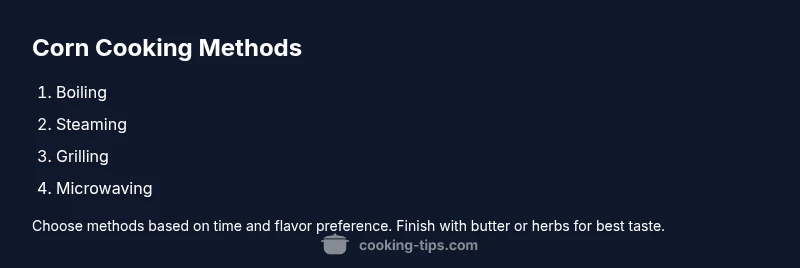
You can cook corn on the cob using boiling, steaming, grilling, or microwaving. Start with fresh ears, husked and silk removed. Have a large pot with water, tongs or grill tools, and optional butter or salt for finishing. This guide covers methods, timing, and flavor ideas so you get tender, sweet corn every time.
Choosing Corn: Freshness, Varieties, and Preparation
If you're exploring corn on the cob how to cook, start with fresh ears. According to Cooking Tips, selecting sweet corn at peak freshness yields the best flavor and a bright, crisp bite. Look for husks that are bright green and tightly wrapped around the ears, with silk that is light in color and not overly brown. Sniff the ears; a sweet, grassy aroma indicates ripeness. Try to buy ears with similar diameter so they cook evenly.
Different varieties offer subtle differences in sweetness and texture. Sugar-enhanced kernels stay tender a bit longer after harvest, while standard sweet corn delivers straightforward sweetness. If you’re cooking for a crowd, consider buying a mix of sizes and varieties so you can test a few methods (boiled, grilled, or microwaved) without overcooking any one batch.
Basic Cooking Principles: Heat, Timing, and Texture
Corn cooks through heat transfer, which softens the kernels and unlocks natural sugars. The goal is tender kernels that still offer a slight snap, not mush. Start with water at a steady boil, then adjust heat to keep a gentle simmer so the ears cook evenly. The difference between good and great corn often comes down to timing and handling: too short a cook preserves crunch and sweetness; too long makes the kernels mealy and dull.
Salt is optional in the cooking water; it won’t drastically change texture but can help enforce flavor. If you add salt, do so only after water returns to a boil to avoid toughening the husk. For grilling or roasting, you’ll want drier heat to caramelize the edges and intensify sweetness. In all methods, serve promptly after cooking to preserve aroma and juiciness.
Boiling Corn on the Cob: Step-by-Step Guide
Boiling is one of the easiest, most forgiving methods for corn on the cob. Here’s a concise approach to get great results without overthinking timing. Start with fresh ears, husk removed, and silk swept away. Bring a large pot of salted water to a rolling boil, then gently lower the ears into the water with tongs. Maintain a steady boil for 4-6 minutes, depending on ear size and sweetness. Once the kernels look glossy and are tender to a fork, lift the corn out and drain. Finish with a pat of butter and a touch of salt if desired. For serving, keep hot and cover with a clean towel to retain heat briefly. Cooking Tips suggests tasting a sample ear to confirm doneness and adjusting next time if needed.
Steaming, Grilling, and Roasting: Alternate Methods
Steaming preserves more moisture and can be gentler on delicate ears. If you use a steamer basket, place ears in a single layer and steam for 6-8 minutes. Grilling adds smoky flavor; husk-on or husk-off, directly on the grate, cook 8-12 minutes, turning occasionally. Roasting in the oven is another option; wrap ears in foil and bake at 400°F for 20-25 minutes. Each method has its fans; your choice depends on timeline and desired flavor.
If you’re in a rush, microwaving can be convenient. Place 1-2 ears on a microwave-safe plate with a splash of water, cover loosely, and cook 3-5 minutes per ear. Let rest a minute before serving; the steam continues cooking slightly.
Flavor Ideas and Finishing Techniques
Butter is classic; after cooking, brush ears with melted butter and sprinkle with kosher salt or a pinch of chili powder. Fresh herbs like chives, parsley, or cilantro add brightness; a squeeze of lime can cut through sweetness. For a savory twist, dust with smoked paprika or grated Parmesan. For a sweet option, a light drizzle of honey with a pinch of cinnamon pairs nicely with grilled corn. If you’re serving with grilled proteins, a compound butter (garlic-herb, chili-lime) can be a showstopper.
To keep corn juicy, avoid letting it sit too long after cooking; instead, serve immediately. For a “texas-style” finish, roll hot ears in a mixture of butter and finely grated cheese.
Troubleshooting Common Issues
Kernel toughness can result from ears being undercooked or harvested late; return to heat briefly and test again. Mushy kernels occur after overcooking; reduce time or remove earlier. Bland flavor can be fixed with a bit more salt or finishing butter and herbs. Dry corn usually means it sat too long after harvest or cooked in water that’s not hot enough. In grilling, keep heat moderate to avoid scorching; a short high-heat sear followed by indirect heat yields best results.
If steaming, ensure there’s enough water in the pot to prevent scorching and re-steam if needed. For microwaving, cover loosely to trap steam without trapping sogginess.
Storing, Reheating, and Leftovers
Short-term storage: Refrigerate unwashed ears for up to 2 days in the husk; remove husk after reheating. Reheat by boiling for 1-2 minutes, or rewarm on the grill or in the microwave until steaming hot. Leftovers can be cut from the cob and used in salads or salsas. If freezing, blanch first, cool quickly, and freeze in a single layer before bagging.
The Cooking Tips team recommends using leftover corn within a day or two for best texture and sweetness.
Tools & Materials
- Large pot (6-8 quarts)(Wide enough to fit ears in a single layer; at least 2-3 inches of water above ears when boiling)
- Water(Enough to fully submerge ears; add salt if desired after water comes to a boil)
- Tongs(For safe handling of hot ears)
- Sharp knife or kitchen shears(To trim silk or remove stubborn husks if needed)
- Butter or butter spray(For finishing flavor after cooking)
- Grill or grill pan(If finishing on the grill for smoky flavor)
- Steamer basket (optional)(For steaming method)
- Microwave-safe plate(For quick microwave method)
Steps
Estimated time: 15-20 minutes
- 1
Choose a pot
Pick a wide, deep pot large enough to hold ears in a single layer.
Tip: A well-sized pot ensures even cooking without crowding. - 2
Fill with water
Fill with water to cover ears by about 1 inch, and place on stove to boil.
Tip: Too little water leads to uneven cooking; aim for a generous coverage. - 3
Husk the ears
Peel back husks and remove silk from each ear.
Tip: Hold the ear steady with a towel to avoid slips. - 4
Lower ears into boiling water
Using tongs, gently slide ears into the rolling boil.
Tip: Don't crowd the pot; work in batches if needed. - 5
Boil until tender
Maintain a steady boil for 4-6 minutes, testing for tenderness with a fork.
Tip: Keep ears out of the water once they reach tenderness to avoid overcooking. - 6
Remove and finish
Lift ears with tongs, drain well, and finish with butter and salt if desired.
Tip: Serve immediately for best texture and sweetness. - 7
Serve or hold warm
Keep hot, covered briefly if needed, and present with optional toppings.
Tip: A light salt bloom enhances sweetness right before serving.
Quick Answers
What is the best method to cook corn on the cob?
There isn't a single best method; boiling, steaming, grilling, and microwaving all work depending on time and flavor goals.
There isn't one best method; you can choose boiling, steaming, grilling, or microwaving based on your time and taste.
How long do you boil corn on the cob?
Boil 4-6 minutes after the water returns to a boil; adjust for ear size and sweetness.
Boil for about 4 to 6 minutes after the water boils, depending on ear size.
Should I husk corn before boiling?
Yes, husk and silk removal is typical for boiling; you can leave husks on for steaming.
Yes, remove the husk and silk before boiling for the best texture.
Can you cook corn on the cob in the microwave?
Yes. Place 1-2 ears on a microwave-safe plate with a splash of water, cover loosely, and cook 3-5 minutes per ear.
Yes, you can microwave corn in about 3 to 5 minutes per ear.
How can I test if corn is cooked properly?
Pierce a kernel with a fork; it should be tender but not mushy.
Pierce a kernel with a fork; it should be tender, not mushy.
Is corn on the cob healthy?
Corn provides fiber and vitamins; enjoy with modest butter or toppings for a balanced plate.
Corn has fiber and vitamins; enjoy with a moderate amount of butter.
Watch Video
Top Takeaways
- Choose fresh corn for best flavor.
- Boiling is quick and forgiving for multiple ears.
- Cook 4-6 minutes for tender, crisp kernels.
- Finish with butter and salt to taste.
- Experiment with grilling or microwaving for variety.