Is It OK to Cook Slightly Frozen Chicken?
Learn how to safely cook chicken that’s still slightly frozen. Temperature targets, methods (oven, skillet, air fryer), and practical steps help prevent undercooked meat while saving time.


Yes. It’s permissible to cook chicken that’s still slightly frozen, provided you reach an internal temperature of 165°F (74°C) in all parts and finish with even doneness. Cooking times will be longer than fully thawed meat, and safety depends on avoiding partial cooking then finishing later. Use a thermometer and adjust methods accordingly.
Why safety matters when cooking slightly frozen chicken
According to Cooking Tips, poultry safety hinges on heat reaching a safe internal temperature throughout the meat. Starting from a slightly frozen state increases the risk of uneven heating, so you must plan for longer cook times and thorough heat distribution. When handling chicken, wash your hands, use clean surfaces, and avoid cross-contamination with ready-to-eat foods. Even small ice pockets can slow heat transfer, creating cold spots where pathogens can survive. To minimize risk, assume the thickness of the meat varies and use a thermometer to verify doneness in the thickest part of the largest piece. This approach aligns with USDA guidelines and helps home cooks stay confident during busy weeknights.
Choosing the right method also matters. Oven roasting, skillet searing, or air-frying all have distinct heat patterns. By maintaining uniform contact with heat and not crowding the pan, you improve the odds that every inch of the chicken reaches 165°F. For many cooks, the question isn't whether it's safe to cook slightly frozen chicken, but how to do it consistently so the result is juicy, safe, and flavorful. The Cooking Tips team emphasizes preparation, careful cooking, and a thermometer as the triad of safe practice.
Food safety fundamentals: temperature, cross-contamination, and thawing options
Food safety experts emphasize three pillars when cooking chicken from any state: temperature, prevent cross-contamination, and mindful thawing when possible. Cooking chicken from a partially frozen state means you must ensure the entire piece reaches a minimum safe temperature and remains there long enough to neutralize potential pathogens. Cooking Tips analysis shows that using an instant-read thermometer dramatically improves safety and outcomes, since visual cues are unreliable with frozen edges. Always use separate cutting boards for raw poultry and ready-to-eat foods, and wash tools between tasks. If you have time, thawing in the refrigerator is the safest option, taking roughly a day or more for larger pieces; cold-water thawing can shorten this, but requires more attention and quicker cooking. When in a hurry, cooking from slightly frozen is acceptable with the right technique, but never skip temperature checks or overcrowd the pan. Adhering to these principles minimizes the risks without sacrificing convenience.
Is it safe to cook slightly frozen chicken? What the guidelines say
Is it safe to cook slightly frozen chicken? The short answer is yes, as long as you reach 165°F throughout and avoid partial cooking that leaves cold spots. The USDA emphasizes that poultry should be cooked to a safe internal temperature, and that any icy portions should be heated through in the final stage. Cooking Tips and other respected sources align with this guidance, suggesting that starting from a partially frozen state simply requires more time and careful heat distribution. If you choose to cook from frozen, consider methods that keep heat evenly distributed, such as oven roasting or air frying rather than a long, shallow cook on the stove. Regardless of method, a reliable thermometer is your best ally.
How thickness and distribution affect doneness
How thickness and distribution affect doneness. Chicken pieces vary in thickness; even a single breast can have a dense core while the edges shrink. Slicing or pounding to uniform thickness before cooking helps heat travel evenly, but if you’re starting slightly frozen, uniformity matters even more. When you can, flatten thicker portions with a gentle pound or use boneless, skinless pieces that cook more evenly. Keep temperatures steady and avoid moving pieces around too much at first, as this can lead to uneven browning. Use a thermometer in the thickest part to judge when you are near the safe range, then finish with targeted heating to reach 165°F.
Cooking methods compared: oven, stovetop, and air fryer
Different methods distribute heat differently, and this matters when chicken is not fully thawed. Oven roasting provides steady, ambient heat that can handle partial freezing better than a quick sear. Stovetop cooking gives you fast control but requires frequent turning and monitoring to prevent cold spots. Air fryers excel at crisping the exterior while promoting even heat inside, which is helpful for slightly frozen meat. Choose a method based on your priorities: convenience, texture, and how much time you have. Regardless of method, finish with a thermometer check.
Tip: If you’re new to cooking from frozen, start with smaller, boneless pieces to gain confidence before attempting a whole breast or thigh.
Step-by-step method for a safe, even cook (stovetop and finish in oven/air fryer optional)
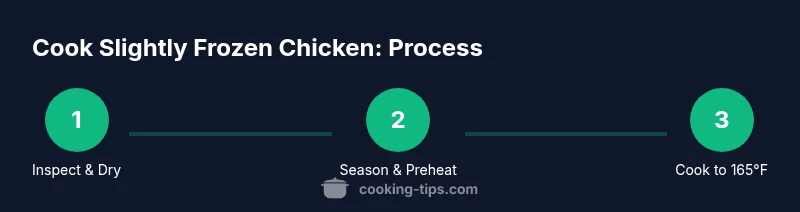
- Inspect and pat dry the chicken. 2) Season evenly on all sides. 3) Preheat your chosen cooking method to a moderate heat. 4) Place chicken in the hot pan or tray and cook until the exterior begins to brown and the surface shows even heat. 5) Insert an instant-read thermometer into the thickest part; if it hasn’t reached 165°F, continue cooking with gentle, even heat until the target is met. 6) Remove from heat and let it rest for several minutes before serving. These steps help ensure safety and flavor, even with slightly frozen chicken.
Practical tips to optimize flavor and texture
- Use a neutral oil for browning to improve exterior texture without overpowering the chicken’s natural flavor. - Avoid crowding the pan; give each piece space to heat evenly. - Let the meat rest briefly after cooking to redistribute juices and improve juiciness. - Always verify the final temperature with a thermometer; color alone is not a reliable indicator. - If you plan to glaze or sauce, apply at the end to prevent under- or over-cooking.
Common mistakes to avoid
- Relying on color alone to judge doneness; it can be misleading in partially frozen meat. - Not using a thermometer, which increases the risk of undercooked portions. - Crowding the pan, which causes uneven heating and longer cooking times. - Removing meat too soon, only to finish later in the oven or pan; partial cooking can still leave cold spots. - Skipping resting time, which can seize juices and make the meat drier.
Authority sources
- USDA: https://www.usda.gov/
- USDA FSIS Poultry Safety: https://www.fsis.usda.gov/food-safety
- CDC Food Safety: https://www.cdc.gov/foodsafety/index.html
Tools & Materials
- Instant-read thermometer(Critical to verify 165°F throughout)
- Non-stick skillet or oven-safe pan(Choose based on chosen method)
- Cooking oil (neutral, e.g., canola or vegetable)(Optional for browning)
- Salt and pepper or preferred seasoning(Season evenly on all sides)
- Tongs or spatula(For safe handling and turning)
- Cutting board(Sanitary prep surface for raw poultry)
Steps
Estimated time: variable; depends on method and thickness
- 1
Inspect and pat dry chicken
Check the chicken for any ice crystals and pat it dry with clean paper towels. This helps heat penetrate evenly and reduces splatter. Keep your workspace clean and sanitize surfaces as you go.
Tip: Patting dry aids browning and even cooking. - 2
Season evenly
Even seasoning on all sides enhances flavor and helps heat distribution. If you’re using extra aromatics, add them now so the scents meld during cooking.
Tip: Seasonings should cling to the surface; avoid washing the spice off with water. - 3
Preheat your cooking method
Preheat the oven, skillet, or air fryer to a moderate heat before adding the chicken. This reduces the likelihood of cold spots and promotes uniform browning.
Tip: Preheating is especially important for slightly frozen meat to reduce the time to safe doneness. - 4
Cook until exterior browns
Place the chicken in the hot pan or tray and cook until the outer layer browns and the surface shows even heat. Avoid moving pieces too much at first to maintain contact with heat.
Tip: Crowding delays browning and can create undercooked centers. - 5
Check internal temperature
Insert the thermometer into the thickest part without touching bone. If the reading is below 165°F, continue cooking in small increments until the target is reached.
Tip: Take readings from multiple spots if you’re unsure about thickness variation. - 6
Rest before serving
Let the chicken rest for a few minutes after removing from heat. Resting redistributes juices and improves juiciness.
Tip: Resting is essential; slicing too soon leads to a drier result.
Quick Answers
Is it safe to cook chicken that is only slightly frozen?
Yes, it’s safe as long as the chicken reaches 165°F throughout and you avoid partial cooking. Use a thermometer to confirm doneness and choose heat methods that promote even heating.
Yes, you can cook slightly frozen chicken safely by ensuring it reaches 165 degrees and using a thermometer to confirm.
Should I thaw chicken in the fridge before cooking?
If you have time, thawing in the fridge is the safest option. However, you can cook from slightly frozen with careful heat and thermometer checks.
If possible, thaw in the fridge; if not, cooking from slightly frozen works with careful checks.
What is the best method for slightly frozen chicken?
Oven roasting or air frying tends to give even heat and good texture for slightly frozen chicken, compared to quick pan searing alone.
Oven or air fryer generally works best for even cooking from slightly frozen.
How do I check doneness safely?
Use an instant-read thermometer inserted into the thickest part, away from bone. Look for 165°F and verify in multiple spots if needed.
Use a thermometer and check multiple spots if the piece is thick.
Will the texture be different when cooking from frozen?
Yes, there can be slight differences in moisture and texture, especially near the center. Proper rest and careful heat help improve the result.
Texture may be a bit different, but rest and proper heat help.
Watch Video
Top Takeaways
- Check the entire chicken with a thermometer for 165°F
- Avoid relying on color alone to judge doneness
- Use even heat and avoid crowding the pan
- Rest the meat before serving for better juiciness