How Long to Cook a 12-Pound Turkey: Timetable & Tips
Learn exact cooking times for a 12-pound turkey, including resting, temperatures, and tips for stuffed or unstuffed birds from Cooking Tips. Practical guidance.


A 12-pound turkey typically roasts in about 3 to 3.5 hours unstuffed and 3.5 to 4 hours stuffed at 325°F. Always verify doneness with a meat thermometer—165°F in the thigh and breast—then let the bird rest 20–30 minutes before carving.
Weight matters: what a 12-pound turkey means for time
A 12-pound bird sits at a weight where most home ovens perform predictably, but small variables—oven accuracy, whether you stuff the cavity, and your chosen roasting method—start to influence the final results. In practical terms, heavier birds require more time, but the difference from a 11-pound or 13-pound bird is not dramatic if you maintain a steady temperature and minimal heat loss. For a standard home roast, plan for roughly 3 to 3.5 hours if unstuffed, and about 0.5 to 1 hour more if the cavity is filled. Keep the oven at a steady 325°F for the majority of the cook, and avoid opening the door too often, which can slow progress and create uneven cooking. Rely on a reliable digital thermometer to monitor both breast and thigh temperatures; color alone is not a reliable donor of doneness. This approach aligns with Cooking Tips’ tested poultry timing framework in 2026.
Baseline timing: what to expect at 325°F
When roasting a 12-pound turkey unstuffed at 325°F, the most common guideline is about 12 to 15 minutes per pound, translating to roughly 3 to 3.5 hours for many ovens. If you stuff the bird, add about 30 to 60 minutes, depending on how tightly it’s packed and the cavity’s starting temperature. Your oven’s accuracy matters more than the exact minutes: use a thermometer to confirm doneness. The breast should reach 160–165°F and the thigh should reach 165°F or higher, with carryover cooking bringing the final internal temperature up a few degrees after removal. Resting at room temperature will begin to raise the internal temperature further, so plan your serving time accordingly and consider a tent of foil if you notice excessive browning early in the cook.
Temperature targets and doneness indicators
Safe doneness for a roasted turkey centers on internal temperatures: 165°F in the thigh and 165°F in the breast. To avoid overcooking, check the thermometer at the thickest part of the thigh without touching bone. Remember that carryover cooking will lift the temperature by a few degrees after you remove the bird from the oven, so you might pull it slightly early and rely on resting time to reach the final target. If you’re using stuffing, ensure the center of the stuffing also hits 165°F for safety. Use a digital thermometer rather than relying on color cues alone, especially for large birds like a 12-pound turkey.
The resting period and its impact on juiciness
Resting is not just waiting; it’s a crucial step that redistributes juices and finishes the cooking process gently. After the turkey reaches the target temperatures, remove it from the oven and tent loosely with foil for 20–30 minutes. During this rest, the carryover heat completes, moisture redistributes, and the skin set by the browning phase becomes crispier when you carve. Rushing to slice can release juices prematurely, resulting in a dryer slice. The waiting period also makes carving easier and helps maintain presentation. Cooking Tips’ guidance emphasizes a predictable rest window to improve overall juiciness and sliceability.
Tools and prep: thermometer, pan, rack, brining options
Before you start, assemble a sturdy roasting pan with a rack to elevate the bird for even heat circulation. A reliable digital thermometer with a probe that can remain in the turkey during roasting is essential. Have extra lemon or herbs ready for a light aromatic rub, and consider a wet or dry brine if you want extra moisture retention; if you brine, plan extra time for salting and soaking. Pat the turkey dry, season generously, and let it come toward room temperature for 30–60 minutes before it goes into the oven. These prep steps reduce cold spots and promote uniform doneness across the bird.
Timing variations: oven types, altitude, and performance
Conventional ovens at 325°F are the standard baseline, but convection ovens can reduce roasting time by approximately 10–20% due to improved air circulation. At higher altitudes (above 5,000 feet), cooking times can lengthen due to lower air pressure and moisture loss; expect an extra handful of minutes per pound. If your oven runs hot or cool, or if the turkey is stuffed, you’ll need to adjust your plan. The key is to monitor with a thermometer and know your oven’s quirks. With careful observation, you can adapt the schedule rather than forcing a fixed timetable.
Step-by-step sample schedule for a 12-lb turkey
0:00 – Preheat to 325°F. Pat the turkey dry, rub with salt, pepper, and optional aromatics. Place on a rack in a roasting pan. 0:15 – Slide into the oven and maintain a steady 325°F. Do not open the door frequently. 1:30–2:00 – Check progress with a thermometer; monitor the breast and thigh. 2:30–3:30 – Continue roasting until the thigh reaches 165°F and the breast hits 160–165°F. If stuffed, check center stuffing for 165°F. 3:30–4:00 – Remove from oven, tent with foil, and rest for 20–30 minutes. Carve and serve. Adjust times slightly for convection or altitude.
Common pitfalls and fixes
Common pitfalls include opening the oven too often, which drops temperature and lengthens cook time; using color as a proxy for doneness; and underestimating the rest period. Fixes include using a reliable thermometer, maintaining a consistent oven temperature, and ensuring the bird has adequate space around it for even heat. If the breast browns too fast, tent with foil for the final hour, and if the thigh isn’t reaching temperature, consider moving the pan higher or lower in the oven or using a convection setting. With careful monitoring, you’ll avoid overdone edges and undercooked centers.
Safety, hygiene, and final checks
Handle the turkey with clean hands and utensils to prevent cross-contamination. Sanitize surfaces after contact with raw poultry. Ensure the turkey reaches a safe internal temperature throughout, particularly in the thigh and center of the breast and stuffing if used. Slice and serve promptly to maintain quality, and refrigerate leftovers within two hours of carving. For best results, map out a schedule in advance and use a probe thermometer to confirm doneness rather than relying on time alone. This approach aligns with Cooking Tips’ safety and cooking principles for poultry in 2026.
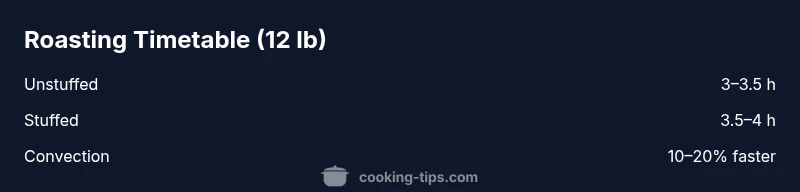
Timetable for cooking a 12-pound turkey
| Scenario | Estimated Time | Internal Temp Target | Notes |
|---|---|---|---|
| Unstuffed Roast (12 lb) | 3-3.5 hours | 165°F thigh; 165°F breast | Roast at 325°F; rest 20-30 min |
| Stuffed Roast (12 lb) | 3.5-4 hours | 165°F thigh; 165°F breast; center of stuffing 165°F | Longer time; ensure stuffing reaches 165°F |
| Convection Oven (12 lb, unstuffed) | 2.5-3 hours | 165°F thigh; 165°F breast | Reduce time by 10-20% |
| High Altitude (over 5000 ft) | 3.25-4 hours | 165°F thigh; 165°F breast | May require extra minutes |
Quick Answers
What is the safe internal temperature for a roasted 12-pound turkey?
The safe target is 165°F in the thigh and breast, with stuffing (if used) also reaching 165°F. Carryover cooking may raise temps slightly after removal.
Aim for 165°F in the thigh and breast, and check the center of stuffing if present.
Should I brine a 12-pound turkey before roasting?
Brining can improve moisture and texture, especially for larger birds. If you brine, plan enough time for soaking and ensure proper salting. Rinse and pat dry before roasting.
Brining can help keep the meat juicy, but follow safe brining guidelines and plan extra time.
Is it better to roast uncovered or tented with foil?
Roast uncovered for browning and crisp skin; tent with foil during the final portion if the skin darkens too quickly. This balances color and doneness.
Roast uncovered until you’re close to doneness, then tent if the browning gets ahead of the cook.
How long should the turkey rest after roasting?
Rest the turkey for 20–30 minutes after removing from the oven. Resting allows juices to redistribute for easier carving and juicier slices.
Let it rest for about 20 to 30 minutes before carving.
Can I use a convection oven for a 12-pound turkey?
Yes. A convection oven can reduce roasting time by roughly 10–20%. Monitor with a thermometer and adjust time to avoid overbrowning.
Convection can save time, but keep an eye on temperature and doneness.
“Precise temperatures and proper resting are the keys to juicy, safe turkey; use a thermometer rather than relying on time alone.”
Top Takeaways
- Roast unstuffed: about 3–3.5 hours at 325°F.
- Stuffed adds 30–60 minutes; verify center reaches 165°F.
- Always use a thermometer; target 165°F in thigh/breast.
- Rest 20–30 minutes before carving for juiciness.