How Long to Cook a 20-Pound Turkey: A Home Cook's Guide
A practical, step-by-step guide for home cooks on cooking a 20-pound turkey safely and juicily, with timing, temperatures, resting, and common pitfalls.


Goal: roast a 20-pound turkey safely and juicily with even doneness. Plan to roast at 325°F, verify a minimum internal temperature of 165°F in the thigh, and budget roughly 4.5–5 hours for an unstuffed bird (add 15–30 minutes if stuffed). Gather a roasting pan, an accurate instant-read thermometer, a meat probe, and a timer for best results.
The objective: juicy, safely cooked 20-pound turkey
Cooking a 20-pound turkey presents a timing and temperature challenge for home cooks. The goal is to produce a safely cooked, juicy centerpiece without overcooking the outer parts. If you're wondering how long 20 pound turkey cook, you’ll find that time varies with stuffing, oven heat, and bird shape. A practical approach combines a steady roasting temperature (325°F), careful preparation, and a reliable thermometer. By following a tested plan, you can predict doneness, minimize dry breast meat, and keep the skin crisp and the meat tender. In this guide, we’ll walk through precise times, doneness targets, prep steps, and resting techniques to help you serve a memorable holiday or weekend meal. According to Cooking Tips, planning with a thermometer-first mindset reduces guesswork and increases confidence at the table.
Size, weight, and doneness expectations
A 20-pound turkey is a sizable bird that challenges even seasoned home cooks. Weight affects how heat penetrates the meat, so larger birds need a longer, steady roasting time. Whether you’re roasting unstuffed or stuffed changes the clock: stuffing adds mass that must reach the same safe internal temperature. A practical rule of thumb is to aim for steady roasting at 325°F and monitor the thigh’s internal temperature rather than relying on time alone. The Cooking Tips team notes that the best indicator of safety and juiciness is a thermometer check rather than a clock. Expect roughly 4.5–5 hours for an unstuffed turkey of this size; plan for an additional 15–30 minutes if the bird is stuffed, and recheck the temperature before resting.
Temperature basics and safe doneness
Safety first: the USDA recommends cooking poultry to a final internal temperature of 165°F in the thickest part of the thigh to ensure all pathogens are destroyed. To avoid a dry breast, test the thigh and also monitor the breast temperature near the center. Remember that meat temperatures continue to rise a few degrees after you remove the turkey from the oven, so you may pull it at 160–162°F in the breast and let carryover heat finish the job. Use a calibrated instant-read thermometer for accurate results, inserting it into the deepest part of the thigh without touching bone. This section helps you translate time into safe, delicious doneness.
Prep: thawing, brining, seasoning options
Proper thawing makes a big difference: plan to thaw in the fridge for roughly 24 hours per 4–5 pounds of turkey, meaning about 4–5 days for a 20-pound bird. Brining is optional but can boost moisture; if you choose to brine, factor in extra time for brine setup and soaking. For seasoning, mix softened butter or olive oil with salt, pepper, and herbs like thyme, rosemary, and garlic. Rinse and pat dry the bird before applying the rub; a dry surface helps the skin crisp. Remember to remove giblets and neck from the cavity, and pat the inside dry as well. Cooking Tips suggests keeping the skin taut and evenly coated to promote browning.
Roasting plan: oven setup, pan, rack, tenting, and basting
Preheat the oven to 325°F and place a rack in the roasting pan. A rack keeps the bird elevated for even heat circulation and crisp skin. Brush or rub the skin with melted butter or oil, then season generously with kosher salt and pepper. Roast uncovered to start to promote browning, then tent with foil if the skin darkens too quickly. Basting is optional; a light glaze of butter in advance helps with flavor but frequent basting can cool the oven and slow browning. Plan to check internal temperature in the thigh after the first 2–3 hours, then every 30–45 minutes as it nears doneness. Shoulder and breast may reach temperature at different times; trust the thermometer rather than time alone.
Resting, carving, and serving for juiciness
Once the thermometer hits 165°F in the thigh (and the breast is near 160–162°F), remove the turkey from the oven and let it rest, tented loosely with foil, for 20–30 minutes. Resting lets juices redistribute, resulting in easier carving and moister meat. Carve the turkey in sections (thighs, drumsticks, wings, and breast) to help preserve moisture on serving trays. For best results, serve the carved slices with pan drippings or a light gravy.
Troubleshooting and common mistakes
If the breast cooks faster than the thighs, tent the turkey with foil to prevent further browning while the legs finish cooking. For very pale skin, finish under the broiler for 2–4 minutes, watching closely. If you notice dry breast meat, consider starting with a butter rub, keeping the oven steady, and avoiding the urge to baste too frequently. If the thermometer reads under 165°F in the thigh near the end, continue roasting in 10–15 minute increments until the target is reached.
Authority sources and quick-reference cheat sheet
- USDA poultry cooking guidelines: safe internal temperatures for turkey. - Extension services from land-grant universities provide decently detailed roasting timelines. - The Cooking Tips team emphasizes thermometer-based doneness checks for consistency.
Tools & Materials
- Roasting pan with rack(Heavy-duty metal pan; rack keeps turkey elevated for even heat)
- Instant-read meat thermometer(Probe into thigh without hitting bone; target 165°F (74°C))
- Butter or olive oil(For skin crispness and flavor; helps seasoning adhere)
- Kosher salt(Generous coating; helps season the meat and skin)
- Black pepper and dried herbs(Optional depth of flavor; use sparingly on skin)
- Aluminum foil(Tent the turkey if the skin browns too quickly)
- Kitchen twine(For optional trussing of legs and wings)
- Paper towels and cutting board(Keep surfaces clean and dry for safety)
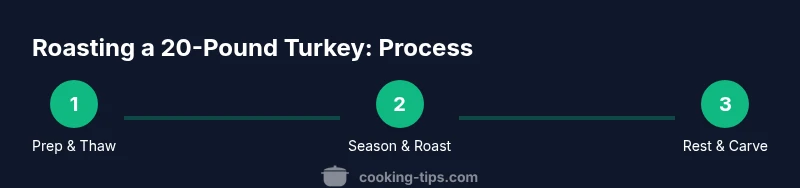
Steps
Estimated time: Total time: 4 hours 30 minutes to 5 hours 30 minutes (oven at 325°F)
- 1
Thaw and prepare
Move the thawing process to a safe fridge environment. Remove giblets and neck, pat the cavity dry, and prepare any brine or rub you plan to use.
Tip: Patting dry helps skin crisp; avoid rinsing the turkey to minimize cross-contamination. - 2
Preheat and position rack
Preheat the oven to 325°F. Place a rack in the roasting pan to elevate the turkey for even heat contact on all sides.
Tip: A good rack ensures airflow around the bird for uniform browning. - 3
Prepare skin and seasoning
Mix softened butter with salt and herbs, then rub under and over the skin where possible for flavor and moisture; don’t forget the cavity.
Tip: Spreading butter under the skin helps baste moisture into the meat as it cooks. - 4
Truss and start roasting
If desired, truss the legs with kitchen twine. Place the turkey breast-side up in the pan and slide it into the oven.
Tip: Trussing reduces shape loss and helps wings and legs cook evenly. - 5
Monitor heat and tent if needed
Roast uncovered for browning, then tent with foil if the skin darkens too quickly while the thighs approach doneness.
Tip: Foil tenting preserves moisture without stalling browning. - 6
Check internal temperature
Insert the thermometer into the thickest part of the thigh (not touching bone). When it hits 165°F, remove from oven or keep warm until other parts finish.
Tip: Rely on thermometer rather than a clock for final doneness. - 7
Rest the turkey
Let the turkey rest loosely tented with foil for 20–30 minutes before carving to redistribute juices.
Tip: Rest time is where the juiciness really settles; don’t rush to carve. - 8
Carve and plate
Carve in sections for even portioning and garnishing; spoon pan drippings or make a quick gravy to finish the plates.
Tip: Carve against the grain and slice once the meat has settled after resting.
Quick Answers
Should I stuff a 20-pound turkey, and how does that affect cooking time?
Stuffing adds mass that must reach a safe temperature, typically extending total cooking time. If you stuff, plan for longer roast and test the center of the stuffing to 165°F in addition to the thigh.
Stuffing can extend cooking time. Make sure both the turkey and the center of the stuffing reach 165°F before serving.
Can I cook at 350°F instead of 325°F?
Cooking at 350°F reduces total time but increases risk of dry breast meat if not monitored closely. If you choose a higher temperature, check the thermometer earlier and consider finishing with a tent and resting.
Yes, you can cook at 350°F, but monitor carefully to prevent drying and use a thermometer.
What is the best way to ensure the breast stays juicy?
Butter or oil on the skin helps with browning and moisture. Avoid over-basting and consider spatchcocking or starting with breast-side up to even out heat distribution.
Use fat on the skin and avoid over-basting; monitor with a thermometer for best results.
How should I thaw a 20-pound turkey safely?
Thaw in the fridge for roughly 24 hours per 4–5 pounds, which means about 4–5 days for a 20-pound bird. Keep it in its original packaging and place on a tray to catch any drips.
Thaw in the fridge, about 4–5 days for a 20-pound turkey.
How long should I rest the turkey after roasting?
Rest the turkey for 20–30 minutes, tented loosely with foil. This allows juices to redistribute for moister slices.
Let the turkey rest for 20 to 30 minutes before carving.
What about thermometer placement to avoid bone interference?
Insert the thermometer into the thickest part of the thigh, avoiding contact with bone. Check multiple spots if possible to confirm even doneness.
Test in the thigh away from the bone for accurate results.
Watch Video
Top Takeaways
- Roast at a steady 325°F for even cooking.
- Internal temperature is the only reliable doneness check.
- Allow 20–30 minutes of rest before carving.
- Stuffing changes timing; test thoroughly before serving.