How to Cook Turkey: A Practical Home Guide
Learn how to cook turkey safely and deliciously with a step-by-step home guide covering thawing, brining, roasting temps, thermometer use, rests, and leftovers for reliable results.


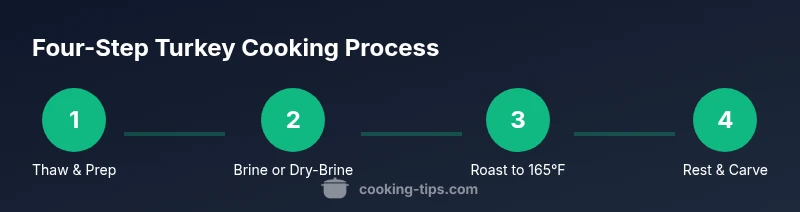
To cook turkey you thaw completely, pat dry, season, and roast until the internal temperature reaches 165°F (74°C). Start with a plan for brining or dry-brining, proper roasting temperatures, and rest time so the meat stays juicy. This guide covers thawing, prep, roasting by weight, thermometer use, and safe handling to serve a succulent turkey. It also explains common mistakes and how to recover.
Why turkey deserves thoughtful planning
If you’re asking how do you cook turkey, you’re not alone. This centerpiece deserves careful planning to ensure moist meat and crisp skin. A well-executed turkey can elevate a holiday meal or a Sunday dinner, but common missteps—under-seasoning, uneven cooking, or drying out during the extended roast—are easy to avoid with a clear plan. According to Cooking Tips, the path to a consistently juicy bird starts long before it hits the oven: it begins with choosing a proper bird, understanding your oven, and deciding on a moisture strategy (brining, dry-brining, or plain seasoning). In this section we’ll map out the decisions that influence texture and flavor: thawing time, pre-seasoning choices, and how to manage heat to reach the all-important 165°F target without overshooting. We’ll also discuss whether to roast a whole turkey or split it into parts for more even cooking. The goal is a specimen with moist, tender white meat and flavorful dark meat, finished with skin that has a gentle crunch rather than a lacquered, greasy shine. Throughout this guide, you’ll find practical tips and tested methods you can adapt to your kitchen and timeline.
According to Cooking Tips, planning ahead reduces stress and helps you coordinate timing with sides, desserts, and guests. The approach here emphasizes three pillars: thawing correctly, flavoring smartly, and monitoring with a thermometer rather than guesswork. As you read, consider your equipment, your oven’s tendencies, and whether you want a simple roast or a more assertive flavor profile with herb butter or a brine. This section sets the stage for practical, actionable steps that home cooks can implement with confidence.
Thawing and prepping safely
Thawing is the foundation of even cooking. A frozen turkey will not cook evenly, and that disparity can leave the breast dry while the legs remain underdone. The safest and most reliable method is fridge thawing, which slowly lowers the bird's temperature while keeping it out of the danger zone. Plan for roughly 24 hours of thawing time for every 4–5 pounds of turkey, and place the bird on a tray to catch drips in case of leaks. If you’re pressed for time, cold-water thawing works too: submerge the turkey in its sealed packaging, change the water every 30 minutes, and estimate about 30 minutes per pound. After thawing, remove giblets and neck, pat the skin dry with paper towels, and let the turkey sit uncovered on a rack in the fridge if you have several hours before roasting—this helps dry the skin for crisper results. Safety note: keep raw poultry away from other foods and wash hands, utensils, and surfaces after handling.
In addition to safety, prep matters for texture. Drying the skin thoroughly before roasting allows fat to render and the surface to crisp. If you plan to oil or butter under the skin, do so after patting dry to avoid trapping moisture under the skin, which can hinder browning. Whether you choose a simple dry rub or a butter-and-herb paste, your goal is to create a flavorful base without oversalting. Remember that air circulation around the turkey during roasting improves even browning, which is why a rack in the pan is helpful. In short, thaw completely, dry well, and prepare your seasonings ahead of time so you can focus on temperature control during the roast.
Brining vs. dry-brining: which is right for your turkey
Brining and dry-brining are both effective ways to boost moisture and flavor, but they work a little differently and require different planning. A wet brine injects or soaks the turkey in a mildly salted solution, which helps the meat retain juiciness during the long roast. A dry-brine uses salt and spices rubbed onto the skin and massaged into the surface; it draws moisture to the skin and then reabsorbs it, leading to a juicy interior and a crisp exterior without the sogginess that can come from a wet brine. The choice often comes down to time and equipment. Wet brining can be more forgiving for extremely lean birds or larger birds, but it adds steps and a draining/rinsing phase. Dry-brining is simpler and less messy, and it can be more convenient for home cooks with limited fridge space. Whatever method you pick, keep the salt amount aligned with the weight of the bird and the brine duration to avoid overly salty meat. If you’re unsure, start with a light dry-brine on a smaller bird to gauge flavor, and then adjust for future roasts.
If you decide to dry-brine, a typical approach is to rub salt and aromatics over the entire surface and refrigerate uncovered or loosely covered for 12–24 hours. For wet brine, dissolve salt (and optional sugar) in water and submerge the turkey, keeping it refrigerated during the brine time. After brining, rinse and pat dry if required by your recipe, then proceed with seasoning. The key: never skip drying after brining and ensure the turkey is completely thawed before cooking. This reduces steam in the cavity and helps crisp the skin. In practice, many home cooks find dry-brining simpler and cleaner, with results that rival wet brining in moisture and flavor.
Seasoning and flavor boosters
Seasoning builds the flavor profile you’ll taste in every bite. A common base is kosher salt and pepper, with optional additions like garlic, lemon zest, fresh herbs, and butter. A classic technique is to loosen the skin over the breasts and rub butter or olive oil directly onto the meat, then tuck herb butter under the skin so fat melts into the muscle as it roasts. This approach yields a juicy breast with a savory glaze on the surface. For more aroma, stuff the cavity with halved citrus, onions, rosemary, or thyme, but avoid stuffing with too much volume, which can obstruct airflow and heat penetration. If you prefer a crisper skin without heavy browning, pat the turkey dry after any brining step and avoid covering the bird too early in the roasting process. A balanced herb rub can also be prepared up to 24 hours in advance to deepen flavor before roasting. As you experiment, keep notes on which herbs work best with your palate and roasting equipment so you can recreate your favorite results next time.
A practical tip from Cooking Tips: avoid over-seasoning the cavity if you’ve already used a salt-heavy brine, as the meat will absorb the balance. You can always add a final touch with a light glaze or drippings in the last minutes of roasting for color without oversweetening. Finally, remember that leftovers can become delicious sandwiches or casseroles, so plan for how you’ll repurpose the meat after the meal.
Roasting methods: oven, convection, and pan choices
Roasting a turkey is about controlling moisture and heat distribution. The conventional oven is reliable; a convection oven can speed cook time and promote browning by moving hot air around the bird. If you’re using a standard oven, set it to a moderate temperature—typically around 325–350°F (165–177°C). Convection ovens usually run hotter and can require slightly lower temps or shorter times. The pan you choose matters too: a shallow roasting pan with a rack allows air to circulate around the bird, which yields more even browning and crisper skin. If you’re stuffing the cavity, use a sturdy, roomy pan and monitor for heat distribution, since stuffed birds cook more slowly and can trap steam.
Whether you swap out the roasting method or keep it simple, the goal remains the same: heat gently enough to cook the interior without drying the exterior. For extra color, you can begin with a high-heat blast for the first 15–20 minutes, then reduce heat to finish cooking. Alternatively, rely on a steady roast at 325–350°F and monitor the thermometer to stop cooking when the breast reaches the target temperature while the thigh remains tender. Stuffing should reach 165°F as well if used, with extra caution to ensure it is heated through. A few minutes of resting after roasting helps reabsorb juices and makes carving easier.
Temperature, time, and thermometer techniques
The cornerstone of consistent turkey results is internal temperature. The safe target is 165°F (74°C) when measured at the thickest part of the breast or thigh, avoiding bone contact for an accurate read. Temperature is more important than exact roasting times because birds vary in size and oven performance. Begin checking early; many birds reach the target around the 3-hour mark, but larger birds may require longer. Keep the breast and thigh readings within a few degrees of each other; if the breast is at 165°F but the thigh is 155°F, continue roasting a bit longer. If you’re worried about overbrowning, tent the breast with aluminum foil toward the end of roasting.
A wired or remote thermometer can be especially helpful for large birds. If you’re using a probe thermometer, you can monitor the temperature without opening the oven, which minimizes heat loss. Remember to insert the thermometer into the thickest part of the muscle, avoiding bone. Let the turkey rest before carving to allow the juices to reabsorb; a 15–30 minute rest makes a noticeable difference in moistness. Finally, if you notice rapid browning, cover with foil to prevent scorching while you finish cooking. This approach helps you achieve even color and uniform doneness across the whole bird.
Resting, carving, and serving perfection
Resting is a critical step that many cooks overlook. After you remove the turkey from the oven, tent it loosely with foil and let it rest for 15–30 minutes. Resting allows the juices to redistribute, which keeps the meat moist and easier to carve. During this period, you can finish pan gravies or prepare side dishes so they’re ready when the turkey is ready to be carved. Carving should follow a clean, strategic method: slice along natural grain lines, first carving the breast in thin, even slices, and then moving to the thighs and drumsticks. A sharp carving knife makes the work easier and keeps slices uniform. Serve with a light pan gravy, mashed potatoes, and roasted vegetables for balance. If using leftovers, plan how to repurpose the meat for sandwiches, soups, or casseroles. A properly rested bird maintains juiciness and mouthfeel, making the meal memorable rather than a rushed afterthought.
Tip: keep the carved pieces warm by placing them on a warm plate or tray while you finish the rest of the meal. A quick drizzle of the pan juices adds immediate flavor without needing extra sauces.
Troubleshooting and leftovers
Even with careful planning, issues can arise. If the breast meat ends up dry, check the cooking schedule and consider brining methods for future roasts. If the skin isn’t browning, check oven temperature with an oven thermometer and ensure the bird isn’t covered too early; uncovered roasting is essential for browning. A gravy made from pan drippings can salvage texture and moisture, especially if you’ve roasted a lean or heavily brined turkey. Leftovers should be cooled quickly and stored in shallow containers in the fridge within two hours, or frozen to extend shelf life. Reheat gently to preserve texture. For smaller gatherings, consider roasting a turkey breast separately if you fear the whole bird won’t fit taste expectations. This approach allows you to customize doneness across portions and reduces the risk of overcooking the breast while the legs finish cooking.
Make-ahead and leftovers ideas
If you want to streamline a holiday menu, plan for make-ahead tasks. You can thaw the turkey a day or two early, prepare the herb butter or dry rub in advance, and keep your timeline plan visible in the kitchen. Leftovers can be repurposed into turkey pot pies, soups, or cold sandwiches. A simple turkey au jus can be prepared by deglazing the roasting pan with stock and reducing it to a flavorful sauce. You can also freeze shredded turkey for future casseroles or quick lunches. The key is to portion and label leftovers so you know what you have on hand. Remember to safely reheat leftovers to at least 165°F before serving. With thoughtful planning, turkey leftovers become the star of future meals rather than a forgotten stash in the back of the fridge.
Tools & Materials
- Thawed whole turkey (typical 10–20 lb)(Weight helps estimate thawing time and roasting plan)
- Roasting pan with rack(Ensures air flow and even browning)
- Meat thermometer (instant-read)(Insert into the thickest part of the breast or thigh)
- Oven mitts and carving knife(Safe handling and clean carving)
- Paper towels(Dry skin for crispness)
- Salt and pepper plus optional herbs(Kosher salt preferred; add rosemary, thyme, or citrus zest as desired)
- Brining container (if wet brining)(Large enough to submerge the bird)
Steps
Estimated time: 3-4 hours
- 1
Thaw the turkey safely
Begin by thawing the turkey in the refrigerator, allowing roughly 24 hours per 4–5 pounds. If you’re short on time, consider cold-water thawing with sealed packaging, changing the water every 30 minutes. Always place the bird on a tray to catch drips and prevent cross-contamination. After thawing, remove giblets and neck, then pat dry thoroughly to promote browning.
Tip: Plan ahead and keep the turkey on a rack to ensure air circulation during thawing. - 2
Prepare the turkey and remove giblets
Remove any bagged giblets and the neck from the cavity. Rinse briefly if you prefer, then pat the skin dry with paper towels. Letting the skin dry helps achieve crispness. If your plan includes brining or a butter-under-skin technique, do that now before proceeding to seasonings.
Tip: Dry skin is key to a crisp finish; don’t skip the pat-dry step. - 3
Choose brine or dry-brine and apply
Decide between wet brine or dry-brine based on your schedule and equipment. Wet brining adds moisture but requires extra space and drainage; dry-brining is simpler and yields crisp skin. Apply salt evenly over the surface and inside the cavity, then refrigerate for 12–24 hours if dry-brining or prepare your brine solution for wet brining.
Tip: Even salt distribution matters—use enough salt to lightly coat all surfaces. - 4
Preheat oven and set up roasting equipment
Preheat the oven to 325–350°F (165–177°C) depending on your oven and whether you’re using convection. Place a rack in the pan to improve heat circulation, and position the turkey breast-side up. If you’re stuffing, fill lightly and ensure room for heat to penetrate; don’t overpack. Have a thermometer ready to monitor the internal temperature.
Tip: Convection ovens cook more quickly; adjust time or temperature accordingly. - 5
Roast with thermometer and monitor
Roast the turkey, keeping the oven door closed as much as possible to maintain consistent heat. Start checking temperature when you’re within the last hour of expected cooking time. Insert the thermometer into the thickest part of the breast and thigh, avoiding bone for an accurate reading. If the breast reaches 165°F first, you can tent the top to prevent over-browning while the thigh finishes.
Tip: Avoid opening the oven frequently—each opening costs heat. - 6
Check doneness and remove from heat
When the thickest part reaches 165°F, remove the turkey from the oven. If some areas are approaching 165°F and others lag, finish on residual heat off the oven for a few minutes to even out temps. Remove from the pan and tent loosely with foil to rest. This step prevents dry meat and ensures safe serving temperatures.
Tip: Use a thermometer with a probe for continuous readings if you have one. - 7
Rest the turkey and carve
Let the turkey rest for 15–30 minutes to redistribute juices before carving. Carve along natural muscle fibers, starting with the breast in thin slices, then moving to the thighs and drumsticks. Serve with pan gravy and sides for a balanced plate. Resting improves texture and ease of carving.
Tip: Resting makes for juicier slices and less juice running off the meat. - 8
Serve and store leftovers
Slice or carve the remaining turkey and serve. Leftovers should be cooled quickly and stored in shallow containers in the refrigerator within two hours. Reheat to at least 165°F before consuming. Use leftovers for sandwiches, soups, or casseroles within 3–4 days or freeze for longer storage.
Tip: Label containers with date so you know what’s usable first.
Quick Answers
What is the safest internal temperature for turkey?
The safe internal temperature for turkey is 165°F (74°C) when measured at the thickest part of the breast or thigh, away from bone. Use a thermometer for accuracy and avoid relying on color alone.
For safety, cook the turkey to 165 degrees Fahrenheit at the thickest part of the meat, then rest before cutting.
Should I thaw in the fridge or with cold water?
Thawing in the refrigerator is safest and most controllable, typically taking about 24 hours per 4–5 pounds. If time is short, cold-water thawing can work with frequent water changes and proper containment.
Fridge thawing is safest; if you’re in a hurry, cold water thawing works with frequent changes.
Is brining necessary for a good result?
Brining is not strictly necessary, but it can improve moisture and flavor. Decide based on your schedule and equipment; dry-brining is simpler for most home cooks and yields excellent results.
Brining helps moisture, but dry-brining is a simpler, highly effective option for many kitchens.
Can I cook a turkey from frozen?
Cooking a frozen turkey is not recommended as it leads to uneven doneness and safety concerns. Always thaw completely before roasting.
Don’t cook from frozen; thaw first for safe, even cooking.
How long should I rest the turkey after roasting?
Rest the turkey for 15–30 minutes after roasting to let juices redistribute. This makes carving easier and results in juicier slices.
Let it rest 15 to 30 minutes to keep the juices in the meat.
Watch Video
Top Takeaways
- Plan thawing well in advance and avoid rushing.
- Rely on a thermometer, not time estimates alone.
- Rest the turkey for juicy carving and easier slicing.
- Dry-brine or brine can significantly improve moisture.
- Choose roasting method and pan setup to optimize browning and heat distribution.