How to Cook a Turkey Breast: A Complete Guide for Juicy Results
Master turkey breast cooking with confidence. Thaw safely, season, roast to 165°F, rest, carve, and enjoy juicy slices with practical tips and safety guidance from Cooking Tips.


Cook a turkey breast using thawing, seasoning, and roasting with precise temperatures. This guide covers safe thawing, proper seasoning, oven temps, doneness tests, resting, and carving for juicy, even slices—whether you’re cooking a small roast or feeding a crowd.
Choosing the Right Turkey Breast and Preparation
A successful roast starts with selecting the right cut and giving it proper preparation. For most home cooks, boneless, skin-on turkey breast offers a balance of moisture and ease of roasting, while bone-in varieties stay a touch juicier thanks to their natural marrow. Choose a breast around 2 to 3 pounds for a standard dinner, or plan for 4-5 pounds if you’re feeding a crowd; adjust roasting time accordingly. Before any seasoning, pat the surface dry with paper towels. This helps the skin crisp and the seasoning adhere. Bring the meat to near room temperature for 15-30 minutes before it goes into the oven to promote even cooking. If you’re pairing with gravy or pan sauce, reserve some pan drippings for flavor.
Food Safety and Thawing Essentials
Always thaw turkey safely in the refrigerator, allowing roughly 24 hours for every 4-5 pounds of meat. If you’re pressed for time, submerge in cold water in an airtight bag, changing water every 30 minutes; this method reduces thaw time but requires more attention. Do not thaw at room temperature. Once thawed, pat dry; keep it on a clean surface and avoid cross-contact with ready-to-eat foods. When handling raw poultry, wash hands and all surfaces with hot, soapy water. Use a clean thermometer to confirm doneness. The USDA and other food-safety authorities recommend cooking poultry to an internal temperature of 165°F (74°C).
Methods: Roasting, Braising, and Alternatives
Roasting is the simplest method for a turkey breast that’s evenly cooked and nicely browned. Roast at 325-350°F (165-177°C) in a shallow pan with a rack to elevate the meat and promote air circulation. If you want extra flavor, you can rub under the skin or baste with a small amount of melted butter or olive oil, but avoid frequent opening of the oven, which lengthens cook time. For a faster option, you can braise the breast in a flavorful liquid for extremely tender results, or cook sous vide for precise control; though these methods require equipment and time. For the oven method, plan on checking doneness with a thermometer rather than relying on time alone.
Preparing the Roasting Plan: Temperature, Time, and Doneness
Plan to roast boneless turkey breast at 325°F until the internal temperature reaches 165°F in the thickest part. Times vary with size; a 2- to 3-pound breast typically finishes in about 1 to 1 1/4 hours; larger breasts will take longer. Start checking at around 60-75 minutes; use a digital thermometer inserted into the center. Remove the meat when it reaches 160-162°F and let carryover heat bring it to 165°F as it rests. Tent loosely with foil to retain warmth without steaming the surface.
Resting, Carving, and Serving Tips
Let the roast rest for 10-15 minutes after removing from the oven. Resting lets juices redistribute and makes carving easier. Slice against the grain for tender pieces, and thinly slice the breast perpendicular to the fibers. If you’re serving with gravy, use the pan drippings to make a quick sauce by deglazing with a bit of broth and whisking in a small amount of flour or cornstarch. For meal-prep, portion into airtight containers and refrigerate for 3-4 days, or freeze for longer storage.
Common Pitfalls and How to Avoid Them
Overcooking dries the meat; start with a thermometer and monitor closely. Not letting the meat rest leads to a hot but dry slice; rest the meat on a cutting board before carving. Seasoning choices that are too salty or too acidic can overpower the meat; start with a light rub and adjust next time. Not patting dry the surface can prevent browning; dry skin or surface yields a pale color. Finally, don’t slice straight from the oven, as steam will ruin the surface; allow 10-15 minutes of rest.
tipssumaryforbodyBlocksPlaceholder":null,
authoritativeSourcesPlaceholder":null,
Tools & Materials
- Digital instant-read thermometer(Insert into the thickest part without touching bone for accurate temp.)
- Roasting pan with rack(Elevates meat for even heat and browning.)
- Aluminum foil(Tent for resting to retain warmth.)
- Paper towels(Pat dry surface for crisp skin.)
- Carving knife or chef’s knife(Sharp blade for clean slices.)
- Basting brush (optional)(Lightly apply melted butter or oil if desired.)
- Pan for pan sauce (optional)(Whisk with broth and starch to make gravy.)
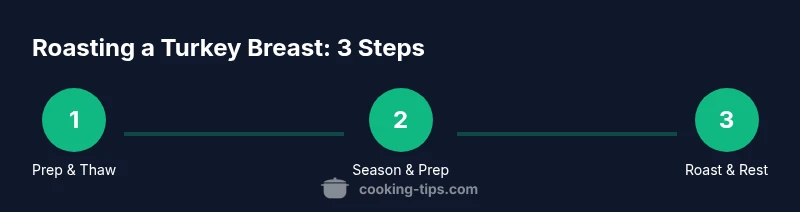
Steps
Estimated time: 1 hour 15 minutes
- 1
Gather and thaw (if needed)
If starting from frozen, plan thawing in the refrigerator for roughly 24 hours per 4-5 pounds. Remove packaging and pat dry once thawed. Let the meat rest at room temperature for 15-30 minutes to promote even cooking.
Tip: Thaw in the fridge for best texture; avoid room-temperature thawing to prevent bacterial growth. - 2
Season and pat dry
Pat the surface dry with paper towels, then apply a light rub or guide seasoning under the skin if you’re comfortable. Let the meat sit uncovered for 10-15 minutes to let the seasonings adhere.
Tip: Dry skin helps browning; use a small amount of oil or butter to help stick herbs. - 3
Preheat oven and prepare roasting setup
Preheat to 325°F (165°C). Place the breast on a rack in a shallow roasting pan so air circulates around it for even browning.
Tip: Do not crowd the pan; space allows heat to circulate. - 4
Roast to safe internal temperature
Roast until the thickest part reaches 165°F (74°C). Start checking near the 60-minute mark for a 2-3 lb breast; larger cuts need more time. Remove at 160-162°F to allow carryover cooking.
Tip: Insert thermometer into the center of the thickest part, avoiding bone. - 5
Rest, carve, and serve
Tent with foil and rest 10-15 minutes. Slice against the grain for tenderness, then serve with pan sauce or sides.
Tip: Resting redistributes juices; slicing too early leaks moisture.
Quick Answers
Can I cook a frozen turkey breast?
Cooking from frozen is not recommended; thaw first for even cooking and safety. If you must cook from frozen, expect a significantly longer time and use a thermometer to verify doneness.
Thaw the breast first for even cooking; cooking from frozen is not recommended.
What is the safe internal temperature for turkey breast?
The USDA recommends an internal temperature of 165°F (74°C) for turkey breast to be safe to eat.
Cook to 165 degrees Fahrenheit, then rest before slicing.
Bone-in vs boneless turkey breast: which is better?
Bone-in breasts stay juicier due to marrow but take slightly longer to cook; boneless breasts cook faster and are easier to carve.
Bone-in stays juicier, but boneless is quicker and easier to carve.
How long per pound should I roast?
At 325°F, plan about 18-25 minutes per pound for boneless; adjust for size and check with a thermometer.
Estimate around 18-25 minutes per pound, then check with a thermometer.
Should I baste the turkey breast?
Basting is optional; a light rub with oil or butter helps browning, but frequent basting only adds time without much benefit.
Basting isn't required; it can help browning but isn't essential.
How should I store leftovers?
Cool quickly, refrigerate in shallow containers within two hours, and use within 3-4 days; freeze for longer storage.
Refrigerate leftovers within two hours and eat within 3-4 days.
Watch Video
Top Takeaways
- Choose the right breast size and thaw safely
- Roast at 325-350°F until 165°F internal
- Rest 10-15 minutes before carving
- Use a thermometer and slice against the grain