What to Do When Cooking Oil: Safe Handling, Reuse & Disposal
Learn safe handling, storage, reuse, and disposal of cooking oil. Practical steps minimize waste, prevent injuries, and keep your kitchen clean and environmentally responsible.


By the end of this guide, you will know how to handle cooking oil safely, assess whether it can be reused, properly dispose of leftover oil, and store it to prevent spoilage. You’ll learn practical cleanup steps, filtering methods, and storage tips that minimize waste and keep your kitchen safe. This approach applies to most common cooking oils used at home.
Understanding Cooking Oil: Types and Freshness
According to Cooking Tips, the type of oil you choose influences flavor, smoke point, and how long it stays usable after cooking. Common kitchen oils include olive, canola, vegetable, peanut, and sunflower. Each has its own flavor profile and fat composition, which affects how it behaves when heated and how it should be stored after use. Fresh oil should smell clean, be free of foamy residues, and look clear rather than dark or murky. Even when you plan to reuse oil, labeling it with the date helps you track freshness. While oil does not spoil like dairy, it can become rancid when exposed to air, heat, and light for too long. For everyday home cooks, a practical rule is to treat oil as perishable once it has been heated and used. This guidance from the Cooking Tips team emphasizes safety and quality, helping you decide whether to reuse or discard.
- Oil type and usage influence safety considerations.
- Smell, color, and texture are first indicators of freshness.
- Labeling with date aids in tracking and preventing waste.
Immediate Steps If Oil Spills or Overheats
A hot oil incident calls for calm, quick action. If oil starts to splatter or overheat, turn off the heat immediately and move the pan away from the flame or hot burner if safe to do so. Do not pour water on hot oil; it can cause a dangerous flare. If a small grease fire occurs, cover the pan with a metal lid to smother the flames, or sprinkle with baking soda. Keep a clear path to exit in case the fire grows. After the flame is out, let the oil cool on a heat-safe surface before handling. The priority is to prevent burns and minimize any spread of the oil.
- Turn off heat and move carefully if safe.
- Do not use water on hot oil or grease fires.
- Use a lid or baking soda to smother small fires.
Cleaning Up and Cooling: Safe Handling
Allow oil to cool thoroughly before attempting cleanup. For spills on the stove or counter, blot excess oil with paper towels, then wipe with soapy water. Place cooled oil in a sturdy, sealable container to prevent leaks. For large spills, use an absorbent material like baking soda or cat litter to soak up the oil before sweeping it into a bag. When you can safely transport the oil, seal the container and store it away from light to slow oxidation. This step minimizes waste and protects your pipes if you’re disposing of the oil later. Remember to ventilate the area and wash your hands after handling hot oil.
- Use absorbents for larger spills to prevent slipping.
- Seal oil containers to avoid leaks and odors.
- Ventilate the workspace to stay comfortable.
Straining and Storing Used Oil for Reuse
If you plan to reuse oil, filtering is essential to remove food particles that can burn and alter flavor. Strain the oil through a fine mesh or cheesecloth into a clean, dry container. A glass or BPA-free metal bottle with a tight lid protects oil from light, which slows rancidity. Store in a cool, dark place such as a pantry or cabinet away from heat sources. Label the container with the date and the oil type. Do not mix different oils, and avoid refrying oils that have foamed, smoked, or taken on strong odors. When in doubt about quality, err on the side of disposal rather than reuse. This approach aligns with cautious kitchen practices recommended by Cooking Tips.
- Filter before storage to extend usability.
- Choose dark, airtight containers to protect from light.
- Do not mix different oils or reuse oil with off odors.
When to Reuse vs. When to Discard
Reuse is often acceptable for similar cooking tasks, such as researing the same batch of vegetables, as long as the oil smells clean, isn’t excessively dark, and was used within reasonable limits. If the oil shows rancid smells, foaming, smoking, or a sticky residue that won’t rinse away, discard it. Oils that have been used to fry strongly flavored foods (like fish) tend to absorb those flavors and odors; if you plan a neutral dish, rinse the oil more thoroughly or discard. It’s safer to reuse oil a few times rather than risk flavors and potentially harmful compounds from degraded oil. Cooking Tips recommends using your best judgment and ruling out oil that has signs of spoilage.
- Reuse only for similar foods and within safe limits.
- Discard oil that smells off or looks dark and thick.
- Strong odor from fried foods indicates potential cross-flavor transfer.
Safe Disposal Options for Unusable Oil
Pouring used oil down the drain or toilet is a major piping and environmental hazard. Instead, place cooled oil in a sturdy, sealed container and discard it with household trash, or take it to a local recycling or hazardous waste program if available. Some communities offer curbside oil recycling; others require drop-offs. If you must, you can solidify oil with absorbent material like cat litter or paper towels, then bag it before disposal. This method reduces leakage and makes handling safer. Always follow local guidelines, as disposal rules vary by location and facility.
- Never pour hot or used oil down the drain.
- Use a sealed container for the trash bag or recycling drop-off.
- Check local programs for oil recycling options.
Cleaning and Decontaminating Surfaces
Oil can leave greasy residues on stoves, countertops, and floors. After cleanup, wash surfaces with warm, soapy water and dry with a clean towel. For stubborn grease, use a degreasing cleaner designed for kitchen use. Avoid mixing cleaning products carelessly, which can create fumes or residues. Keeping a routine to wipe down surfaces after frying helps prevent slip hazards and keeps your kitchen hygienic. If you spill oil on fabric or upholstery, blot promptly and follow with a mild detergent suitable for the material. Regular cleaning reduces buildup and makes future cooking safer and more enjoyable.
- Use appropriate degreasers for stubborn spots.
- Dry surfaces thoroughly to prevent slips.
- Address spills on textiles quickly to minimize staining.
Tips for Extending Oil Life and Reducing Waste
Smart oil management starts long before the fry. Store oil in a cool, dark place away from heat and sunlight. Straining between uses helps remove particulates that accelerate rancidity. Don’t mix oils with different smoke points, as this can alter cooking performance and safety. Consider portioning oil into smaller containers to avoid repeated full opening, which introduces air. When possible, reserve oil for similar cooking tasks and avoid overheating to preserve flavor and quality. Regularly reviewing your oil use reduces waste and saves money, a point echoed by the Cooking Tips team.
- Store properly to slow oxidation.
- Filter between uses to remove solids.
- Avoid overheating and mixing different oils.
Quick Reference: Checklists for Oil Handling
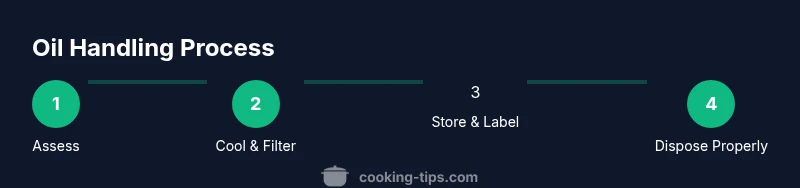
- Assess freshness before reuse.
- Cool and drain safely after use.
- Filter and store in a sealed, light-proof container.
- Decide reuse only for compatible dishes; discard otherwise.
- Dispose of unusable oil according to local guidelines.
- Clean up spills promptly and sanitize surfaces.
- Keep absorbents handy for spills and disposal.
- Label stored oil with date and type for easy tracking.
Tools & Materials
- Paper towels(At least 2 rolls for spills; keep handy near the cooking area)
- Disposable gloves(Protect hands when handling hot oil and spills)
- Trash bags(Use sturdy bags for oil-soaked absorbents or containers)
- Absorbent material (baking soda, cat litter)(Pack spills to prevent spreading and for safe containment)
- Fine-mesh strainer or cheesecloth(Filter particulates when reusing oil)
- Clean, sealable oil container(Opaque glass or metal bottle with a tight lid to protect from light and air)
- Dish soap and degreaser(For cleaning after oil spills on surfaces)
- Heat-safe tray or surface(Place pan on stable surface while oil cools)
- Markers and labels(Label dates and oil types for tracking)
Steps
Estimated time: 30-60 minutes
- 1
Assess oil for reuse
Inspect the oil’s smell, appearance, and previous use. If it smells rancid, looks unusually dark, or has visible foam when used again, discard. If it seems normal, you can consider filtration for reuse. This decision reduces waste and preserves flavor when used for similar dishes.
Tip: Trust your senses; when in doubt, discard rather than risk off flavors or harmful compounds. - 2
Cool and prepare cleanup area
If the oil is hot, turn off the burner and move the pan away to a heat-safe surface. Allow the oil to cool to a safe handling temperature before touching it. Set up your cleanup area with towels and a garbage bag ready for containment.
Tip: Keep kids and pets away from the area while cooling and cleaning to prevent burns. - 3
Filter and transfer oil
Pour the cooled oil through a fine mesh strainer or cheesecloth into a clean container. This removes particulates that can burn and degrade oil quality over time. Use a dark, sealed container to limit light exposure.
Tip: Do not squeeze the solids; let gravity do the filtering to avoid pushing debris through. - 4
Store oil properly
Seal the container tightly and store in a cool, dark place away from heat sources. Label with the date and oil type. Do not mix oils; store each type separately to preserve flavor and performance.
Tip: Consider portioning into smaller bottles to minimize air exposure when opening. - 5
Decide reuse vs. discard
If the oil smells fine and has been filtered, you can reuse for similar cooking tasks a few times. If you notice off odors, foaming, or smoke, discard it safely.
Tip: Limit reuse for safe quality; reuse is not worth compromising flavor or safety. - 6
Dispose of unusable oil
Place cooled oil in a sealed container and discard with household trash or take to a local recycling or hazardous waste facility if available. Never pour oil down the drain or toilet.
Tip: Check local guidelines for oil recycling options and drop-off locations.
Quick Answers
What should I do first if oil spills on the stove?
Turn off the heat and carefully move the pan away if safe. Blot the spill with paper towels and clean the area with warm, soapy water. For a small fire, cover with a metal lid or use baking soda to smother.
First, turn off the heat and move the pan away if you can. Then blot the spill and clean with soap and water.
Can I reuse cooking oil after frying fish?
You can reuse oil after frying fish only if it’s been strained, smells fine, and has not been overheated. Strong flavors or off odors suggest discarding. For safety and flavor, reuse is best limited to similar foods.
You can reuse if it smells and looks good and hasn’t been overheated; otherwise discard.
How long can I store used oil?
Store oil in a sealed container, away from light and heat, and use within a few weeks for best quality. If the oil develops off smells or dark color, discard.
Store in a sealed, dark container and use within a few weeks; discard if it smells off.
Is it safe to pour oil down the drain?
No. Pouring used oil down the drain can clog pipes and harm the wastewater system. Instead, seal and place in trash or recycle where available.
No—don’t pour it down the drain. Seal it and dispose with trash or recycle.
What tools help manage oil waste?
Keep a metal container for cooling oil, a strainer for filtering, absorbent for spills, and sealable bottles for storage.
Have a sealable container, a strainer, and absorbent ready to manage waste efficiently.
Watch Video
Top Takeaways
- Inspect oil for freshness before reuse
- Cool and contain spills safely
- Filter and store oil in light-protective containers
- Reuse only for similar foods and within safe limits
- Dispose of unusable oil per local guidelines