What Temperature to Cook Chicken: Safe Temps for Every Cut
Learn the exact internal temperatures for chicken, why 165°F matters, and how to measure it accurately across breasts, thighs, and whole birds. Practical guidance for baking, grilling, and pan-searing with a focus on reliability.


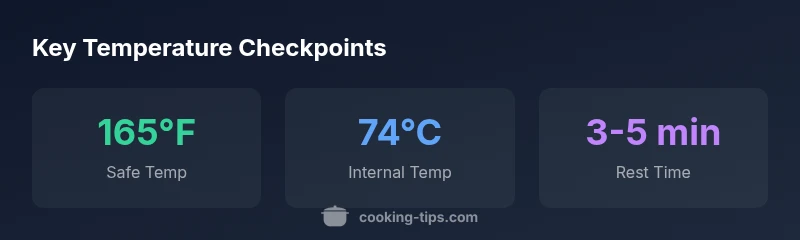
To ensure chicken is safe to eat, cook until the internal temperature reaches 165°F (74°C) measured with a calibrated thermometer. This target applies to all cuts—breasts, thighs, and wings—whether baked, grilled, sautéed, or roasted. Insert the probe into the thickest part, away from bone, and recheck before serving to account for carryover cooking.
Why temperature control matters for chicken safety and quality
Temperature control is the cornerstone of both food safety and flavor when cooking chicken. Bacteria such as Salmonella can survive at improper temperatures, so reaching and holding the recommended internal temperature dramatically reduces risk. Beyond safety, temperature also directly affects juiciness, texture, and color. A thermometer helps you move away from guesswork toward precise, repeatable results. According to Cooking Tips, investing a few seconds to verify temperature yields consistently better outcomes than relying on color cues or time alone. For home cooks, the habit is simple: insert the thermometer into the thickest part of the meat, away from bone, and confirm it has reached 165°F (74°C). This target applies across methods—roasting, grilling, pan-searing, and slow cooking. Remember that carryover cooking will continue after you remove from heat, so some rest time is essential. Mastery comes from practice and a trusted thermometer, not intuition alone.
Safe target temperature explained: 165°F (74°C) universally
The official recommendation for all poultry is 165°F, because it reliably destroys common pathogens that can lurk in chicken. This temperature is a single, practical target for breasts, thighs, wings, and whole birds, regardless of cooking method. While some cooks advocate different temps for very large pieces to offset carryover, the consensus remains that 165°F is the safe default. The key is to verify at the thickest part, away from bone, and to consider a brief rest period to allow the heat to distribute evenly. Remember: color and juices are important indicators, but they do not replace a real thermometer reading. Practically, plan for slight carryover and confirm just before serving to avoid overcooking. ”Cooking Tips” emphasizes consistency over guesswork.
Measuring temperature: choosing the right thermometer and technique
Selecting a reliable thermometer is the most practical step toward consistent results. A digital instant-read thermometer provides quick, accurate readings, while a dial thermometer can work but may be slower. Calibrate your thermometer regularly—ice-water method (32°F/0°C) for a quick check, or boiling-water method (212°F/100°C at sea level) for larger calibrations. When testing, insert the probe into the thickest part of the chicken, not touching bone or the pan, and avoid removing the product too early. For best results, take readings toward the end of cooking, then allow 3–5 minutes of rest to account for carryover. A calibrated tool and correct placement reduce guesswork and increase safety.
Carryover cooking: what happens after you remove from heat
Carryover cooking is real: temperature continues to rise after heat is removed. The window varies with size and cut, but a typical rise is about 5–10°F (3–6°C). That means you can pull the chicken from heat when it reads slightly below 165°F, then rest to finish. To manage this, test in the thickest portion during the final phase and plan a short rest before slicing. This approach helps maintain juiciness while ensuring safety, and it aligns with practical guidance from Cooking Tips.
Temperature by cooking method: baking, grilling, pan-searing, roasting whole chicken
Different cooking methods affect heat delivery, but the target remains 165°F. For breasts, pan-searing or baking at moderate heat can yield juicy results if you monitor the thickest part precisely. Grilling introduces direct heat; keep the heat steady and use direct measurements in the center. Roasting a whole chicken requires checking both the breast and thigh, as they cook at different rates. In all cases, verify the center of the thickest portion reaches 165°F and allow for a brief rest before carving. Cooking Tips recommends a thermometer as your primary tool, not surface color or estimated times.
Visual cues vs thermometer: why color is not reliable
Color and juiciness are unreliable signals of doneness for chicken. A perfectly cooked piece can look pale or appear slightly pink near the bone if not measured correctly. Rely on a thermometer for precision rather than color cues. The thermometer gives you a definitive answer—165°F (74°C)—and helps you reproduce results across ovens and grills. Remember to insert the probe into the center of the thickest section for a representative reading, and trust the temperature reading over any subjective cues.
Common mistakes and how to fix them
Common mistakes include checking temperature in the wrong spot (near bone or at the pan surface), using an uncalibrated thermometer, and neglecting rest time. Fixes are simple: calibrate monthly, insert into the thickest part away from bone, and rest 3–5 minutes after cooking. Another pitfall is relying on color or juice clarity alone; always confirm with a thermometer. Finally, avoid propping the door or lid open during cooking, which can artificially lower heat and extend cooking times. By adjusting technique, you’ll improve safety and texture.
Resting and serving: how long and safe handling of leftovers
Resting for 3–5 minutes after removal from heat allows juices to re-distribute, enhancing juiciness. If you’re preparing multiple pieces, keep them on a warm plate or cutting board and cover lightly to retain heat. Safe handling of leftovers includes chilling within two hours and storing in shallow containers to cool rapidly. Reheat leftovers to 165°F before serving, using a thermometer to confirm. These practices minimize bacteria growth and keep flavors intact for next-day meals.
Quick-start checklists by method
- Oven/Bake: Preheat, insert thermometer into thickest part, bake until 165°F, then rest 3–5 minutes.
- Grill: Preheat grates, measure at the center, remove from heat at 165°F, rest before slicing.
- Pan-sear: Use medium-high heat, monitor the center, rest briefly to finish.
- Whole chicken: Truss, roast evenly, test breast and thigh, rest before carving.
Temperature targets for common chicken preparations
| Cut / Method | Target Temperature | Notes |
|---|---|---|
| Chicken breast (boneless) | 165°F / 74°C | Read in thickest part; rest 3-5 min |
| Chicken thigh (bone-in) | 165°F / 74°C | Dark meat safe; verify near bone |
| Whole chicken | 165°F / 74°C | Check breast and thigh; avoid bone |
| Ground chicken | 165°F / 74°C | Ensure fully cooked; no pink |
Quick Answers
Is 165°F always the safest target for every chicken cut?
Yes, 165°F is the official minimum safe internal temperature for all poultry, including breasts, thighs, and whole birds. Some cooks prefer slightly higher targets for very large pieces to account for carryover, but the standard guideline remains 165°F.
165 degrees is the safe minimum for all poultry; you may adjust slightly based on piece size, but 165°F is the proven baseline.
Can I rely on pink juices to tell if chicken is done?
Juice color can be misleading. The only reliable indicator is the internal temperature. Use a thermometer to confirm 165°F before serving.
Don’t rely on color—check the temperature with a thermometer.
How long should chicken rest after cooking?
Rest chicken for 3-5 minutes after removing it from heat. Resting allows juices to redistribute and helps avoid dry slices.
Let it rest for 3 to 5 minutes before slicing.
Does bone-in chicken require a higher temperature?
The safe internal temperature remains 165°F for bone-in and boneless chicken. Bone can affect how long it takes to reach that temperature, so test the thickest part near the center.
No, the safe temp is the same; check the thickest part near the center.
What thermometer should I use?
Choose a reliable instant-read digital thermometer for quick, accurate readings and easy calibration. Ensure it reads up to at least 212°F and calibrate regularly.
Use a good instant-read thermometer and calibrate it often.
What about leftovers?
Refrigerate leftovers within two hours and reheat to 165°F before serving. Store in shallow containers to cool rapidly and safely.
Cool leftovers quickly and reheat to 165°F.
“Accurate thermometer readings are the cornerstone of safe poultry cooking; always verify internal temperature with a calibrated probe.”
Top Takeaways
- Check thickest part with a thermometer
- Aim for 165°F (74°C) across cuts
- Allow 5–10°F carryover by resting
- Don’t rely on color to judge doneness
- Calibrate your thermometer regularly
- Resting improves juiciness and safety