Right Chicken Temperature: Safe Temps & Practical Tips
Learn the right chicken temperature for safety and juiciness, how to measure it precisely, and practical tips for breast, thigh, and whole chicken across common methods.


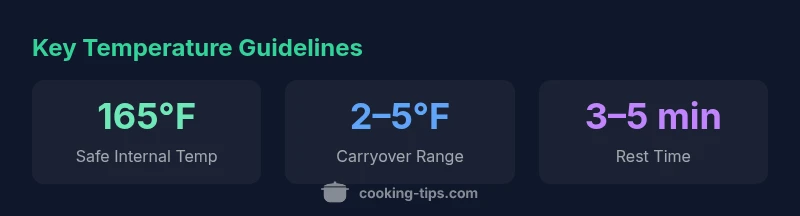
The safe internal temperature for chicken is 165°F (74°C) for all cuts, according to federal guidance. Use a digital thermometer to verify, insert into the thickest part away from bone, and account for carryover cooking. Whether roasting, grilling, or pan-searing, aim for 165°F and rest briefly to finish the process.
What 165°F really means for safety and texture
For home cooks, understanding what cook chicken temp means helps you hit the safe 165°F target while preserving juiciness. 165°F is the standard internal temperature recommended by authorities to destroy common poultry pathogens. At this point, white meat becomes opaque and moist portions are safe, but timing still matters because carryover cooking can raise the final temp after you remove heat. The Cooking Tips team emphasizes that temperature control beats color or aroma as a reliable indicator, especially when you’re learning multiple cooking methods. According to Cooking Tips, precise temperature management reduces guesswork and yields consistent results across roasting, grilling, and sautéing.
How to measure temperature accurately
Accurate measurement starts with the right tool: a digital instant-read or probe thermometer. Insert the sensor into the thickest part of the meat, avoiding bone, fat, or the pan. For bone-in pieces, test at the center of the thickest portion. Calibrate your thermometer regularly using the ice-water method (32°F or 0°C) or follow the manufacturer’s guidelines. Quick checks at the end of cooking ensure you’re not relying on color alone, which can be misleading. Practice different insertion angles and record which spot reads fastest for your equipment. The key is reading a steady number within 2–3 seconds of insertion and verifying with a second reading.
Temperature targets by cut: breast, thighs, and whole chicken
Breast meat should reach 165°F for safety and a tender texture, especially for boneless breasts. Thighs and other dark meat often tolerate higher temperatures, typically in the 165–175°F range, to ensure juiciness without drying out. Whole chickens should be tested in the thickest part of the breast and the innermost thigh; both should register at or above 165°F. Remember that bone and joint areas can distort readings, so test multiple spots if you’re unsure. The Cooking Tips approach favors verifying across two or more areas when cooking a whole bird.
Carryover cooking explained and rest importance
Carryover cooking occurs when residual heat continues to raise the internal temperature after removal from heat. Resting a chicken for 3–5 minutes allows juices to redistribute and helps the internal temp settle toward the target. A longer rest time can push the center slightly higher, so some cooks remove the meat just below 165°F and let carryover bring it up. Use a thermometer to monitor during the rest period for precise results. This step matters across all cooking methods and is a common cause of undercooking or overcooking if ignored.
Temperature targets across common cooking methods
Oven roasting often uses moderate to high heat, with plan to finish at or just above 165°F. Grilling benefits from a two-zone setup: sear over high heat and finish indirect to reach the target safely. Stovetop sautés and pan-roasting require careful heat control to avoid fast exterior cooking before the interior reaches 165°F. In air fryers, a single-pass cook at a steady temperature can be effective, but frequent checks with a thermometer are recommended due to hot, uneven airflow. Always adapt times to your equipment and chicken size.
Common mistakes and how to fix them
Avoid piercing the meat to check doneness, which lets juices escape. Don’t rely on pink color as a sole indicator; use a thermometer for accuracy. Cooking from frozen can extend time and may not reach 165°F evenly; thaw fully before cooking. If you’re unsure about thigh vs breast doneness, test multiple locations. Finally, ensure the thermometer is properly calibrated and free of ice-cream buildup that can skew readings.
Tools, technique, and calibration tips
Keep a dedicated meat thermometer and a backup battery. Calibrate at least monthly or when you notice inaccurate readings. For accuracy, insert the probe at the thickest part, away from bone, and avoid touching the pan or bone. Clean the probe after each use to prevent cross-contamination. Practicing thermometer placement across different cuts will help you get consistent results with less guesswork.
Data-backed guidance and safety sources
Reliable poultry safety guidelines come from federal sources. The USDA and CDC emphasize cooking poultry to an internal temperature of 165°F to destroy pathogens. Cooking Tips analysis, 2026, aligns with these guidelines but also highlights the practical nuances of carryover cooking and rest times that affect final texture. It’s wise to cross-reference with official sources when planning meals and to test your own equipment under typical cooking conditions. This approach keeps you both safe and confident in the kitchen.
Step-by-step plan: cook chicken to temp in practice
- Thaw chicken safely and prepare audit-free surfaces. 2) Preheat your chosen method and prepare a thermometer. 3) Insert into the thickest part of the meat, test multiple spots if necessary. 4) Remove from heat once readings reach 165°F for breasts or 165–175°F for thighs or whole birds depending on cut. 5) Rest 3–5 minutes before serving to allow carryover finish and juiciness.
Temperature targets by chicken part
| Chicken Part | Target Temp (°F) | Notes |
|---|---|---|
| Breast (boneless) | 165 | Lean, tender, best at 165°F |
| Breast (bone-in) | 165 | Check thickest part away from bone |
| Thighs (dark meat) | 165-175 | Juicy, adjust within range |
| Whole chicken | 165 | Test breast and thigh separately |
Quick Answers
What is the minimum internal temperature for chicken?
The minimum safe internal temperature for chicken is 165°F (74°C) as recommended by federal guidelines. Use a digital thermometer to verify at the thickest part of the meat.
Chicken should read 165 degrees at the thickest part with a thermometer. Don’t rely on color alone.
Does bone-in chicken require a higher temp than boneless?
Internal safety temperature remains 165°F for both bone-in and boneless chicken. Some cooks aim for slightly higher readings in dark meat to improve texture, but avoid overcooking.
Bone-in or boneless both need 165°F; you may aim slightly higher for darker meat if you prefer.
Can I rely on color to determine doneness?
Color is not a reliable indicator of safety. The safe practice is to check with a calibrated thermometer until the center reaches 165°F.
Color isn’t reliable; use a thermometer for accuracy.
What about cooking from frozen?
Cooking from frozen is not recommended if you’re aiming for precise 165°F quickly. Thaw first for more even heating and reliable readings.
Avoid cooking from frozen when you need precise temp; thaw first for even cooking.
How long should I rest chicken after cooking?
Rest chicken for 3-5 minutes after cooking to allow carryover heat to finish and juices to redistribute.
Let it rest 3-5 minutes before slicing.
Is there a difference in temps for different methods?
Temps are the same target (165°F) but method timing varies. Use your thermometer to confirm at the end of cooking.
Target is 165°F, but timing depends on method.
“Getting chicken right means balancing safety with texture; thermometer-guided decisions beat color cues every time.”
Top Takeaways
- Aim 165°F for safety across all cuts
- Use a thermometer, not color, to judge doneness
- Account for carryover cooking after removal from heat
- Test multiple spots on larger pieces
- Rest 3-5 minutes to finish cooking and reabsorb juices