What Should Cooked Turkey Temperature Be? A Practical Guide to Safe Roasting
Discover the safe turkey temperature for juicy, evenly cooked meat, with clear targets by part, resting guidance, and thermometer tips for reliable roasting results.


165°F (74°C) is the safe minimum internal temperature for turkey. For best results, check the thickest part (breast or thigh) with a thermometer and plan for carryover cooking. Depending on cuts and stuffing, aim for 165°F and up to 175°F in dark meat to balance safety with juiciness.
Why Temperature Matters for Turkey Doneness
So, what should cooked turkey temperature be? The short answer: 165°F (74°C) in the thickest part. This baseline ensures safety by killing pathogens and preserving meat quality. According to Cooking Tips, understanding this temperature helps prevent both undercooking and dryness. The rest of your plan—check multiple parts, account for carryover cooking, and choose a method—determines juiciness and texture as you finish roasting. Remember, the goal is safety without sacrificing moisture, which is why reliable thermometers and a systematic approach matter more than relying on time alone.
Safe Temperature Benchmarks by Part
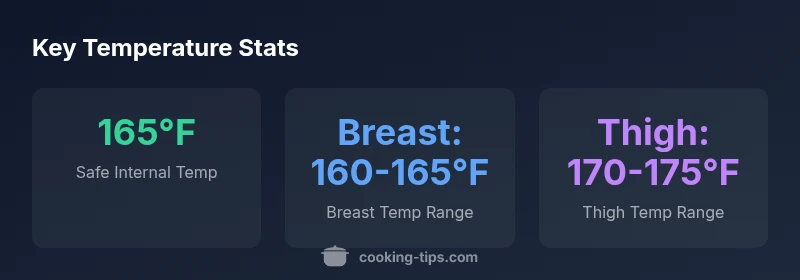
Turkey won’t finish evenly if you chase a single number for every part. The breast, being lean, can dry out quickly if pushed too far, while the thigh remains juicier at slightly higher temperatures. For safety and quality, target about 165°F in the breast and roughly 170-175°F in the thigh. If your bird is stuffed, ensure the center of the stuffing reaches 165°F. Plan for carryover cooking: remove the turkey when the thermometer reads just under the target so residual heat brings it up to the ideal endpoint.
Measuring Temperature Accurately: Tools and Techniques
A reliable digital instant-read thermometer is an essential tool, complemented by a long-probe oven thermometer for steady monitoring during roasting. Calibrate your thermometer regularly and insert the probe into the thickest part without touching bone to avoid false readings. Check both breast and thigh temperatures for an accurate read, particularly in larger birds. If you notice one area lagging, rotate the pan or reposition the turkey to promote even heat distribution. Consistency in technique translates to predictable results.
The Role of Rest and Carryover Cooking
Carryover cooking means the turkey continues to cook after you remove it from the oven. In a typical roast, expect a 5-10°F rise during a 15-20 minute rest. To maximize juiciness, loosely tent with foil and allow the meat to rest on a warm surface. Removing the bird at slightly lower temps (e.g., 160-162°F breast, 165-170°F thigh) can still yield the target endpoints after resting. Resting is not a delay—it's an essential step that stabilizes texture and juices.
Cooking Methods That Affect Temperature Targets
Roasting in a conventional oven, spatchcock roasting, and even turkey frying each influence heat penetration and doneness timelines. Spatchcocking often yields more uniform temps and shorter cook times, helping you avoid overcooking the breast before the thigh reaches 165-175°F. Brining can improve moisture, but it does not replace the need to verify temperature. Stuffed birds require that the center of the stuffing hits 165°F, which may necessitate longer rest or higher target temperatures in the meat to ensure overall safety.
Step-by-Step Guide to Doneness
- Thaw completely if frozen; 2) Preheat oven to a moderate 325-350°F; 3) Prepare turkey with dry rub or simple seasoning; 4) Insert thermometer into the thickest part away from bone; 5) Roast until readings approach target temps ( breasts near 160-165°F, thighs 170-175°F ); 6) Remove and rest 10-20 minutes before carving. This sequence minimizes safety risk while preserving moisture and flavor.
Troubleshooting: Common Doneness Issues
If the turkey appears overcooked with dry breast or underwhelming thigh, reassess your oven temperature, pan position, and thermometer placement. An inaccurate thermometer, touching bone, or opening the oven door too often can throw readings off. Ensure you read multiple locations and account for carryover. If you’re reaching the target temperature but the juices are scarce, consider a brief final blast at a lower oven setting to rehydrate surface tissue without drying the interior.
Reducing Dryness: Juicier Turkey Tips
Moisture management starts well before heat. Use a brine or a dry brine to help tissue retain moisture, particularly for larger turkeys. Basting is optional; frequent opening of the oven can cause temperature fluctuations. Skin protection with oil or butter helps crispness without accelerating moisture loss. Remember to monitor internal temps rather than chasing skin color alone, since color is not always a reliable indicator of doneness.
Serving Safely: After-Cook Handling and Leftovers
After roasting, handle hot turkey with care to avoid contamination or burns. Cut only after resting to preserve juiciness. Store leftovers within two hours at safe refrigeration temperatures and reheat to at least 165°F when reheating. For larger gatherings, plan portions so that there’s enough time to verify temperatures across all servings and maintain food safety throughout the meal.
Temperature targets by turkey parts and roasting method
| Part / Method | Target Temperature (F) | Notes |
|---|---|---|
| Breast (unpacked turkey) | 165 | Safe minimum; risk of drying if overcooked |
| Thigh (dark meat) | 170-175 | Juicier at higher end; carries more flavor |
| Stuffed turkey | 165 | Center stuffing must hit 165°F |
| Spatchcock roasting | 165 | More even heat distribution; shorter cook time |
| Resting after roast | 165 | Carryover may raise temp by 5-10°F |
Quick Answers
What is the safe internal temperature for cooked turkey?
The safe internal temperature for cooked turkey is 165°F (74°C) in the thickest part. Some cooks target a slightly higher temp in dark meat for juiciness, but 165°F is the official minimum.
Heat the turkey until the thickest part reaches 165°F; you can aim a bit higher for the dark meat if you want extra juiciness.
Should different parts reach different temperatures?
Yes. Breast should reach about 160-165°F, while thigh can be 170-175°F for best texture. If stuffed, ensure the center of the stuffing hits 165°F.
Breast around 165, thighs a bit higher, and stuffing center at 165 for safety.
Can I rely on color to tell if turkey is done?
Color is not a reliable indicator of doneness. Temperature is the only dependable guide. Use a thermometer for accuracy.
Doneness is about temperature, not color; check with a thermometer.
How long should turkey rest after cooking?
Rest the turkey for 10-20 minutes after removing from heat to let carryover cooking finish and juices redistribute.
Let it rest 10-20 minutes before slicing.
What about cooking turkey from frozen?
Cooking from frozen is not recommended if you need to reach 165°F in a reasonable time. Thaw completely before roasting for even heat.
Thaw completely before roasting for consistent doneness.
Does stuffing change the temperature target?
Yes. Center of stuffing must reach 165°F; this can require higher end temperatures for the meat and a longer rest.
Center of stuffing should reach 165°F for safety.
“Getting the correct internal temperature is the single most reliable way to ensure both safety and juiciness in turkey.”
Top Takeaways
- Target 165°F as the safe baseline for turkey doneness.
- Check both breast and thigh to ensure even cooking.
- Allow for carryover by removing from heat before reaching final temp.
- Use a calibrated thermometer for accurate readings.
- Stuffed turkeys require centers of stuffing to reach 165°F.