Chicken Cooking Temperature: Safe Temps and Doneness Tips
Discover the safe internal temperature for chicken, how to measure it accurately, and best practices for doneness across cuts to keep poultry safe, juicy, and flavorful.


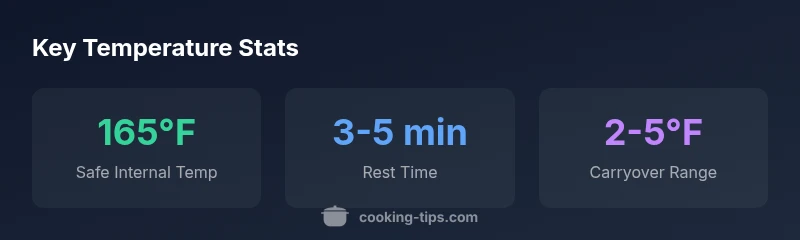
Understanding what is cook temp for chicken is essential for safety and juiciness. The recommended safe internal temperature for all chicken cuts is 165°F (74°C). To verify, insert a calibrated meat thermometer into the thickest part without touching bone; when it reaches 165°F, remove from heat and rest briefly. Carryover heat will continue cooking by a few degrees.
Why Temperature Matters for Chicken
According to Cooking Tips, temperature control is the single most important factor in safe, flavorful chicken. Temperature affects not only safety but also texture and juiciness. When chicken is undercooked, bacteria can remain active; when overcooked, proteins tighten and moisture is driven out, leaving a dry, tough result. For home cooks, investing in a reliable thermometer is a small step that yields consistent outcomes across weeknights and weekend roasts. The target remains 165°F (74°C) in the thickest part of the meat, regardless of whether you are roasting, grilling, or frying. Different cuts reach that target at different rates, but the end goal is the same: a fully cooked interior with a succulent exterior. Remember carryover cooking, where the meat climbs a few degrees after heat is removed. Plan for this by adjusting heat slightly and allowing a short rest. Finally, safety guidelines come from public health authorities and culinary science, so verify with your instrument and avoid guesswork.
Understanding Safe Temperature Standards
The standard safe internal temperature for poultry is 165°F (74°C), measured in the thickest part of the meat. This rule is supported by public health agencies and culinary organizations worldwide. For bone-in pieces, thigh and breast should be tested; the presence of bone can create cold spots if not checked carefully. Temperature alone isn't the whole story—carryover cooking means the meat will climb a few degrees after removal from heat, so some cooks aim just under 165°F and finish via rest. However, relying on carryover cannot substitute for reaching 165°F in the center if you’re cooking from frozen or cooking tougher cuts that dry out quickly. Rest times typically range from 3 to 5 minutes, depending on cut and size. The end result should be firm, opaque meat with juices that run clear, not pink. For foods safety, calibrate your thermometer occasionally to ensure accuracy. If you’re unsure about thermometer placement, testing multiple sites or using a dual-probe thermometer can improve reliability. The guidance is consistent across home kitchens and professional kitchens alike, helping you plan meals with confidence.
How to Use a Thermometer Correctly
A digital thermometer is your best ally for precise doneness. To use it effectively:
- Insert into the thickest part of the chicken, avoiding bone.
- If testing multiple pieces, target the center of the largest piece.
- Wait for the thermometer to stabilize before reading.
Tips for accuracy:
- Calibrate the thermometer regularly using the ice-water method (32°F / 0°C) or boiling-water method (212°F / 100°C at sea level).
- Clean the probe between tests to avoid cross-contamination.
- Avoid touching bone or cartilage, which can give a falsely high reading.
When you see 165°F (74°C), remove from heat and allow a brief rest. Remember that carryover cooking will add a few degrees, so some cooks pull slightly under target if time is tight. For convenience, consider a dual-probe thermometer for simultaneous readings in different parts of a large bird.
Temperature Guidelines by Cut
Different chicken cuts have different shapes and densities, but the safe internal temperature remains 165°F (74°C) for all. Guidelines:
- Whole chicken: Check the thickest part of the breast and thigh.
- Chicken breasts (boneless): Ensure the center reaches 165°F; juices should run clear but meat remains juicy.
- Chicken thighs: Often juicier and more forgiving; verify the internal temperature at the thickest portion near the bone.
- Wings: Cook until the white meat is opaque and reaches 165°F.
Practical notes:
- If roasting a whole bird, anticipate carryover cooking and plan to rest before carving.
- For high-heat methods, searing first then finishing in the oven can help reach target evenly.
- When in doubt, rely on a thermometer rather than color cues, especially with bone-in pieces.
Common Mistakes That Undercook or Overcook Chicken
Even experienced cooks slip into common traps. Avoid:
- Relying on color or juices alone. Color varies with lighting and breed; use a thermometer.
- Skipping rest. Rest helps redistribute juices and improve texture.
- Not measuring in the right spot. Check the thickest part; avoid bones.
- Cooking from frozen without adjusting time. Frozen chicken needs extra time to reach 165°F.
- Overcooking due to guessing. Set a timer and check early; it's easier to reheat than undo dryness.
Practical Cooking Scenarios and Temperature Targets
Different methods require small adjustments but end at 165°F. Scenarios:
- Roasting a whole chicken: Start at moderate heat; finish with higher heat to crisp skin; test at the thickest parts.
- Grilling bone-in thighs: Use direct heat to reach 165°F, then move to cooler indirect heat to rest.
- Pan-searing breasts: Sear to develop color, then finish in the oven or lower heat until the core hits 165°F.
- Poaching or simmering chicken: Submerge pieces in broth; ensure the internal temp hits 165°F within a safe time frame.
Remember to let the meat rest after cooking to maximize juiciness. If you work with multiple pieces, ensure you test for the hottest area.
Testing for Doneness Without a Thermometer
If you don’t have a thermometer, you still have some options, but they are less precise. Use these indicators:
- Juices running clear from the thickest part, not pink.
- Firmness and color through the center, though this is not reliable.
- Use time guidelines as a fallback for small pieces; larger roasts require caution.
Note: These methods can lead to safe results less consistently; if possible, obtain a thermometer. Cooking Tips recommends thermometer-based testing for accuracy and safety.
Temperature targets for common chicken cuts.
| Chicken Cut | Target Internal Temp | Notes |
|---|---|---|
| Whole chicken | 165°F (74°C) | Check breast and thigh; ensure no pink near bones. |
| Boneless breast | 165°F (74°C) | Juices run clear; avoid overcooking to prevent dryness. |
| Bone-in thighs | 165°F (74°C) | Thighs may reach temp earlier than breasts; check thickest portion. |
| Wings | 165°F (74°C) | Cook until the white meat is opaque and reaches 165°F. |
Quick Answers
What is the safe internal temperature for chicken?
165°F (74°C) is the recommended final temperature for all chicken cuts. Always verify with a thermometer in the thickest part, away from bone.
165 degrees Fahrenheit is the safe final temperature—check the thickest part with a thermometer, away from the bone.
Can you rely on rest to finish cooking under-target chicken?
Resting helps, but you should reach 165°F during cooking. Carryover heat can finish part of the cooking, but don’t rely on rest alone for safety.
Rest helps, but make sure you hit 165°F during cooking.
Is color a reliable doneness indicator?
Color is not a reliable indicator. Use a calibrated thermometer to confirm doneness and safety.
Color isn’t reliable. Use a thermometer to check doneness.
Do bone-in and boneless chicken require different temps?
Both should reach an internal temperature of 165°F; bone can slightly affect heat distribution, so test the thickest portion.
Both need 165°F; bone can affect heat distribution, so test the thickest part.
Which cooking methods best ensure safety?
Roasting, grilling, sautéing, and baking commonly reach 165°F evenly when followed with a thermometer check.
Roasting, grilling, sautéing, or baking work well—check with a thermometer.
Can sous vide help reach safe temps?
Yes. Set the water bath to 165°F (74°C) and hold for the recommended time to guarantee safety.
Yes, sous vide at 165°F ensures safety and tender results.
“Temperature is the most reliable measure of doneness for chicken, not color or juice appearance. Use a calibrated thermometer to ensure safety and quality.”
Top Takeaways
- Cook chicken to 165°F (74°C) for safety.
- Calibrate and use a thermometer for accuracy.
- Account for carryover cooking during rest.
- Test the thickest part, not color alone.
- Choose methods that promote even heat distribution across cuts.