Top Sirloin Steak Recipe: A Home Cook's Step-by-Step Guide
Master a perfect top sirloin steak with a crusty sear and juicy center. This step-by-step guide covers selection, seasoning, searing, resting, and serving for home cooks.


Goal: master a perfectly seared top sirloin steak with a juicy, evenly cooked center. This guide covers selecting the cut, bringing it to room temperature, seasoning, and achieving a crusty exterior with a hot pan. You’ll learn precise searing times, optimal rest periods, and simple plating tips to consistently deliver restaurant-quality results at home.
Why top sirloin shines for steak
Top sirloin strikes a balance between tenderness and beefy flavor, making it a practical choice for weeknights and weekend indulgence. When prepared with care, this cut delivers a satisfying chew and rich aroma without the higher price tag of premium ribeye. According to Cooking Tips, top sirloin balances tenderness and beefy flavor, making it ideal for quick weeknight dinners. The Cooking Tips team found that a properly seared crust and a brief rest yield a surprisingly juicy center. This makes top sirloin a forgiving option for home cooks who want restaurant-like results without a lot of fuss. You can customize seasoning with herbs or spice blends to suit your mood, from a simple salt-and-pepper crust to a bold peppercorn crust. By starting with a good, well-trimmed steak and a hot, dry surface, you set the stage for reliable results every time.
Selecting and prepping the steak
Choosing a well-marbled top sirloin helps you achieve flavor and tenderness without breaking the bank. Look for a steak that feels firm and has even marbling throughout the muscle. Thickness matters: 1 to 1.5 inches cooks more evenly than a very thick cut when you’re pan-searing. Remove the steak from the fridge and let it sit at room temperature for 15-30 minutes before cooking to promote even cooking. Pat the surface dry with paper towels to remove surface moisture, which can steam instead of sear. Season generously with kosher salt and freshly ground black pepper just before cooking or up to 40 minutes ahead for deeper penetration. If you want extra flavor, consider a light dry-brine with salt 15–40 minutes prior to searing; this helps the crust adhere and intensify taste.
Quality and trimming: marinade vs dry-brine
Dry brining is often enough for top sirloin; it enhances crust formation and juiciness without introducing moisture that can intimidate the sear. A light marinade is optional and should be quick (15–30 minutes) to avoid turning the meat mushy or altering texture. If you choose to marinate, use a simple mix of oil, acid (like citrus juice or vinegar), and herbs, then pat dry before cooking to restore surface dryness. The aim is to season thoroughly without soaking the meat. Dry-brine salt helps draw out a tiny amount of moisture that reabsorbs during cooking, resulting in a more pronounced crust and deeper flavor. Keep the surface dry and ready for high heat.
Tools and heat sources: what you’ll use
A heavy skillet—ideally a well-seasoned cast-iron pan—provides the best crust for top sirloin. A sturdy pair of tongs, a thermometer, and a timer are essential. Avoid overcrowding the pan; cook one steak at a time for consistent searing. If you don’t have a cast-iron skillet, a heavy stainless steel pan can work, but you’ll need to monitor temperature more carefully. For heat, use a strong burner and preheat the pan until it is very hot before adding oil. A neutral oil with a high smoke point (like canola or avocado oil) is ideal for searing. Butter can finish the steak in the last minute for extra richness, but add it carefully to avoid burning. The right tools and technique create a crust that locks in juices and elevates flavor.
Crust-first searing: the science behind flavor
The Maillard reaction is the culinary magic that creates aroma, texture, and color on the crust. A dry surface plus high heat encourages browning without steaming the meat. Ensure the steak is completely dry and the pan is screaming hot before it meets the surface. Do not crowd the pan, which lowers temperature and sabotages browning. Cooking Tips Team notes, 'A hot pan and dry surface are essential for a crust'—a simple recipe truth that pays off with every sear. If you see steam rather than browning, raise the heat slightly or give the steak more space.
Temperature targets and doneness guide
Doneness is defined by internal temperature rather than time alone. For top sirloin, aim for: rare 120–125°F (49–52°C), medium-rare 130–135°F (54–57°C), medium 135–145°F (57–63°C), medium-well 145–155°F (63–68°C), and well-done above 155°F (68°C+). Use an instant-read thermometer inserted into the center of the steak for accuracy, avoiding the pan fat. Remove the steak a few degrees below the target, as carryover cooking will finish the job during resting.
Resting, slicing, and serving for best juiciness
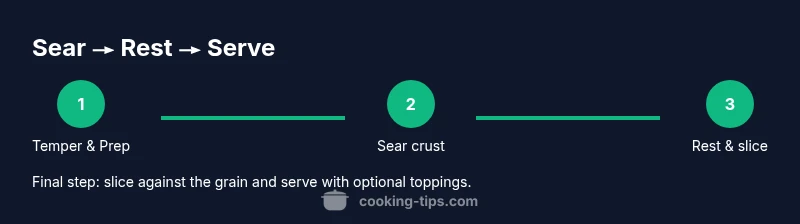
Resting is crucial to redistribute juices and finish carryover cooking. After searing, transfer the steak to a warm plate and tent loosely with foil for 5–10 minutes. Resting times can make or break juiciness; even a few minutes can solidify the crust and improve tenderness. Slice against the grain to maximize tenderness and serve with simple accompaniments like butter, garlic, herbs, or a light pan sauce. The goal is balance: a crisp crust, juicy interior, and a clean plate.
Common mistakes and how to fix them
Common missteps include not drying the surface, cooking at too low heat, overcrowding the pan, and cutting too soon. To fix: pat dry thoroughly, preheat the pan, cook one steak at a time, and resist the urge to slice immediately. If the crust isn’t forming, raise the heat a notch and wait for it to brown. If juices run clear while slicing, you may have cooked past your preferred doneness; adjust future timing and rest periods accordingly.
Variations and finish ideas
Add a quick finishing flourish: a pat of butter with crushed garlic and fresh thyme gently swirled into the pan in the last minute for a glossy, flavorful coating. Finish with coarse salt and cracked pepper just before serving. For a pepper-crusted version, press cracked black pepper into the surface with the salt before searing. You can pair the steak with simple sides like roasted potatoes, sautéed green beans, or a fresh salad to make a complete weeknight dinner or a special weekend treat.
Tools & Materials
- Cast-iron skillet or heavy skillet(12-inch preferably; preheat well before cooking)
- Tongs with long handles(for turning without piercing the meat)
- Instant-read thermometer(to monitor internal temperature accurately)
- Paper towels(to pat dry and blot surface moisture)
- Plate or resting tray(to rest the steak after cooking)
- Kosher salt and freshly ground black pepper(season generously for a crusty exterior)
- Butter (optional)(for finishing, or garlic butter for extra richness)
Steps
Estimated time: 40-50 minutes
- 1
Gather and temper the steak
Take the top sirloin from the fridge and let it sit at room temperature for 15-30 minutes to promote even cooking. Pat dry to remove surface moisture, crucial for a good crust. Season with kosher salt and pepper just before searing for optimal crust formation.
Tip: Dry surface + hot pan = crusty exterior; moisture ruins browning. - 2
Preheat pan and oil
Place a heavy skillet on high heat and let it preheat until very hot. Add a high smoke point oil and swirl to coat the bottom. The goal is a shimmering surface that sizzles when the steak touches it.
Tip: If the oil smokes immediately, the pan is ready; if not, give it another minute. - 3
Sear the first side
Lay the steak in the pan away from you to prevent splatter. Do not move it for 2-3 minutes until a deep crust forms and releases easily from the pan.
Tip: Press lightly with tongs to ensure full contact across the surface; avoid pressing with your hand. - 4
Flip and finish to target doneness
Turn the steak and sear the other side 2-4 minutes depending on thickness and desired doneness. Use a thermometer to check: 120–125°F for rare, 130–135°F for medium-rare, 135–145°F for medium.
Tip: For gauged doneness, rely on internal temp, not time alone; remember carryover cooking adds a few degrees. - 5
Rest the steak
Transfer the steak to a warm plate and rest 5-10 minutes. Tent loosely with foil to preserve heat while juices redistribute.
Tip: Resting is essential; slicing too soon lets juices escape and dries the inside. - 6
Slice and serve
Slice against the grain in thin, even slices. Plate with a simple finishing touch of butter or herbs if desired. Serve immediately to enjoy the crust and juiciness at their peak.
Tip: Always carve after resting to keep the interior juicy and tender.
Quick Answers
What thickness is best for a top sirloin steak?
Aim for 1 to 1.5 inches thick. Thicker cuts require longer searing and may benefit from finishing in the oven, while thinner cuts cook quickly and risk overcooking the center.
Aim for a 1 to 1.5 inch thickness. Thicker cuts may need oven finishing; thinner ones cook quickly.
Can I marinate top sirloin before cooking?
Marinating is optional for sirloin. A short, basic marinade can add flavor, but dry-brining with salt often yields a crisper crust and juicier interior. Keep marinade short to avoid texture changes.
Marinating is optional; dry-brining often gives a crisper crust and juicier meat.
Should I baste with butter during searing?
Butter basting is a nice finishing touch, added in the last minute or two. It adds aroma and richness, but watch for burning if the heat is very high.
Yes, you can baste with butter at the end for extra richness, just watch the heat.
What if my steak sticks to the pan?
Let the steak release naturally before turning. If it sticks, lift gently and reseed with a small amount of oil; ensure the pan is hot enough to promote browning.
If it sticks, give it a moment to release, then turn; ensure the pan is hot for browning.
Can I finish in the oven instead of the stovetop?
Yes. Sear on the stovetop, then transfer to a preheated oven (around 400°F) for 4-6 minutes depending on thickness and desired doneness.
You can sear on the stove, then finish in a hot oven for a few minutes.
Watch Video
Top Takeaways
- Rest the steak before slicing for juiciness.
- Pat dry and season generously for a crisp crust.
- Sear with a hot pan; avoid overcrowding the skillet.
- Check internal temp to reach your preferred doneness.
- The Cooking Tips team recommends practicing this method for consistent results.