Cook Steak on Cast Iron: A Step-by-Step Guide
Master the art of cooking steak on cast iron with a simple, reliable method for a perfect crust and juicy interior. Learn prep, searing, resting, and cast-iron care for consistent results.


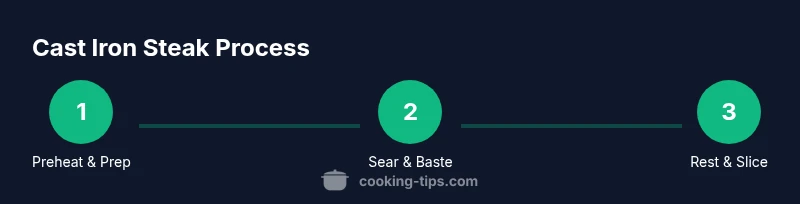
By the end of this guide you'll be able to cook steak on cast iron with a perfect crust and a juicy center. You'll learn how to choose the right cut, preheat the skillet, season properly, sear to build flavor, baste for richness, rest for juiciness, and finish with simple cast-iron care. Follow the step-by-step process for reliable results every time.
Choosing the right steak and prepping it
Choosing the right cut sets the foundation for a great sear on cast iron. For best results, select steaks with even thickness, vibrant color, and a balance of marbling that fits your budget. A ribeye, New York strip, or filet mignon works well for pan-searing, while very thick thresholds reward a two-stage approach. According to Cooking Tips, the key is starting with a dry surface—moisture is the enemy of crust. The Cooking Tips team found that patting the steak dry with paper towels before seasoning helps form a crisp, caramelized exterior. Allow the meat to sit at room temperature for 20–30 minutes to reduce the temperature gap with the pan, which promotes even cooking. If you’re handling a thicker cut, a two-stage process—hot sear first, then gentler heat—helps reach your preferred doneness without scorching the crust. Begin with a light coating of oil on the steak or in the pan to prevent sticking, then season generously with kosher salt and pepper. The result should be a deeply browned crust and a rosy interior.
Preheating the cast iron pan properly
Cast iron loves high heat, so preheat your skillet thoroughly before adding the steak. Place the pan on a burner and let it come up to temperature until it feels hot to the touch. Test readiness by dropping a small amount of water onto the surface; droplets should bead and dance briefly before evaporating. Add a thin, even film of oil; you should see it shimmer and lightly smoke within seconds. If smoke becomes overwhelming, briefly lift the pan and wipe away excess oil with a paper towel. A properly heated pan creates the famous crust while keeping the interior juicy. Remember to work in a well-ventilated kitchen; cast iron sears benefit from strong heat but can produce more fumes if the pan is overheated.
Seasoning and oil choices
Salt is your flavor amplifier and pepper adds aroma. Right before searing, season the steak generously with kosher salt; you want a good salt crust. Pepper can be added before searing or after; if you add pepper too early, it may burn. Oil with a high smoke point helps the pan stay slick and reduces sticking. Avocado oil or refined peanut oil are common choices; some cooks also rub a thin layer of neutral oil on the steak itself to promote even browning. Use enough oil to coat the bottom of the pan in a thin, even layer. If you’re finishing with butter, you can add it toward the end to introduce richness, but keep it from burning during the initial sear.
Searing for crust: building that crust
Place the steak in the hot pan away from you to avoid oil splatter. Do not move the steak during the first minute or two; let the crust form. When it releases easily, flip and sear the other side. The crust should be a deep brown with caramel notes. Baste with melted butter and herbs only after both sides have formed a crust to intensify flavor and keep the surface moist. The goal is a crust with a rich color and an interior that matches your preference. With proper technique, you’ll achieve a crust that crackles under a fork and a center that remains juicy.
Managing temps: doneness without overcooking
Doneness is a balance between crust and interior pinkness. If you have a thermometer, monitor the internal temperature as you cook; otherwise, use the finger test as a rough guide. Avoid pressing the steak with your finger repeatedly, as that can bruise the meat and push out juices. When the steak reaches your target level of doneness, remove it from the pan and let it rest briefly. For very thick cuts, finishing in the oven after searing helps raise the internal temperature evenly without over-crisping the exterior.
Basting and finishing touches
During the last minute of cooking, tilt the pan slightly and spoon hot fat over the top of the steak to baste. Add a pat of butter for extra gloss and flavor, and toss in a few sprigs of thyme or rosemary if you like. This technique helps finish the crust while imparting herbal notes. If cooking indoors, keep the fan on and avoid letting butter burn. Basting also helps keep the steak moist by coating the surface as the interior finishes cooking.
Resting and slicing for juiciness
After removing from heat, rest the steak on a warm plate or rack for several minutes. Resting allows juices to redistribute and the heat to finish gentle cooking, resulting in a more even pink center. Avoid slicing immediately; cutting too soon causes juices to run out and leaves the meat dry. When you slice, cut against the grain to maximize tenderness. A small dribble of the pan juices over the slices can enhance flavor and keep slices juicy.
Common mistakes and how to avoid them
Overcrowding the pan causes uneven searing; cook one or two steaks at a time. Using meat straight from the fridge chills the pan and prevents crust formation; let meat approach room temperature first. A dull knife or poor slicing technique reduces tenderness; always slice against the grain. If the pan isn’t hot enough, you’ll miss the crust and end up steaming instead of searing. Avoid burning the oil, butter, or pan aromatics by controlling heat and watching for smoke. With careful control, you’ll consistently land a crusty exterior and juicy interior.
Caring for your cast iron after cooking
Cool the pan briefly before cleaning, then rinse with hot water and a soft brush. Avoid soap if possible to preserve seasoning; dry thoroughly to prevent rust. Apply a thin layer of oil and wipe off the excess, especially if you’ll store the skillet for a while. Store in a dry place, away from moisture, and avoid stacking heavy items on top. Regular maintenance—seasoning the pan with a light oil layer after each use—keeps your cast iron ready for the next sear.
Tools & Materials
- Cast iron skillet (12-inch or larger)(Seasoned and dry; prefer a well-maintained skillet)
- Sturdy tongs(Long-handled to keep hands away from heat)
- High-heat cooking oil (avocado or refined peanut)(2-3 tablespoons for initial sear)
- Kosher salt or flaky salt(Generous seasoning before sear; adjust to taste)
- Freshly ground black pepper(Apply after searing or at finish)
- Instant-read thermometer (optional)(Check doneness without cutting)
- Butter (optional)(For finishing baste if desired)
- Paper towels or oil brush(Wipe excess oil if pan smokes)
Steps
Estimated time: 25-40 minutes
- 1
Prep and dry the steak
Pat the steak dry with paper towels until there's no visible moisture. This helps the surface brown rather than steam. Season generously with kosher salt and a little pepper, then let it rest at room temperature for 20–30 minutes. The rest period reduces temperature disparity with the hot pan and promotes even cooking.
Tip: Dry surface = better crust; don’t rush the resting time. - 2
Preheat the pan
Set the cast iron skillet over medium-high to high heat and let it come to a hot, steady glow. A drop of water should dance and evaporate quickly. Add a light coat of oil and let it shimmer; you should see a faint wisp of smoke. A properly preheated pan is essential for a crusty sear.
Tip: Patience at this stage yields a superior crust later. - 3
Season the steak
If you haven’t seasoned yet, do so just before searing. Salt first to draw out surface moisture; pepper can be added now or after the sear. Coat lightly with oil on the surface or in the pan to prevent sticking. The goal is a dry, seasoned surface that browns evenly.
Tip: Salt timing matters—salt earlier helps crust; salt after searing preserves spicier aroma. - 4
Sear the first side
Place the steak in the hot pan away from you to avoid splatter. Do not move the meat for 1–2 minutes until a crust forms and it releases easily. Flip and sear the other side to form a deep, caramelized surface. This creates crust depth and flavor.
Tip: A good crust forms when you resist the urge to flip early. - 5
Baste and finish
Add a tablespoon of butter and optional herbs for aroma. Tilt the pan slightly and baste the steak with the melted fat for flavor and moisture. If the steak is thick, you can transfer the pan to a cooler part of the burner or to a preheated oven to finish gently.
Tip: Butter adds richness but burns if overexposed; baste only at the end. - 6
Check doneness
Use an instant-read thermometer if you’re uncertain; aim for your preferred doneness without overcooking. If you don’t have a thermometer, rely on color and touch to gauge doneness and remember the steak will continue to cook a little after removing from the pan.
Tip: Thermometer guidance prevents over-cooking with thick cuts. - 7
Rest the steak
Transfer the steak to a plate or rack and rest for 5–10 minutes. Resting lets juices redistribute, resulting in a juicier bite. Never cut immediately; slicing early leaks juices and dries the meat.
Tip: Rest time is essential for flavor and tenderness. - 8
Slice and serve
Slice against the grain for tenderness and arrange on a warm plate. Spoon a few pan juices over the slices to enhance savoriness. Serve immediately for best texture and temperature.
Tip: Cut across the grain to maximize tenderness. - 9
Cast iron care after cooking
While the pan is still warm, wipe it clean and rinse with hot water. Dry thoroughly, then apply a thin layer of oil to protect the seasoning. Avoid soap if possible, and store in a dry place to prevent rust.
Tip: A quick wipe and light oil keep seasoning intact.
Quick Answers
Can I cook a thick steak on cast iron?
Yes. Sear to form a crust, then finish in the oven or reduce burner heat to cook the interior evenly. For very thick cuts, consider a two-step approach to avoid burning the exterior while the inside finishes.
Yes. Sear, then finish in the oven or reduce heat to cook the interior evenly.
Should I marinate steak for cast iron searing?
Marinating is optional. A dry surface and proper seasoning often yield better crust and flavor. If you marinate, dry the surface well before searing to avoid steaming.
Marinating is optional; dry surface and proper seasoning usually give a better crust.
Is finishing in the oven necessary?
For thick steaks, finishing in a hot oven helps distribute heat evenly without over-burning the crust. For thinner cuts, a stovetop finish can be enough.
Oven finishing helps thick steaks cook through evenly.
What oil should I use for cast iron searing?
Choose an oil with a high smoke point like avocado or refined peanut oil. It helps maintain a slick surface for even browning without burning.
Use high-smoke-point oils like avocado or refined peanut oil.
How long should I rest after cooking?
Rest the steak for about 5–10 minutes to let juices redistribute. Rest times vary with thickness; larger cuts may need longer.
Rest for about 5–10 minutes to keep juices inside.
Can I reuse the pan right away after searing?
Yes. Wipe excess oil, check seasoning, and continue cooking if needed. Avoid aggressive scrubbing that can wear away seasoning.
Yes, just wipe and reuse; avoid harsh scrubbing.
Watch Video
Top Takeaways
- Preheat well and pat dry for crust.
- Season generously and sear without moving.
- Use thermometer to hit preferred doneness.
- Rest before slicing for juiciness.
- Care for cast iron to keep seasoning intact.