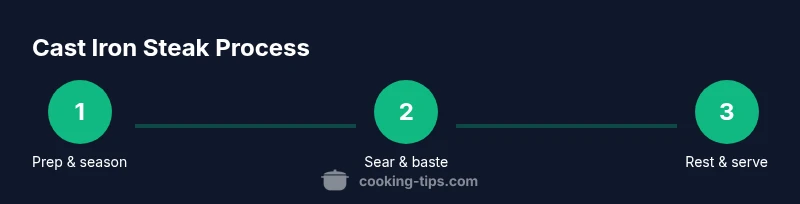
Cook Steak in a Cast Iron Skillet: A Step-by-Step Guide
Master a perfect steak in a cast iron skillet with a crisp crust and juicy center. This guide covers prep, searing, finishing, and resting for reliable results, with tips, steps, and troubleshooting.


Learn how to cook a perfect steak in a cast iron skillet with a crusty sear and a juicy center. You’ll need a well-seasoned skillet, high smoke-point oil, kosher salt, freshly ground pepper, and a thermometer. Follow preheating, searing, basting, and resting steps to maximize flavor and tenderness. This method adapts to different thicknesses and preferred doneness.
Why cast iron skillet is ideal for steak
Cast iron skillets heat evenly and retain heat long after the surface is hot, which helps form a strong, uniform crust. The pan’s weight promotes constant contact with the meat, improving browning and fond development for pan sauces. A well-seasoned surface behaves like nonstick and adds a touch of extra flavor when you sear at high heat. The combination of reliable heat retention, even browning, and the potential for a rich fond makes the cast iron skillet the preferred tool for home cooks who want restaurant-grade crust. According to Cooking Tips analysis, 2026, proper preheating to the right temperature yields noticeably better browning and crust formation, especially on thicker steaks. Starting with a dry, well-seasoned surface sets up the technique for consistent results across thickness and doneness levels.
Choosing the right cut and prep for best results
Your cut choice matters as much as your pan. Ribeye, New York strip, and sirloin all work, but thickness and marbling are key. A 1 to 1.5-inch-thick cut often delivers a good balance between crust and juiciness; thinner steaks can overcook quickly, while very thick cuts benefit from a staged finish. Dry the surface completely with paper towels to promote a crisp crust; moisture on the surface steams the meat instead of browning. Salt generously to draw moisture to the surface and help crust formation; you can salt 15–40 minutes ahead or right before cooking depending on your schedule. Pepper or herbs can be added before searing or after; coarse ground pepper holds up to high heat. Bring the steak closer to room temperature before it hits the pan for even doneness. While some cooks brush the meat with a light oil, avoid soaking the surface with oil to prevent splatter and uneven browning.
Tools and pantry prep you need
Before you start, assemble the essentials and a few optional extras. Essential: a heavy 12-inch cast iron skillet, sturdy tongs, an instant-read thermometer, and a clean resting surface. High smoke point oil (grapeseed, canola, or light olive oil) is crucial; use just enough to lightly coat the surface. Salt and pepper are your base seasonings, with butter and fresh herbs (thyme or rosemary) optional finishing touches. Optional but helpful: an oven for finishing thick cuts, and a heat-safe spoon for basting. A dry workspace and organized mise en place help you time the sear precisely, especially when aiming for a specific doneness. If you lack tongs, a wide spatula can work, but tongs protect the crust and reduce piercing the meat.
Preheating and oil: setting the stage for a perfect sear
Place the skillet on the stove and heat it over medium-high until the surface is hot and just begins to shimmer. Add a thin coat of high smoke point oil; tilt the pan to distribute evenly. Watch for a light shimmer and, just before the oil smokes, lay the steak in. The goal is a fast, brown crust that forms immediately, while the interior stays juicy. If the pan smokes excessively or smells burnt, reduce heat slightly and recheck the pan’s temperature. When done correctly, you’ll hear a satisfying sizzle that indicates ideal browning and fond formation. Remember: a properly heated pan makes all the difference in crust quality.
Mastering the sear: timing, flip, and crust development
Place the steak in the pan away from you to minimize splatter; allow it to sear without touching for a few minutes until a deep brown crust forms on the bottom. Use tongs to flip gently and sear the other side; avoid pressing down on the steak, which squeezes out juices. If you’re using butter or aromatics, add them after you flip and baste with the melted fat to finish the cooking. The aim is a crust-rich exterior while the interior moves toward your target doneness. Check doneness with a thermometer for precision, or rely on color and texture as a guide for thinner cuts. A successful sear yields a crust that’s deeply browned and flavors that are concentrated in the pan fond.
Finishing touches: butter, herbs, and resting
When the steak reaches the desired crust and interior, remove it and let it rest on a warm plate for 5–10 minutes. Resting allows the juices to redistribute, resulting in a juicier slice. If you like, add a pat of butter to the hot pan and spoon the melted butter over the steak during the final minutes of resting for extra richness. Slice against the grain to maximize tenderness and serve with your preferred sides. The resting phase is essential for a consistent texture and flavor profile after a high-heat sear.
Thick cuts and oven-finishing: when and how
For thicker steaks (about 1.5 inches or more), you can finish in a preheated oven to ensure doneness without burning the crust. After searing both sides, transfer the pan to a 400°F oven and cook until the internal temperature meets your target. This method ensures even doneness from edge to center while preserving the perfect crust. If your skillet isn’t oven-safe or you prefer not to use the oven, you can reduce heat after searing and continue cooking on the stove with the lid on to trap heat and finish cooking more evenly.
Authority sources and further reading
To deepen your understanding of meat science and safe cooking practices, consult reliable sources such as:
- USDA FSIS guidelines: https://www.fsis.usda.gov
- Penn State Extension: https://extension.psu.edu
- University of Illinois Extension: https://extension.illinois.edu These resources offer practical guidance on safe handling, resting times, and general cooking practice that complements hands-on kitchen experience.
Tools & Materials
- Cast iron skillet (12-inch or larger)(Well-seasoned for best crust)
- Tongs (long-handled)(For turning without piercing the steak)
- Instant-read thermometer(To check doneness precisely)
- Oven (optional)(Finish in oven for thick cuts)
- High smoke point oil (grapeseed, canola, or light olive)(Thin coat; avoid drowning the surface)
- Butter (unsalted) and fresh herbs (optional)(Finish baste for extra flavor)
- Paper towels(Pat dry steak before seasoning)
- Chef’s knife for slicing(Sharp, clean edge for even cuts)
Steps
Estimated time: 25-40 minutes
- 1
Pat dry and season
Pat the steak dry with paper towels and season generously with salt and pepper. Dry surface improves crust; salt helps draw out surface moisture for browning. Let sit briefly if time allows to enhance flavor.
Tip: Dry surface thoroughly; moisture impedes crust formation. - 2
Preheat pan to hot
Warm the skillet on medium-high until it’s hot and lightly shimmering. A properly heated pan is essential for a strong sear and even browning across the surface.
Tip: Test heat with a tiny drop of water; it should dance and evaporate quickly. - 3
Add oil and coat
Add a thin coat of high smoke point oil and swirl to coat the bottom. The oil helps prevent sticking and promotes an even crust. Wait for the oil to shimmer before placing the steak.
Tip: If the oil starts to smoke heavily, reduce heat slightly. - 4
Sear the first side
Lay the steak in away from you to avoid splatter and resist moving it for a few minutes. Once a deep crust forms, flip using tongs and sear the other side. Do not press the steak.
Tip: A good crust forms quickly; resist the urge to peek or move. - 5
Baste and finish
If using butter and aromatics, add them after flipping and tilt the pan to baste with the melted fat. Continue cooking to reach your preferred doneness.
Tip: Basting adds flavor; don't baste too early to avoid burning butter. - 6
Rest and slice
Remove the steak and rest on a warm plate for 5-10 minutes. Slice against the grain for tenderness and serve with pan juices or a simple side.
Tip: Resting is essential for juicy slices. - 7
Oven finish for thick cuts
For thick steaks, transfer to a 400°F oven after searing and cook until the center reaches the desired doneness.
Tip: Use a thermometer to target doneness for accuracy. - 8
Optional: pan sauce
Deglaze the pan with a splash of wine or broth, scrape up fond, and reduce into a quick sauce to serve with the steak.
Tip: Keep it simple to let the steak flavor shine.
Quick Answers
What internal temperature should I aim for when cooking steak in a cast iron skillet?
Doneness targets vary by taste: rare around 120-125°F, medium-rare about 130-135°F, medium 140-145°F, and well-done above 155°F. Use an instant-read thermometer to decide when to remove from heat and rest.
Aim for 130-135 degrees for medium-rare and adjust to your preference; use a thermometer to verify.
Should I salt the steak before cooking?
Yes. Salting in advance helps draw out moisture and builds a better crust. If you’re short on time, salt right before cooking and pat dry before searing.
Salt before cooking is best for flavor and crust; if pressed, salt right before and pat dry.
Is butter necessary when searing?
Butter is optional but adds rich flavor; many cooks baste with a mix of butter and oil or finish with butter toward the end of cooking.
Butter adds flavor but isn’t required; you can finish with oil-based fond if you prefer.
Can I cook steak on a non-stick pan instead?
A cast iron pan delivers the best crust and fond for pan sauces due to its heat retention. A non-stick skillet can be used for low-heat finishes but won’t brown as deeply.
Cast iron gives the best sear; you can use other pans, but the crust won’t be the same.
Why is resting important after cooking?
Resting allows juices to redistribute, ensuring a juicy slice and better texture. Skipping resting can result in a wetter, less pleasant bite.
Resting helps the juices settle so the steak stays juicy when cut.
Is finishing in the oven necessary for thick steaks?
It's optional but helpful for thick cuts to ensure even doneness without burning the crust. If you don't use an oven, lower the heat and keep battering with time on the stove.
Oven finishing is optional but useful for thick steaks to ensure even doneness.
Watch Video
Top Takeaways
- Preheat the cast iron properly for a crusty sear.
- Pat dry and season generously for flavor and browning.
- Rest the steak after cooking to lock in juices.
- Use a thermometer to hit your preferred doneness.