How to Cook Steak: Step-by-Step Guide for Juicy, Crusty Results
Learn how to cook steak to perfection with pan-searing, grilling, and finishing tips. This guide covers cut choice, seasoning, temperature targets, resting, and troubleshooting for home cooks seeking reliable, restaurant-quality results.


Mastering how to cook steak starts with choosing the right cut, drying the surface, seasoning well, and applying heat to form a crust while keeping a juicy center. This guide covers pan-searing, grilling, and finishing temps, plus resting and techniques to reproduce restaurant-quality results at home.
The core idea behind how to cook steak
To master how to cook steak, you need two things: heat management and moisture control. Start with a good cut and a surface dry enough to form a crust. According to Cooking Tips, drying the surface and patting with paper towels is essential for crust development. Cooking Tips Analysis, 2026, also highlights temperature control as crucial, almost as important as salt and pepper.
With the basics in place, you can choose tactics based on your equipment: pan-sear in a heavy skillet, grill over direct heat, or finish in a hot oven for thick cuts. The goal is a deeply browned crust while the interior stays juicy. Carryover cooking will continue after you remove the meat, so timing matters. A crust-first approach helps ensure even browning, and a thermometer will guide you to the target doneness without guessing.
Selecting the right cut and thickness
Steak quality starts with the cut and its marbling. Ribeye and New York strip are favorites for crust and richness, while filet mignon is leaner and cooks faster. Thickness matters: about 1 to 1.5 inches (2.5 to 3.8 cm) is ideal for pan-searing because it allows a good crust without overcooking the center. When possible, choose steaks that are evenly shaped for uniform searing. Let meat come to room temperature before cooking to promote even browning and consistent doneness throughout.
Seasoning and prep: dry surface and salt timing
Seasoning is simple but powerful. Generously coat the steak with salt on all sides; pepper can be added at the same time. Dry surface thoroughly with paper towels to promote a crust instead of steaming. If you have time, salt early (forty minutes to an hour) to enhance flavor and crust formation; if not, salt right before searing and you’ll still get a good crust. Some cooks brush lightly with oil, but a dry surface is often enough when you start with a hot pan.
Searing methods: pan-sear and cast-iron benefits
Pan-searing in a heavy skillet is the most forgiving home method. Preheat the pan until it is hot enough that a drop of water dances and evaporates quickly. Add a light coating of high-smoke-point oil (like canola or grapeseed) just before laying the steak in. Place the steak in the pan and resist the urge to move it for 2-4 minutes until a deep crust forms. Then flip and sear the other side. If you’re using a cast-iron pan, you’ll notice more even browning and better fond formation for later flavor.
Finishing options: oven finish and grill finish
Thick steaks or those that have started very cold benefit from finishing in a hot oven after a good sear. Transfer the pan to a preheated oven or move the steak to a hot grill to finish cooking through the center. Use a thermometer to approach your target doneness, then remove from heat slightly under to account for carryover. Resting the steak after cooking helps the juices settle and makes slicing easier.
Resting, slicing, and serving for juiciness
Resting is essential: move the steak to a warm plate and let it rest for 5-10 minutes before slicing. This pause allows the juices to redistribute and makes the final texture more tender. When you’re ready to serve, slice against the grain to maximize tenderness and consider a final sprinkle of flaky salt or a dab of herb butter for extra flavor.
Troubleshooting common issues and authoritative sources
Common issues include a steak that sticks to the pan, a crust that’s pale, or an overcooked center. To fix sticking, ensure the pan is hot and dry before adding the steak and avoid moving it early. If the crust isn’t browning, raise the heat slightly or let it sear a bit longer. For doneness control, use a meat thermometer and remove the steak a touch early for carryover cooking. Authoritative sources: • USDA FSIS beef safety guidance • CDC food safety guidance • OSU Extension beef cooking tips
Authoritative sources (for reference)
- USDA FSIS: beef safety and cooking guidelines
- CDC Food Safety: keeping meat safe to eat
- OSU Extension: beef cooking tips and best practices
Tools & Materials
- Heavy skillet (cast iron preferred, 12-inch)(A well-seasoned skillet provides even browning)
- Tongs (long-handled)(For turning without piercing the crust)
- Meat thermometer(Instant-read is ideal for quick checks)
- Paper towels(Pat dry thoroughly before searing)
- Kosher salt or sea salt(Coarse salt helps crust formation)
- Freshly ground black pepper(Coarse grind for even crust)
- Oil with high smoke point (e.g., canola, grapeseed)(Lightly coat the pan if dry surface isn't sufficient)
- Butter (optional)(For finishing and baste (add late to avoid burning))
- Fresh herbs (garlic, thyme) (optional)(For aroma during baste (optional))
Steps
Estimated time: 30-45 minutes
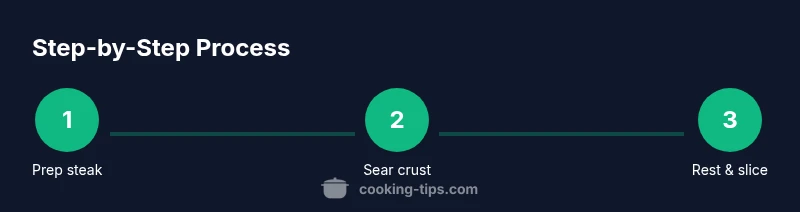
- 1
Prepare steak
Take the steak from the fridge 30-60 minutes before cooking to take off the chill. Pat dry thoroughly with paper towels. Lightly oil and season generously with salt and pepper.
Tip: Room-temperature meat sears more evenly and develops a better crust. - 2
Preheat your pan
Place a heavy skillet over high heat and let it heat until a drop of water dances and evaporates quickly. Have your oil ready to add just before the steak goes in.
Tip: A properly heated pan prevents sticking and promotes even browning. - 3
Sear the first side
Lay the steak in the pan away from you and resist moving it for 2-4 minutes until a deep crust forms. Check color before flipping.
Tip: If the crust resists or sticks, give it a bit more time before turning. - 4
Flip and sear the other side
Turn the steak with tongs and sear the opposite side until a similar crust forms. For thicker cuts, extend the sear on this side a bit longer.
Tip: Use even pressure to avoid curling edges. - 5
Finish to desired doneness
Check internal temperature with a meat thermometer and remove when slightly below your target to account for carryover cooking.
Tip: When in doubt, aim for a touch under to let carryover finish the job. - 6
Optional butter-basting
Add a knob of butter and aromatics to the pan; tilt and baste the steak for flavor and a glossy finish. Remove from heat once fragrant.
Tip: Baste only in the final minute to avoid burning aromatics. - 7
Rest the steak
Transfer to a plate and rest for 5-10 minutes to let juices redistribute. Do not slice immediately.
Tip: Resting is essential for juiciness and even texture. - 8
Slice and serve
Slice against the grain and serve immediately. If desired, finish with a light sprinkle of salt.
Tip: Slice just before serving for maximum tenderness.
Quick Answers
What thickness steak is best for pan-searing?
Thicker cuts around 1 to 1.5 inches are easier to manage; thinner steaks cook quickly and can overcook. Start with room-temp meat and monitor doneness closely.
Thicker cuts are easier to control; aim for about one to one and a half inches.
Should I salt before or after searing?
Salt generously before cooking to create a crust; if you have time, salt earlier to enhance flavor and crust formation; otherwise, salt right before searing and you’ll still get a good crust.
Salt early or just before cooking; both methods help crust formation.
Is butter and baste necessary?
Butter adds flavor; baste after searing to prevent burning; you can skip or use high-smoke oil if you prefer.
Butter baste is optional but tasty.
How do I know when the steak is done without a thermometer?
A thermometer is the most reliable method, but you can use the finger test and color cues as a guide if you don’t have one.
A thermometer is the surest method for doneness.
Can I cook steak in the oven instead of the pan?
Yes. Sear the steak on the stove, then finish in a hot oven to bring the center up evenly. Timing depends on thickness.
You can finish in the oven after searing.
Why is resting important?
Resting lets juices redistribute within the meat, producing a juicier, more tender slice.
Resting makes it juicier.
Watch Video
Top Takeaways
- Choose a thick, well-marbled steak.
- Pat dry and season generously for crust.
- Sear hot and finish to doneness with guidance from a thermometer.
- Rest 5-10 minutes before slicing.
- Cooking Tips's verdict: rest before slicing.