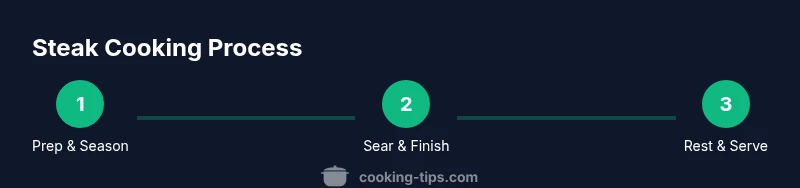
What Cook Steak In: The Home Cook's Guide to Juicy Steaks
Discover what to cook steak in and compare pan-sear, oven finish, grill, and air fryer methods. This in-depth guide covers timing, temperatures, resting, and flavor tips for juicy, perfectly seared steaks at home.


If you’re wondering what to cook steak in, your best all-purpose approach is a hot, well-seasoned pan for a crisp crust, followed by a gentle finish in the oven or on the grill. For thinner cuts, pan-sear and serve; for thicker steaks, reverse-sear or finish in the oven after searing. You can also use an air fryer for convenience, though crust texture may vary. The goal: precise heat, prompt rest, and a juicy interior.
What to cook steak in: deciding the best method
When you ask 'what cook steak in', you're deciding how to balance sear, crust, and doneness with your schedule and equipment. The truth is there isn't a single best method for every steak; the best choice depends on thickness, cut, and your flavor goals. The Cooking Tips team has found that most home cooks achieve reliable results by combining high-heat searing with a gentle finish, either in the oven or on a grill. For a quick, weeknight steak, a hot skillet can deliver a crust in 1-2 minutes per side, then a brief rest. For thicker cuts, you may want to reverse-sear: a low oven first, then a final crust in a hot pan. If you crave smoky flavor, the grill becomes your best friend. And if you want minimal equipment, an air fryer can work, though the crust differs. The important thing is to start with high-quality meat and a plan for doneness. The Cooking Tips team would also note that consistency comes from practice and careful timing.
How to choose method by steak characteristics
Different factors—thickness, fat distribution, and desired doneness—drive the best cooking path. A 1-inch ribeye responds well to a fast, hot sear followed by a short oven rest, while a 2-inch filet benefits from a longer crusting phase and more precise temperature control. The phrase 'what cook steak in' really becomes a question of balancing time with texture. According to Cooking Tips, thickness is the single biggest predictor of method, not just flavor preference. Also consider your equipment: cast-iron retains heat for crust development; grills add smoke; air fryers simplify timing but can yield a lighter crust. When in doubt, start with a quick pan-sear, then finish by your chosen method to target your preferred doneness.
Setting up your kitchen for great steak outcomes
Good results start with preparation: pat steaks dry, season generously, and let them warm to room temperature for even cooking. Preheat your pan or grill before adding meat to avoid sticking and ensure immediate crust formation. Consistent heat is the foundation for even doneness. The Cooking Tips team emphasizes that using a thermometer takes the guesswork out of doneness, especially with thicker cuts. Gather your tools ahead of time and keep a timer handy; this reduces second-guessing and helps you nail the exact interior you want.
Searing and crust formation: core technique for any 'what cook steak in' decision
A strong crust locks in juices and adds texture. Start with a small amount of high-smoke-point oil and a very hot pan. Place the steak away from you to avoid splatter, and resist the urge to move it during the first 60-90 seconds—this is when a crust forms. After one side is well browned, flip and continue. Butter, garlic, and herbs can be added in the final minute for aromatic depth. This approach works whether you’ve chosen pan-only, pan-then-oven, grill, or air fryer. The key is to keep the surface hot and the interior tender.
Finishing methods: oven, grill, or reverse-sear
Finishing in the oven employs gentle, even heat to bring the interior to target doneness without scorching the crust. A reverse-sear (low oven, then hot sear) is ideal for thick steaks and minimizes the risk of overcooking. Grilling offers bold flavor but requires closer attention to heat zones to avoid flare-ups. The air fryer can work for thinner cuts or when you want hands-off cooking, but expect a different crust than a skillet. Throughout all approaches, monitor internal temperature and rest before serving for maximum juiciness.
Temperature and doneness: a practical guide
Use an instant-read thermometer and aim for these ranges as rough targets: rare around 120-125°F, medium-rare 130-135°F, medium 140-145°F, and well-done above 155°F. Remember carryover heat will raise the final temp by a few degrees after resting. For safety, do not rely solely on time; temperatures provide the most reliable doneness indicator. The exact time will depend on thickness, starting temperature, and heat source. The key is to remove the steak when it’s a few degrees below your target, so resting completes the cooking.
Resting, slicing, and serving: unlocking juiciness
Resting 5-10 minutes after cooking lets juices redistribute, preventing a pool of juices on the cutting board. Slice against the grain for tenderness and present the steaks with a simple finishing salt or a drizzle of good butter. For dramatic effect, sprinkle flaky salt just before serving. If you’re serving multiple steaks, rest them together on a rack above a warm tray to maintain even temperature.
Flavor boosters, seasonings, and sauces to elevate the experience
While salt and pepper are essential, finishing with a pat of butter, garlic, or fresh herbs elevates aroma and gloss. For a touch of brightness, finish with a squeeze of lemon or a splash of acid-based sauce like chimichurri. If you’re cooking ‘what cook steak in’ for guests, consider offering a small selection of toppings—garlic butter, herb oil, and a classic pan sauce made from the fond left in the pan. The idea is to complement the crust, not overwhelm it.
Practical planning for different occasions: what to cook steak in on a schedule
A weekday dinner favors speed and reliability: pan-sear, rest briefly, and serve with quick sides. A weekend feast might use the reverse-sear method for perfect interior with a dramatic crust. If you’re cooking for a crowd, consider batch-prepping steaks and finishing in short bursts to ensure even results. Finally, always have a plan for leftovers: cool quickly, wrap, and refrigerate within two hours for best quality.
Safety and cleanup: keeping a clean plan
Always wash hands after handling raw meat and sanitize surfaces. Use a separate cutting board for raw steak to prevent cross-contamination. Don’t leave a hot pan unattended; it can produce dangerous flare-ups. After cooking, let the pan cool, then scrub with hot water and a non-abrasive scrubber to preserve seasoning on cast iron.
Tools & Materials
- Cast-iron skillet (12-inch or larger)(Heavy-bottom, well-seasoned pan yields best crust)
- Tongs with a long handle(For safe turning and lifting)
- Instant-read thermometer(Essential for precise doneness)
- High-smoke-point oil(Canola, grapeseed, or avocado oil)
- Salt (kosher or sea salt)(Season generously; adjust after searing)
- Freshly ground black pepper(Adds aroma and bite)
- Butter (optional)(For basting and flavor in the final minutes)
- Garlic cloves (optional)(Crushed or sliced for aroma)
- Fresh herbs (rosemary or thyme) (optional)(Adds aroma during finish)
- Oven (preheated to 400°F/204°C) or grill(Used for final cooking or reverse-sear)
- Kitchen timer(Helpful for precise timing)
- Paper towels(Pat meat dry before cooking)
Steps
Estimated time: 25-35 minutes
- 1
Prepare and season
Pat the steak dry with paper towels, then season generously with salt and pepper. Let it come to room temperature for about 20-30 minutes to ensure even cooking. The goal is a dry surface for crust formation and uniform doneness.
Tip: Season generously; salt at least 15-20 minutes before cooking for better seasoning penetration. - 2
Preheat pan
Place your cast-iron skillet on high heat and allow it to preheat until it begins to shimmer and lightly smoke. A hot pan ensures immediate crust formation when the steak makes contact.
Tip: Avoid overcrowding; cook one or two steaks at a time to maintain heat. - 3
Sear first side
Oil the pan lightly, then lay the steak away from you to avoid splatter. Sear undisturbed for 1-2 minutes until a deep brown crust forms.
Tip: Do not press or move the steak during the first crust; this damages crust formation. - 4
Flip and sear opposite side
Turn the steak with tongs and sear the other side 1-2 minutes. If using butter and aromatics, add them now and tilt the pan to baste.
Tip: Basting adds flavor and helps create a glossy surface; keep the heat steady to avoid burning butter. - 5
Finish to target doneness
If you’re aiming for medium-rare, transfer the pan to a preheated oven (around 400°F/204°C) or move to a grill with indirect heat, then monitor with a thermometer.
Tip: Remove from heat when the internal temp is 5–10°F below target; carryover heat will finish the job. - 6
Rest before slicing
Transfer the steak to a plate and rest for 5–10 minutes. Resting allows juices to redistribute, ensuring a juicy slice.
Tip: Loosely tent with foil to keep warmth without steaming the crust. - 7
Slice and serve
Slice against the grain for tenderness. Plate with any pan juices or melted butter and a light sprinkle of finishing salt.
Tip: Serve with simple sides that won’t overpower the steak’s flavor. - 8
Clean up and store leftovers
Let any leftovers cool briefly, then refrigerate in airtight containers within two hours of cooking.
Tip: Label leftovers with date for easy week-ahead meals.
Quick Answers
What is the best pan for steak?
A well-seasoned cast-iron skillet is widely regarded as the best option for achieving a deep, even crust with good heat retention. It works well on the stovetop and in the oven.
A well-seasoned cast-iron skillet is the best pan for steak because it holds heat well and creates a great crust.
Can I cook steak entirely in the oven?
Yes, you can finish steaks in the oven after a quick sear or even cook them fully at a moderate temperature. Expect less crust than pan-searing but even doneness with careful temperature control.
Yes, you can finish steaks in the oven after a quick sear, or cook them entirely in the oven with careful temperature control.
Should I salt the steak before cooking?
Yes. Salt helps season the meat and can improve crust formation. For best results, salt at least 15–20 minutes before cooking or even the night before for a deeper flavor.
Yes, salt the steak before cooking to enhance flavor and crust; 15 to 20 minutes is great, or salt ahead of time.
What temperature should steak reach for doneness?
Doneness is typically judged by internal temperature: around 120-125°F for rare, 130-135°F for medium-rare, 140-145°F for medium, and 155°F+ for well done. Remember carryover heat continues after resting.
For doneness, aim for about 120-125 for rare, 130-135 for medium-rare, 140-145 for medium, then rest.
Is reverse searing better for thick cuts?
Reverse searing can be ideal for thick cuts because it ensures even doneness through the center before a final crust. It minimizes the risk of a overcooked exterior.
Yes, reverse searing is great for thick steaks because it cooks the center evenly before a final crust.
How long should I rest after cooking?
Rest steaks for about 5-10 minutes after cooking. This allows juices to redistribute and improves juiciness and tenderness.
Rest for 5-10 minutes after cooking to keep juices inside the steak.
Watch Video
Top Takeaways
- Choose method based on steak thickness and cut.
- A hot pan creates a crust; finish with oven/grill for even doneness.
- Resting maximizes juiciness and flavor.
- Use a thermometer for precise doneness.
- Flavor boosters should enhance, not mask the crust.