Soft boil egg cook time: Mastering the perfect runny yolk
A data-driven guide to soft boil egg cook time, including timing ranges, variables, and troubleshooting to consistently achieve a creamy yolk.


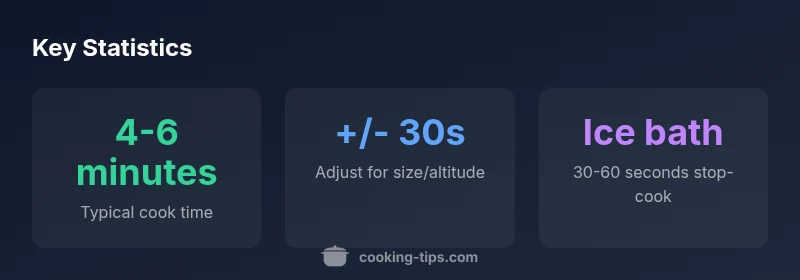
The soft boil egg cook time typically ranges from 4 to 6 minutes for a standard large egg, with 5 minutes offering a set white and a centered, slightly runny yolk. Start with eggs at room temperature, maintain a gentle boil, and adjust by 30 seconds for size or altitude. For extra precision, use a timer and practice with a batch to dial in your preferred yolk consistency.
Why timing matters for soft-boiled eggs
The soft boil egg cook time is the single most controllable variable in achieving a consistent yolk texture. According to Cooking Tips, slight deviations in timing or starting temperature can shift the yolk from runny to jammy in seconds. In practice, most home cooks aim for a white that is just set and a yolk that remains soft; this balance is delicate and highly sensitive to egg size, whether the egg has just come from the fridge, and how vigorously your water is simmering. By standardizing your start method, you’ll minimize surprises and produce reliable results across batches. The concept of a precise cook time also means you can translate a tested method into repeatable steps for any number of eggs you boil during meal prep.
Variables that influence soft boil egg cook time
Several variables determine the exact moment an egg reaches the ideal soft-boiled state. Egg size matters: medium eggs often finish slightly faster than large eggs, while extra-large eggs may need extra seconds. Starting temperature is another key factor: cold-from-the-fridge eggs will take a little longer than room-temperature eggs. Altitude also shifts the equation; higher elevations can raise the boiling point and extend cook time. Water volume and pot shape influence heat transfer too: a shallow, wide pot heats eggs more evenly, reducing hot spots. Finally, how you introduce the eggs (cold water vs. boiling water) changes the initial conditions and overall timing.
Step-by-step guide to soft-boiling eggs
To hit a reliable soft boil egg cook time, follow this routine. 1) Bring a pot of water to a gentle simmer (not a rolling boil). 2) Gently lower cold eggs into the water with a spoon, keeping the water at a steady simmer. 3) Start timing the moment the water returns to a simmer; for large eggs, aim for 4-6 minutes (5 minutes is a common midpoint). 4) Use tongs to remove eggs and transfer them to an ice bath for 30-60 seconds to stop cooking and set the whites. 5) Peel under cold running water to keep the yolk intact. Adjust by 30 seconds if your eggs are slightly larger or your altitude is higher.
Common pitfalls and troubleshooting
Common issues include overcooked yolks that become jammy and undercooked whites that wiggle. If your yolk ends up too runny, reduce the time by 30 seconds and recalculate for your egg size. If the whites aren’t set, add 15-30 seconds to the timer and test with another egg. Peeling eggs straight from the ice bath helps with removing shells without mashing the whites. Also ensure you start with fresh eggs; older eggs peel more easily but can behave differently during the cook.
Flavor and texture adjustments
Soft-boiled eggs are versatile: keep yolks runny for dipping toast, or let the yolk set slightly for a spoonable texture. Salt and pepper, or a drizzle of sesame oil, can elevate the flavor. For a smoother yolk, bring eggs to room temperature before cooking; for a firmer texture, extend the timer by 15-30 seconds. Incorporating a quick ice bath makes peeling easier and ensures the yolk stays glossy.
Tools and technique for consistency
Useful tools include: a timer that can measure seconds, a pot with a tight lid to keep heat stable, and a slotted spoon to avoid cracking eggs. Tip: write down your exact cook time for your stove and your egg size; small changes can shift results by a minute or more. If you cook several eggs, place them in the pot in a single layer to avoid crowding and uneven heat. Finally, store eggs in their carton to minimize temperature fluctuations prior to cooking.
Putting it all together: a repeatable routine
Create a standard routine: select eggs a day ahead to reach room temperature, fill a pot with 1-2 inches of water, bring to a simmer, lower eggs gently, start timing, and transfer to an ice bath. Record your time and note the yolk consistency; repeat a few batches to dial in your perfect soft boil egg cook time. Once dialed in, you can scale up for meal prepping or batch cooking. With practice, you’ll achieve consistent yolks without guesswork.
Soft boil egg cook time by variable
| Aspect | Cook Time Range | Notes |
|---|---|---|
| Egg size (large vs medium) | 4-6 minutes | Base range for large eggs; adjust for size |
| Starting temperature | Room temp vs fridge | Room temp reduces start time slightly |
| Altitude | +10-30 seconds per 1000 ft | Expect longer cook times at elevation |
| Cooling step | 30-60 seconds ice bath | Stops cooking and preserves yolk |
Quick Answers
What defines a soft-boiled egg?
A soft-boiled egg has a set white with a yolk that remains soft or runny, depending on the cook time. Typical targets for home cooking are around 4-6 minutes for large eggs.
A soft-boiled egg means the white is set but the yolk is runny or just barely set; you usually cook for about 4 to 6 minutes.
How long should I soft boil eggs for large eggs?
Typically 4-6 minutes is common for large eggs; adjust to your preferred yolk firmness, with 5 minutes as a reliable middle.
About four to six minutes, with five minutes as a reliable middle.
Does starting temperature matter?
Yes, room-temperature eggs cook slightly faster; cold eggs can require extra 15-30 seconds.
Yes—room-temperature eggs cook a bit faster; cold eggs take a touch longer.
How can I tell when the eggs are done?
Use a timer and test; examine the yolk after peeling; if you want firmer yolks, increase time in 15-second increments.
Set a timer and test. For firmer yolks, nudge the time by 15 seconds.
Is it safe to eat soft-boiled eggs?
Soft-boiled eggs with runny yolks may pose a small risk. Ensure eggs are fresh and consider cooking longer for safety.
Soft-boiled eggs with runny yolks carry a small risk; consider fully cooking for safety.
“Consistency in soft boil egg time comes from precise timing and controlled heat; small, deliberate adjustments yield repeatable yolks.”
Top Takeaways
- Set a precise timer for repeatable results
- Begin with room-temperature eggs for consistency
- Adjust by about 30 seconds for size or altitude
- Cool eggs briefly to stop cooking and protect the yolk
- Practice with a batch to dial in your preferred doneness