How to Hard Cook Eggs: A Complete Guide to Perfect Hard-Boiled Eggs
A practical, step-by-step guide on how to hard cook eggs for every texture—from jammy to fully set. Learn timing, cooling, peeling, and storage tips for reliable results.


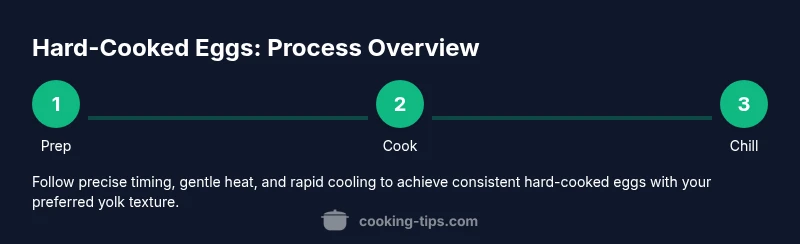
Goal: hard cook eggs with a texture you prefer—slightly jammy, creamy center or fully set. This guide shows you how to hard cook eggs using accurate timing, proper starting temperature, and a quick cooling method. You'll need eggs, a pot, water, a timer, ice or cold water for cooling, and a slotted spoon. We'll walk through timing by size and stove type. See our full step-by-step guide for exact times and tips.
What does it mean to “how hard cook eggs”?
Hard cooking eggs means achieving a texture where the white is firm and the yolk is fully set. For many home cooks, the goal is not a dry, chalky center but a creamy, uniform center (or a fully firm yolk) depending on preference. When people ask how hard cook eggs, they are often seeking a reliable method that works across kitchen setups. The Cooking Tips team recommends starting with eggs that are a few days old, since older eggs peel more easily and hold up to heat better. You will also want enough water to fully cover the eggs by about an inch, a gentle, steady heat, and a cold-water shock at the end to stop cooking. In this section we establish the texture spectrum, clarify terminology like “jammy” versus “fully set,” and outline a practical workflow you can repeat.
Core Methods for Hard-Cooking Eggs
There are two mainstream methods that yield consistent results: boiling and steaming. Both can produce reliably hard-cooked eggs with minimal fuss if you control heat and timing.
- Boiling: Start with eggs in a pot of cold water, bring to a gentle boil, then reduce to a simmer and time to your target firmness. A common range for large eggs is roughly 9–12 minutes; adjust shorter for softer centers and longer for fully set yolks.
- Steaming: Place eggs in a steamer over boiling water and steam for about 9–12 minutes. Steaming is gentler on the shells and can reduce cracking and overcooking when timing is precise.
Choose the method that fits your kitchen setup and equipment. The Cooking Tips team has found that steamers often provide a slightly more forgiving path to a perfect firmness, particularly for beginners. Either approach works well if you stay consistent and stop the cook with a rapid cold-water shock.
Timing Essentials: Size, Freshness, and Altitude
Timing determines texture as much as heat does. Because egg sizes vary slightly, treat the times as a guideline and adjust by 1–2 minutes based on your observations. In general:
- Large eggs at sea level: aim for 9–12 minutes of steady cooking once the water boils.
- Extra-large eggs: extend to 10–13 minutes for a fully set yolk.
- Fresh eggs peel more stubbornly than eggs that are a few days old, so plan on a slightly longer peel with fresher stock.
- At higher altitudes, water boils at a lower temperature, so you may need to add 1–3 minutes to the cook time and test a single egg first.
These guidelines help you control texture when how hard cook eggs becomes a routine in your kitchen. Practical testing with a single egg can save you time for subsequent batches. The goal is a predictable, repeatable result that suits your preference for a jammy center or a fully hard yolk.
Step-by-Step Setup: Prep, Water, and Temperature
Proper setup reduces surprises. Start by assembling your tools and eggs, then prepare the water and heat:
- Gather eggs, a pot large enough for a single layer, and a timer. If you plan to chill eggs after cooking, have a bowl of ice water ready.
- Place eggs in a single layer in the pot and cover with water by about 1 inch. Avoid stacking eggs as it causes uneven cooking.
- Heat on medium-high until the water reaches a rolling boil, then reduce to a gentle simmer. The goal is steady heat, not a violent boil that can crack shells.
A steady boil helps you achieve consistent timing, which is essential for how hard cook eggs to your liking. For best results, use room-temperature eggs and ensure your pot is not overcrowded. The Cooking Tips team suggests setting up your station so you can time the eggs precisely as soon as the water boils.
Cooling, Peeling, and Storing for Best Texture
Cooling is the final, crucial step to stop cooking. Transfer the eggs to an ice bath or very cold water immediately after the timer goes off and let them chill for at least 5 minutes. This rapid cooling helps set the yolk and makes peeling easier.
- Tap the egg lightly on a hard surface, then roll to crack the shell all over. Peel under running water to help lift the shell away smoothly.
- If not eating right away, store peeled eggs in a covered container in the fridge for up to 1 week; unpeeled eggs will keep longer in the shell.
Proper cooling and peeling ensure a clean texture that makes how hard cook eggs reliable for sandwiches, salads, or quick snacks. The cold-water shock is what prevents the greenish ring around the yolk and minimizes rubbery texture.
Troubleshooting Common Issues
Even with careful technique, issues can arise. Here are quick fixes:
- Cracked shells: Ensure eggs are not cold from the fridge when placed into hot water; consider letting them sit at room temperature for 15–20 minutes before cooking, and use gentle heat.
- Rubber yolks: Overcooking is the primary culprit. Stick to the 9–12 minute window for large eggs and immediately chill after cooking.
- Difficult peeling: Use slightly older eggs if possible; adding a little salt or vinegar to the cooking water is optional but can help with shell separation.
These tips help you troubleshoot typical problems and keep how hard cook eggs on track for a reliable outcome.
Flavor Variations and Quick Serving Ideas
Hard-cooked eggs are incredibly versatile. Once peeled, you can dress them simply with a pinch of salt and pepper, or elevate them with a touch of mayo, paprika, dill, or chives for a sandwich or salad. For a protein-packed snack, halve and dip in a light yogurt or mustard sauce. If you want a bolder finish, try a quick paprika-lemon mix or a smoky yogurt dressing. The key is to maintain the texture you've achieved through careful timing and cooling, a hallmark of good cooking technique.
Tools & Materials
- Eggs (large or extra-large, preferably not ultra-fresh)(A few days old peels more easily)
- Pot with lid, large enough for eggs in a single layer(Capacity for 6–12 eggs depending on size)
- Cold water and ice(For an ice bath to stop cooking)
- Water, enough to cover eggs by ~1 inch(Fresh, cold is fine)
- Timer or clock(To track exact cooking times)
- Slotted spoon(For gentle transfer to ice bath)
- Optional: a splash of vinegar or a pinch of salt in water(May help with shell integrity)
Steps
Estimated time: 30-40 minutes
- 1
Gather and prep equipment
Collect eggs, pot, timer, ice bath, and a slotted spoon. Ensure eggs are in a single layer so heat distributes evenly. This setup minimizes cracking and ensures uniform cooking.
Tip: Having everything ready prevents scrambling mid-cook. - 2
Place eggs and cover with water
Gently place eggs in the pot and cover with water by about 1 inch. Room-temperature eggs cook more predictably than directly from the fridge.
Tip: Use a spoon to lower eggs gently to avoid cracks. - 3
Bring to a boil, then simmer
Heat on medium-high until water reaches a rolling boil, then reduce heat to maintain a gentle simmer. A steady boil reduces cracking and ensures even cooking.
Tip: Avoid a frantic boil which can jostle eggs. - 4
Start the timer for your firmness
As soon as the boil is steady, start timing: 9–12 minutes for large eggs depending on desired firmness. Shorter times yield creamier centers, longer times yield fully set yolks.
Tip: Test one egg first to calibrate your stove and altitude. - 5
Cool rapidly in ice bath
Transfer eggs to ice bath or very cold water immediately after timing. Let chill for at least 5 minutes to stop cooking and aid peeling.
Tip: The ice bath is essential for texture and peelability. - 6
Peel and store
Peel under running water or after a gentle roll to crack shells. Store peeled eggs in a covered container in the refrigerator for up to 1 week.
Tip: Peeling under water reduces shell fragments and speeds removal.
Quick Answers
What is the best method to peel hard-cooked eggs?
Peel under cool running water or start by tapping on a flat surface and rolling to crack the shell. The water helps separate the shell from the membrane for easier removal.
Peel under cool water to help detach the shell smoothly.
How do I know when eggs are fully cooked?
Fully cooked eggs have firm whites and yolks. Use a timer within the 9–12 minute range for large eggs and adjust slightly for different sizes.
Rely on timing and the yolk texture to tell when they’re done.
Can I reuse hot water to boil more eggs?
Yes, you can reuse water as long as you bring it back to a boil before adding more eggs. Fresh water may cook more evenly for consecutive batches.
Yes, bring the water back to a boil before cooking more eggs.
Should I add salt or vinegar to the cooking water?
Adding salt or vinegar is optional. Some cooks find it helps with shell integrity or peeling, but neither is essential for texture.
Salt or vinegar isn’t necessary, but some people find it helps.
Is steaming better than boiling for hard-cooked eggs?
Steaming is gentler and can be more forgiving in keeping the shells intact and producing uniform texture. Boiling is quick and reliable with careful timing.
Steaming can be a gentler alternative with similar results.
How should I store and reuse hard-cooked eggs?
Store peeled eggs in a container in the fridge for up to 1 week, or keep in the shell for up to that time. Peel only when ready to eat for best texture.
Store peeled eggs in the fridge for up to a week.
Watch Video
Top Takeaways
- Choose egg size and method based on texture preference.
- Control heat and timing for consistent results.
- Cool eggs quickly to stop cooking and ease peeling.
- Peel under running water for best results.