How to Cook Soft-Boiled Eggs: A Complete Guide
Master soft-boiled eggs with velvety yolks and firm whites. This educational guide covers timing, equipment, troubleshooting, variations, and serving ideas for reliable, restaurant-worthy results at home.


By the end of this guide you will know exactly how to cook soft-boiled eggs with a velvety yolk and firm whites. You’ll learn the precise timing, the best equipment, and practical tips to reproduce consistent results every time. We’ll cover water temperature, cook duration, cooling, peeling, and serving ideas for everyday meals.
The science of soft-boiled eggs: yolk, white, and timing
When you heat eggs in water, heat travels from the outer white toward the center. The white firms first, the yolk remains liquid until you reach a precise temperature window. For ideal soft-boiled eggs, aim to keep whites just set while the yolk remains soft and pourable. Factors that affect timing include egg size, temperature coming from the fridge, altitude, and how vigorous your boil is. Small deviations in minutes can shift yolk texture from truly runny to chalky. Mastery comes from consistent technique: use the same size eggs, start from cold water, and maintain a gentle simmer, not a rolling boil. This minimizes shock to the shell and makes peeling easier when done correctly. A reliable approach blends science with technique: you’re watching for a balance between resistant white and a welcomingly soft yolk.
Essential equipment and ingredients
The right tools make soft-boiled eggs predictable. You want a deep, wide pot large enough to hold eggs in a single layer with room for water movement. A slotted spoon is invaluable for lowering eggs gently and retrieving them without cracking. Use fresh or slightly older eggs depending on peeling preference. Ingredients are simple: eggs, water, a pinch of salt (optional), and a quick ice bath to stop cooking. Optional items like a kitchen timer or a timed thermometer can improve accuracy, especially if you’re new to the method. Keeping the setup minimal reduces variables and improves consistency across attempts.
Timing matters: choosing the right cook time for your yolk
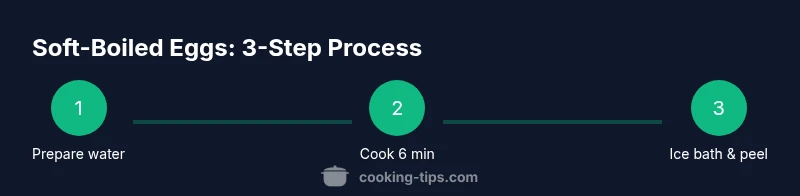
The window for a soft yolk is relatively narrow. A 5-minute cook yields a very runny center; 6 minutes tends to give a balanced, velvety yolk with firmer whites; 7 minutes approaches a more custard-like yolk while whites stay mostly set. Egg size and starting temperature influence these results, so use the same size and stocking method for best reproducibility. Practicing with a timer and recording your preferred duration will help you dial in your perfect soft-boiled egg. If you’re cooking for a crowd, aim for a standard time (such as 6 minutes) and adjust only for large variances in egg size.
The ideal cook setup: water, eggs, and technique
Start with enough water to cover the eggs by about an inch, then bring to a gentle simmer. A rapid boil can jostle shells and cause cracking. Lower the eggs into the water with a spoon, keeping them in a single layer to ensure even cooking. Keep the water simmering lighty for steady heat transfer, then begin timing once the water is at the correct temperature. After cooking, transfer the eggs to an ice bath to halt cooking and make peeling easier. A calm, controlled process reduces the risk of overcooking or undercooking.
Troubleshooting common issues
If the whites are undercooked, your cook time was too short or your water wasn’t at a true simmer. If the yolk is too runny, extend the cook time by 15-30 seconds on your next attempt. Cracked shells usually come from eggs that were very cold or jolted into boiling water; ensure eggs are handled gently and that water is at a steady simmer before submerging them. If peeling is difficult, try using eggs that aren’t ultra-fresh or peel under running water to help loosen the membrane. A consistent routine—same pot, same water temperature, same egg size—reduces these common missteps.
Variations for yolk texture and egg size
Egg size (large, medium, extra-large) shifts cooking times slightly. For a slightly larger egg, add 15-30 seconds; for smaller eggs, subtract similarly. You can also tailor yolk texture by adjusting the final rest time in the ice bath slightly. If you prefer a very runny yolk, aim for 5-6 minutes; for a more custard-like center, edge toward 7 minutes, with cooling to stop carryover heat. Finally, consider finishing with a light dusting of salt or a drizzle of olive oil to accent the yolk.
Serving ideas and finishing touches
Soft-boiled eggs pair beautifully with warm toast, avocado, or a simple soldier toast for dipping. A sprinkle of flaky salt, cracked pepper, or chili flakes can wake up the yolk’s richness. For a gourmet touch, serve over sautéed greens, a spoon of pesto, or a touch of truffle salt. If you’re aiming for a comforting breakfast, serve alongside a light grain like quinoa or a slice of crusty sourdough. The yolk’s silkiness invites a range of pairings, so feel free to experiment with textures and flavors.
Quick-start checklist for perfect soft-boiled eggs
- Use eggs that fit your peeling preference
- Start with a gentle simmer; avoid rolling boils
- Submerge eggs in a single layer
- Time the cook precisely and start cooling immediately
- Peel under cool running water for easy removal
Tools & Materials
- Pot large enough for eggs in a single layer(Deep enough to cover eggs by ~1 inch)
- Water(Cold water to start; adequate to cover eggs)
- Digital timer or clock(Accurate timing is essential)
- Slotted spoon(Gently lowers eggs into water)
- Ice bath or cold water(Stops cooking quickly and aids peeling)
- Bowl for de-chilling/peeling under water(Optional but helpful for peeling)
- Eggs (room temperature ideal)(If using fridge eggs, allow 20-30 minutes to warm)
- Salt (optional)(A pinch can season water and shell slightly)
Steps
Estimated time: 12-15 minutes
- 1
Gather ingredients and set up equipment
Collect eggs, a pot, water, a timer, and a slotted spoon. Arrange a bowl for the ice bath and towels for drying. Verify you have all items within arm’s reach so you won’t interrupt the process.
Tip: Having everything ready reduces mid-step delays. - 2
Heat water to a gentle simmer
Place the pot on the stove, add water, and bring it to a gentle simmer. Avoid a rolling boil to minimize shell cracking and ensure even heat transfer to every egg.
Tip: A calm simmer is more forgiving than a vigorous boil. - 3
Lower eggs into the water
Use a slotted spoon to gently lower the eggs into the water in a single layer. Slow immersion helps prevent cracks and promotes uniform cooking.
Tip: Support the eggs as they enter the water to avoid bouncing against the bottom. - 4
Start timing once submerged
Set a timer for your target duration (6 minutes is a common starting point). Maintain a steady simmer and avoid stirring to keep heat even around each egg.
Tip: Consistency is key—use the same timer setup every time. - 5
Prepare an ice bath
While the eggs cook, prepare a bowl of ice water. After the cook time, transfer the eggs immediately to the ice bath to halt cooking and set the whites.
Tip: Ice water speeds cooling and makes peeling easier. - 6
Peel and test for doneness
Peel eggs under running cold water, starting at the wider end. Check yolk consistency and adjust future times if needed for your preferred texture.
Tip: Peeling under water helps prevent tearing the delicate whites. - 7
Serve with your favorite accompaniments
Add salt, pepper, or a splash of olive oil. Serve with toast soldiers, greens, or a grain bowl to complete the meal.
Tip: A short rest after peeling allows the yolk to settle for the perfect bite. - 8
Adjust for size and preference
If your eggs are very large or you desire a different yolk level, tweak the cook time by 15-30 seconds per attempt.
Tip: Keep a small log of times and results for quick reference.
Quick Answers
How long should I boil eggs for a soft yolk?
Typical soft-yolk results come from about 5-7 minutes of simmering, depending on egg size. Start with 6 minutes for a balanced center and adjust by 30 seconds for preference. Always finish with an ice bath.
Soft yolks usually come from about six minutes of simmering, with adjustments for size and preference.
Should I use fridge-cold or room-temperature eggs?
Room-temperature eggs cook more evenly and peel easier, but you can use fridge eggs if you plan to warm them briefly in warm water before cooking.
Room-temperature eggs cook more evenly; if using fridge eggs, allow 20-30 minutes to warm.
How do I peel a soft-boiled egg without tearing the white?
Crack the broad end and peel under running water or in a bowl of water. The water helps loosen the shell and prevents tearing.
Crack the top and peel under running water to avoid tearing the white.
Can I cook multiple eggs at once?
Yes, but keep them in a single layer and avoid overcrowding. Use a pot large enough to maintain a gentle simmer.
Yes, cook in a single layer with enough space so they cook evenly.
What if the yolk is undercooked or overcooked?
If yolk is too runny, shorten cooking time next attempt; if too firm, lengthen by 15-30 seconds next time.
Adjust cook time by small increments until you reach your preferred yolk consistency.
Watch Video
Top Takeaways
- Peel under cool water for ease and cleanliness
- Maintain a gentle simmer to ensure even cooking
- Aim for a 5–7 minute window for soft yolks
- Cool immediately in ice bath to stop carryover cooking