Slow Cook Ribs in a Slow Cooker: A Step-by-Step Guide
Learn how to slow cook ribs in a slow cooker for tender, flavorful results. This guide covers rib selection, prepping, rubs, moisture options, timing, finishing, safety, and storage for a fail-safe weeknight favorite.


Learn how to slow cook ribs in a slow cooker to achieve tender, flavorful results. This guide covers choosing ribs, trimming, seasoning, sauce options, correct layering, cooking times, and safe internal temperatures, plus tips for shortcuts and cleanup. Whether you prefer dry rubs or glaze, bone-in or spare ribs, this method delivers consistent, restaurant-quality results with minimal hands-on time.
Why slow cook ribs in a slow cooker
Slow cooking ribs in a slow cooker is a reliable way to coax maximum tenderness while keeping the meat juicy and flavorful. The slow, steady heat allows collagen in the ribs to break down gradually, resulting in meat that pulls cleanly from the bone. For home cooks with busy schedules, the method delivers consistent results with minimal hands-on time, making weeknight dinners feasible without sacrificing flavor. According to Cooking Tips, slow cookers excel at maintaining moisture and distributing heat evenly, which helps avoid dry edges that can happen in some oven-based methods. The technique also reduces the need for constant monitoring, so you can multitask or prepare sides while the ribs cook. If you prefer a hands-off approach but still want depth of flavor, this method pairs nicely with simple rubs, a splash of liquid, and a short finishing glaze to brighten the glaze and aroma. In short, a slow cooker turns tough racks into tender, fall-off-the-bone ribs with little fuss.
Choosing the right ribs
When selecting ribs for the slow cooker, you have two common options: baby back ribs and spare ribs. Baby backs are leaner and cook a bit faster, while spare ribs offer more meat per rib and can yield a heartier bite. Both cuts work well in a slow cooker, but your choice can influence cook time, appearance, and how much sauce clings to the meat. Cooking Tips analysis shows that both cuts perform well in this method, especially when you want generous portions with reliable tenderness. If you’re cooking for a crowd or want extra meat for leftovers, spare ribs are a solid choice; for a quicker weeknight dinner, baby backs can save a bit of time without sacrificing flavor. Regardless of cut, aim for evenly sized racks to ensure uniform cooking throughout.
Essential prep: trimming, membrane removal
Before any seasoning, give the ribs a quick check for uneven edges or thick fat caps. Trim excess fat with a sharp knife, then remove the silver skin (the tough membrane) from the back of the rack. Removing the membrane lets rubs and flavors penetrate more deeply and helps the meat finish more evenly. Pat the ribs dry with paper towels to improve rub adhesion and prevent excess moisture from diluting flavors. A dry surface also promotes better browning in any optional searing step. Keeping prep consistent ensures every bite tastes balanced and avoids a soggy finish that can occur if too much liquid pools in the cooker.
Dry rubs and marinades: flavors that work
Rubs are a simple way to layer flavor without relying on heavy sauces. A balanced dry rub typically includes salt, paprika, garlic powder, onion powder, black pepper, and a touch of brown sugar or smoked sugar for caramelization. If you prefer a marinade, combine similar spices with a little oil and a splash of acid (like vinegar or citrus) to help the rub cling. Whatever you choose, apply the rub evenly to both sides and let the flavors meld with the meat for at least 15 minutes, or up to several hours in the fridge for deeper penetration. Cooking Tips emphasizes that even coverage matters more than the exact spice mix; a consistent coat yields more uniform flavor.
Liquid options for moisture and flavor
A small amount of liquid beneath the ribs in the slow cooker helps maintain moisture and prevents sticking. Popular options include low-sodium stock, apple juice, beer, or a combination of stock with a splash of acid (vinegar or lemon). You can also add a few tablespoons of barbecue sauce to the liquid for a subtle glaze as the meat finishes. The goal is to provide moisture without drowning the ribs. Avoid filling the cooker with liquid to the top; you want steam and heat to circulate freely for even cooking.
Layering and arranging in the slow cooker
Arrange the ribs in a single layer if possible, or stand them upright against the sides of the cooker so the bones touch the ceramic and the meat sits closer to the heat. Layering helps heat and moisture reach each rib more evenly. If you’re short on space, cut the racks into sections and stagger them around a shallow trivet or small steamer rack to improve air circulation. The goal is consistent contact with heat and moisture while preventing large air pockets that can slow cooking.
Cooking times and temperature guidance
For tender, fall-off-the-bone ribs, cook on low for about 6–8 hours or on high for 4–6 hours. Times can vary based on rib size, thickness, and your slow cooker’s particular heat pattern. Do not rely on a fixed clock; check for tenderness by inserting a fork between bones; if it slides in with little resistance, you’re close. If you notice uneven tenderness, rotate the ribs halfway through cooking or adjust the liquid level to maintain even moisture. The goal is to reach a point where the meat yields to gentle pressure without shredding.
Finishing touches: glaze, broil, or grill briefly
Finish with a glaze or sauce for a glossy, flavorful coating. Apply the sauce in the final 15–20 minutes of cooking if you want it to thicken and cling, or finish with a brief broil (or a quick grill) after removing the ribs from the slow cooker. This step creates a caramelized surface that contrasts beautifully with the tender meat inside. Let the ribs rest for a few minutes before slicing to allow juices to redistribute and flavors to settle.
Safety and food handling tips
Handle raw pork with care to avoid cross-contamination. Wash hands, utensils, and surfaces after contact with raw meat, and sanitize cutting boards. Check the internal texture and ensure the ribs are tender but not overcooked to the point of falling apart. Use a meat thermometer if you’re unsure about doneness, and always store leftovers in a clean, shallow container in the refrigerator within two hours of cooking. Following these guidelines helps ensure a safe, delicious result every time.
How to adapt for different slow cookers
Different slow cookers vary in heat output and capacity. If yours is older or runs hot, start checking for doneness a little earlier and adjust liquid levels to prevent burning. Larger seconds may require a longer cook time or a wider surface area; smaller Crock-Pots may need a little more help with moisture, such as a light glaze or additional broth. Practicing with your specific model will help you dial in the ideal timing and texture for future batches.
Troubleshooting common issues
If the ribs are not tender after the minimum time, extend the cooking by an additional 1–2 hours on low, adding a splash of liquid if the surface seems dry. If the meat tastes bland, it may need a bolder rub or glaze; you can finish with a stronger sauce that clings to the surface for extra punch. If the texture is mushy, you likely cooked too long or used too much liquid; remove the ribs and reduce the remaining liquid to concentrate flavor. Finally, if ribs look pale, a quick sear in a hot pan or under a broiler can restore color and aroma.
Flavor boosters and storage
To vary flavor, consider finishing with different sauces, such as a spicy glaze, honey-garlic glaze, or a tangy tomato-based sauce. Store leftovers in airtight containers in the refrigerator for several days, or freeze for longer storage. When reheating, cover the ribs to retain moisture and heat gently to avoid drying out the meat. Cooking Tips suggests labeling containers with the date to keep track of freshness.
Tools & Materials
- Slow cooker (7-8 quart recommended)(Look for a model with a rack insert if possible)
- Sharp knife(For trimming and membrane removal)
- Cutting board(Protect surfaces; keep meat separate from veggies)
- Mixing bowls(For rubs and marinades)
- Tongs(Handling hot ribs safely)
- Measuring spoons(Accurate spice amounts)
- Meat thermometer(Verify tenderness and safety)
- Aluminum foil(For finishing glaze or resting loosely)
Steps
Estimated time: Total time: 6-8 hours on low (4-6 hours on high) plus 15-20 minutes finishing
- 1
Prepare ribs
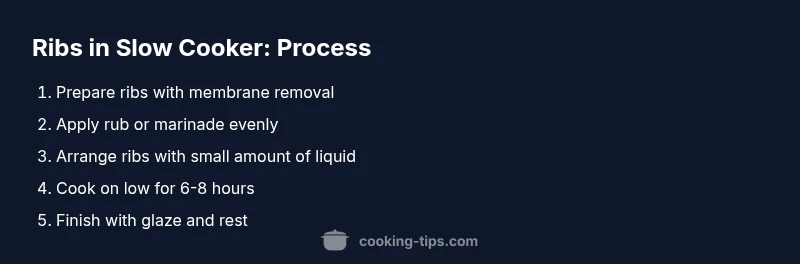
Trim any excess fat and remove the silver skin from the bone side. Pat dry to create a good surface for rubs. This step ensures better flavor absorption and avoids a milky, watery surface during cooking.
Tip: Dry surface = better rub adherence and flavor. - 2
Apply rub or marinade
Evenly coat both sides with your chosen rub or marinade. Massage the spices into the meat to promote even flavor distribution. Let sit at room temperature for 15-20 minutes or refrigerate longer for deeper flavor.
Tip: Cover and rest to maximize flavor absorption. - 3
Optional browning step
If you have time, quickly sear the ribs in a hot skillet to develop Maillard flavor before slow cooking. This step adds depth, but is optional if you’re short on time.
Tip: Watch closely to avoid burning the rub. - 4
Add liquid and arrange ribs
Pour a small amount of liquid into the slow cooker and arrange the ribs, bone side down or standing upright to maximize contact with heat and moisture. Secure a uniform cook by avoiding overstacking.
Tip: Keep the top relatively dry to prevent soggy surfaces. - 5
Set time and temperature
Cover and cook on low for 6-8 hours or on high for 4-6 hours, depending on ribs size and cooker performance. Avoid lifting the lid frequently to retain heat and moisture.
Tip: Low and slow yields the best tenderness. - 6
Finish with glaze and rest
If using glaze, apply in the last 15-20 minutes or after cooking and briefly broil for a glossy finish. Allow the meat to rest for 5-10 minutes before slicing to redistribute juices.
Tip: Resting improves juiciness and flavor.
Quick Answers
Can I use boneless ribs in a slow cooker?
Yes, boneless ribs can work, but bone-in ribs typically yield more flavor and moisture due to bone marrow and connective tissue. If using boneless, monitor tenderness and adjust cooking time accordingly.
Yes, you can, but bone-in ribs usually flavor and stay juicy better.
Should I brown the ribs before slow cooking?
Browning is optional but can deepen flavor through the Maillard reaction. If you’re short on time, you can skip this step and still achieve great results in the slow cooker.
Browning adds flavor but isn’t strictly necessary.
Do I need to flip the ribs during cooking?
No, flipping isn’t required. The slow cooker maintains moisture and heat, but you can rotate once if you notice uneven tenderness.
Flipping isn’t essential; rotate once if needed.
How long can ribs stay in the slow cooker after cooking?
Keep them covered on the warm setting for a short period if needed, but avoid extended durations. Refrigerate leftovers promptly after cooling.
Only keep warm briefly; refrigerate leftovers soon.
Can I add barbecue sauce during cooking?
Sauce can break down or burn if left for too long. Add sauce or glaze in the last 15-20 minutes of cooking or finish under a broiler for best effect.
Add sauce near the end or finish under a broiler.
What internal temperature should ribs reach?
Ribs should be tender and easy to bite through; for best texture, aim for a tender, pull-apart feel rather than a single target temperature. If you use a thermometer, target around 190-203°F for tenderness.
Aim for tender, pull-apart texture; 190-203°F is a common guide.
Can I freeze cooked ribs?
Yes, you can freeze cooked ribs after cooling. Reheat gently to preserve moisture, and consider adding a fresh glaze to revive flavor after freezing.
Cooked ribs can be frozen and reheated gently.
What’s the best glaze to finish ribs?
A glaze with a balance of sweetness, acidity, and a touch of heat works well. Choose a sauce you enjoy and brush it on during the final minutes of heating or after cooking.
Choose a glaze with balance and brush on near the end.
Watch Video
Top Takeaways
- Choose rib cut based on crowd size and time.
- Season evenly and maintain moisture for tenderness.
- Cook low for best texture, finish with glaze for brightness.
- Store leftovers promptly and reheat gently.