Slow Cook Frozen Chicken: Safe and Simple Guide
Master safe, simple slow-cooker techniques for cooking frozen chicken, with temps, liquids, and flavor variations. Learn practical steps and how to store leftovers.


Goal: slow cook frozen chicken to a safe, juicy finish using a slow cooker. You can do this without thawing first, but ensure the meat reaches 165°F for safety. Expect longer cook times—roughly 6–8 hours on low or 3–4 hours on high—plus 1 to 1.5 cups of liquid to prevent drying. Use a thermometer and check for even doneness before shredding or serving.
Why slow cook frozen chicken is a practical choice
According to Cooking Tips, slow cooking frozen chicken is a practical option for busy days, offering convenience with minimal prep. You can skip the thawing step and still achieve tender, flavorful results when you follow safe cooking temperatures and appropriate liquid levels. This method works with boneless and bone-in cuts, but it shines with thighs for tenderness. The key is to prevent the meat from sitting in the temperature danger zone for too long by starting with a hot, moist environment and keeping the lid on as much as possible to maintain steady heat. For home cooks, this approach reduces last-minute scramble and fits into a balanced, weeknight meal plan. It also pairs well with pantry staples like broth, canned tomatoes, or a quick spice blend, making it easy to tailor to your family’s tastes.
Choosing the right cut and size
When slow cooking from frozen, starting with the right cut matters. Chicken thighs remain forgiving and flavorful when cooked slowly, while breasts can dry out if not monitored. For best results, select bone-in thighs or split bone-in pieces, which stay moist during longer cooks. If you only have boneless breasts, plan for slightly shorter cooking times and consider adding a bit more liquid. In all cases, avoid overcrowding the slow cooker; arrange pieces in a single layer with some space for heat to circulate. If the frozen pieces vary in size, you can place larger chunks toward the outer edge so they heat more evenly. This section lays the groundwork for a successful, flavor-forward outcome even when starting from frozen.
Preparing flavor bases and liquids
A reliable base ensures that flavor builds as the chicken cooks. Choose 1 to 1.5 cups of liquid such as low-sodium broth, water with a splash of soy sauce, or a simple tomato-based sauce. Add aromatics like garlic, onion, bay leaves, and herbs to infuse the meat with depth. Avoid dumping heavy sauces that might separate or scorch; instead, whisk in a balanced mix of salt, pepper, and a touch of acid (citrus juice or vinegar) to brighten the final dish. Layering flavors early helps the frozen meat absorb spices as it thaws and cooks, resulting in a more cohesive finish. Cooking Tips recommends keeping the liquid level to about one-third of the slow cooker’s capacity to prevent splashing while maintaining heat.
Safety and temperature basics
Safety comes first when cooking from frozen. Plan to reach an internal temperature of 165°F (74°C) throughout the largest piece. Use a digital meat thermometer inserted into the thickest part without touching bone. Do not rely on color or texture alone to determine doneness. If you notice pinkish juices, extend the cook time and re-check. Keep raw chicken separate from ready-to-eat foods to avoid cross-contamination, and wash hands and surfaces after handling. By prioritizing temperature checks, you ensure safe consumption without guesswork. This section reinforces the importance of precise temps in slow-cooked poultry.
Step-by-step cooking approach (general workflow)
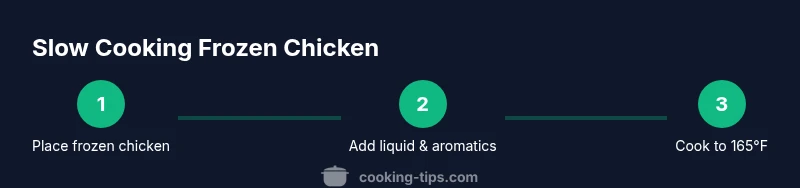
This section outlines a practical workflow you can follow in most slow cookers. Start by placing the frozen pieces in a single layer, add your chosen liquid and aromatics, then set the cooker to low. Allow the meat to cook for several hours, checking the temperature toward the end. If your appliance runs hotter or cooler than average, adjust the final few minutes accordingly. Keeping the lid closed as much as possible preserves heat and ensures even cooking. In general, larger pieces will require a longer cooking window to reach 165°F, while smaller pieces will come up to temperature more quickly. Plan for a total time window that accommodates your schedule and appetite.
Variations and flavor boosters
You can vary the flavor profile by switching up herbs and spices. Try a cumin-lime blend for a Mexican-inspired dish, or Italian herbs with crushed tomatoes for a comforting bowl. For a faster finish, add a splash of citrus or a ready-made sauce during the last hour to brighten the dish. If you prefer a richer base, finish with a teaspoon of butter or olive oil to create a glossy sauce. Remember, the slow cooker excels at melding flavors over time, so give aromatics a chance to permeate the meat. These variations help you tailor the dish to weeknight needs or weekend dinners.
Troubleshooting common issues
Even cooking from frozen presents the risk of uneven texture. If you notice dry edges or dense centers, consider adding a little extra liquid or massaging the curry-style sauce to reach all areas. If the meat seems underdone after the expected window, resample with the thermometer after another 15–20 minutes. Avoid opening the lid repeatedly, as heat loss will extend cooking times and can lead to inconsistent results. This section compiles practical fixes to common problems, helping you finish with a uniformly tender result.
Reheating, serving, and storing leftovers
Cold-storage handling is key for keeping cooked chicken safe and tasty. Refrigerate leftovers within two hours of cooking, and store in shallow containers to cool quickly. Reheat portions to at least 165°F before serving, using a microwave or oven to restore moisture if needed. Chicken shredded from slow cooker leftovers is perfect for tacos, salads, or grain bowls. Reheating in a covered dish with a splash of broth helps preserve moisture while preventing dryness. By following proper cooling and reheating steps, you can enjoy smart, delicious leftovers.
Quick meal ideas using slow-cooked frozen chicken
Shredded chicken from the slow cooker is a versatile base for many weeknight meals. Try serving it over brown rice with steamed vegetables, in soft tortillas with salsa, or tossed into a quick vegetable soup. You can also use the meat as a topping for baked potatoes or as a protein addition to a hearty grain bowl. By focusing on adaptable flavors and textures, you create multiple meals from one efficient cooking session. This section provides practical ideas to transform the basic dish into a week of meals.
Safety reminders and best practices
Always verify that your appliance is in good working order before using it for frozen meat, and never leave the slow cooker unattended for extended periods in rooms with children or pets. Use a food thermometer to confirm the 165°F threshold, and ensure the cooker is filled correctly to avoid overflow or scorching. After cooking, let the meat rest briefly before slicing to retain moisture. These final safety checks ensure your slow-cooked frozen chicken is both tasty and safe for family meals.
Tools & Materials
- Slow cooker (6-8 quart recommended)(Large enough to hold pieces without crowding)
- Digital meat thermometer(To verify 165°F interior temperature)
- Cutting board(For prepping aromatics if used)
- Sharp knife(For trimming or trimming surfaces)
- Measuring cups(Measure liquids accurately (1-1.5 cups))
- Tongs or spatula(To arrange frozen pieces in a single layer)
- Liquid (broth, water, or sauce)(1–1.5 cups depending on cooker size)
- Aromatics and seasonings(Garlic, onion, bay leaves, herbs, salt, pepper)
Steps
Estimated time: 6-9 hours total (varies by cut, size, and slow cooker model)
- 1
Arrange frozen chicken in the slow cooker
Place the frozen chicken pieces in a single layer as much as possible to maximize even heat distribution. Do not thaw beforehand. This ensures the meat starts cooking promptly and reduces total time to reach safe temperature.
Tip: Pro tip: Avoid stacking pieces; space helps heat migrate through the meat. - 2
Add liquid and aromatics
Pour 1–1.5 cups of broth or sauce around the chicken. Add aromatics like garlic, onion, bay leaves, and herbs to infuse flavor during the long cook. The liquid prevents sticking and helps maintain moisture.
Tip: Pro tip: Keep liquids to about a third of the cooker’s capacity to prevent overflow. - 3
Set the cooker and start cooking
Set the slow cooker to low; this usually cooks frozen chicken more evenly but can take longer. If your schedule requires faster results, use high but monitor temperature as it cooks faster. Resist the urge to lift the lid during the bulk of the cooking.
Tip: Pro tip: Plan for 6–8 hours on low or 3–4 hours on high, depending on cut size and cooker performance. - 4
Check for doneness near the end
Check the thickest piece with a digital thermometer; aim for 165°F (74°C) internal. If needed, continue cooking in 15-minute increments until safe.
Tip: Pro tip: Always verify with a thermometer rather than relying on color alone. - 5
Finish and rest
Once at 165°F, remove from heat and let the meat rest 5–10 minutes to reabsorb juices. If shredding, this resting period helps keep moisture in the meat.
Tip: Pro tip: Shred with forks for even texture and moisture retention. - 6
Store or serve promptly
If serving later, portion leftovers into shallow containers to cool quickly and refrigerate within two hours. Reheat to 165°F before serving.
Tip: Pro tip: Label containers with date to track freshness.
Quick Answers
Is it safe to cook frozen chicken in a slow cooker?
Yes, it is generally safe to cook frozen chicken in a slow cooker as long as the internal temperature reaches 165°F. Avoid long periods in the danger zone and use a thermometer to confirm doneness.
Yes. It’s safe if the internal temperature hits 165°F; use a thermometer to confirm and avoid extended time in the danger zone.
Should I thaw chicken before slow cooking?
Thawing is not required for slow cooking, but it may reduce overall cooking time and promote more even heat distribution. If you’re short on time, starting frozen is convenient, just plan for longer cook times.
Thawing isn’t required, but it can shorten cooking time and help even cooking. If you’re pressed for time, starting frozen is fine with longer cook times.
What liquids are best for flavor and moisture?
Low-sodium broth, water with a splash of soy sauce, or tomato-based sauces work well. Avoid heavy creams that can separate during long cooking. Choose liquids that complement your planned dish.
Use broth or a light sauce to keep moisture and flavor balanced. Avoid heavy creams for slow cooking.
Can I use chicken breasts instead of thighs?
Yes, but breasts are leaner and can dry out if cooked long. Consider shorter cook times or adding a bit more liquid, and monitor with a thermometer for best results.
You can use breasts, but they cook faster and dry out more easily; monitor doneness and keep moisture.
How long should I cook bone-in vs boneless pieces?
Bone-in pieces typically require longer to reach 165°F than boneless cuts. Plan for slightly longer windows if bones are present and check temperatures toward the end.
Bone-in parts take longer to heat through; check temperature toward the end to avoid undercooking.
How should I reheat leftovers safely?
Reheat leftovers to 165°F using a microwave or oven, adding a splash of broth if needed to restore moisture. Do not reheat multiple times.
Reheat to 165°F and keep leftovers moist; don’t reheat more than once.
Watch Video
Top Takeaways
- Choose thighs for best texture in slow cooking.
- Maintain 165°F internal temperature for safety.
- Use 1–1.5 cups liquid to prevent drying.
- Layer flavors early for a tastier finish.
- Reheat to 165°F and store properly.