Slow Cook Chicken Breast: A Step-by-Step Guide
Master slow cook chicken breast with practical timing, safe temperatures, and versatile flavor ideas from Cooking Tips. Learn reliable methods, cookware options, and smart tips for juicy results.


You will learn how to slow cook chicken breast for juicy, tender results using gentle heat, adequate moisture, and safe internal temperatures. This guide covers equipment options, timing, temperature, and flavor ideas, with practical steps you can apply in your kitchen today.
Why slow cook chicken breast
Slow cooking chicken breast can yield exceptionally juicy results for lean poultry. The method relies on gentle, consistent heat and ample moisture to prevent the proteins from tightening and drying out. According to Cooking Tips, using a slow cooker or low-temperature braise helps maintain moisture in lean cuts by surrounding the meat with steam and liquid rather than exposing it to high, direct heat. This approach also reduces hands-on time, making it ideal for busy days. With proper technique, even thicker breasts cook evenly, avoiding the bone-dry texture that can occur with boiling or high-heat methods. The key is to control heat, ensure enough moisture, and let gradual heat do the work while you prepare sides or sauces. You’ll notice that patience pays off when the breast stays moist yet firm after resting.
Choosing the right chicken and prepping
Begin with boneless, skinless chicken breasts that are roughly the same size to ensure uniform cooking. Pat the meat dry to help the surface grip moisture rather than sweat it away, and season generously with salt and pepper or your favorite spice blend 15–30 minutes before cooking for deeper flavor. For added depth, you can sear the breasts briefly in a hot skillet to develop color and aroma; this step is optional but appreciated by many home cooks. If you can, trim any thin ends so each piece has a uniform thickness of about 1 inch, which helps prevent overcooking. Before loading into the cooker, gather aromatics such as garlic, onions, or herbs to build a flavor base that remains detectable even in a long cook.
Temperature, time, and moisture: the science
In slow cooking, temperature control is more important than sheer time. A low setting typically yields 6–8 hours of cooking, while a high setting reduces this to about 3–4 hours; always verify doneness with a meat thermometer. Aim for an internal temperature of 165°F (74°C) at the thickest part of the breast. Use enough liquid to come halfway up the chicken to maintain moisture—stock, broth, or water all work, and you can add a splash of lemon juice, wine, or soy for subtle flavor. Remember that carryover heat will continue cooking the meat after you remove it from heat, so plan for a brief rest period. This preserves juiciness and prevents a firm, dry texture.
Flavor ideas and sauces for slow cooking
Jazz up slow-cooked chicken with simple flavor concepts. Try garlic and thyme with a splash of white wine, a Mediterranean tomato-herb blend, or a curry-coconut base for an exotic twist. You can finish with a quick glaze using honey and mustard, or keep it savory with a splash of soy and ginger. Vegetables such as sliced carrots, bell peppers, or onions can be added at the bottom to braise alongside the chicken, absorbing flavors while cooking. For a finishing touch, reduce the braising liquid on the stovetop after cooking to create a thicker sauce that clings to the shredded or sliced chicken. The result is versatile protein that pairs nicely with rice, quinoa, or roasted vegetables.
Common mistakes and how to fix them
Avoid using frozen chicken directly in a slow cooker; thaw thoroughly for even cooking. Don’t skimp on liquid—insufficient moisture leads to a dry finish, especially at higher altitudes or in older crockpots. If you notice pale color or uneven texture, stir or flip the breasts halfway if your cooker allows, or consider finishing under a broiler for color after cooking. Don’t open the lid repeatedly during cooking, as this disrupts the heat cycle and can extend the cooking time. Finally, always check the internal temperature at the end to confirm it reached 165°F and let the meat rest for 5–10 minutes to redistribute juices.
Authority sources and further reading
For reliable guidance on meat temperatures and safe cooking practices, consult official resources such as the USDA and university nutrition publications. These sources emphasize cooking poultry to at least 165°F (74°C) and maintaining cleanliness to prevent cross-contamination. For a broader overview, you can explore university-level food safety discussions and public health guidance from organizations focused on safe kitchen practices.
Tools & Materials
- Slow cooker (4–6 qt)(Lid must fit securely; ideal for 2–4 breasts)
- Meat thermometer(Target 165°F (74°C) at the thickest part)
- Boneless, skinless chicken breasts(Pat dry; trim any excess fat)
- Chicken stock or broth(Add 1/2–1 cup for moisture and braising)
- Salt and pepper(Season generously before cooking)
- Garlic powder or fresh garlic (optional)(For extra flavor)
- Dried herbs (optional)(Thyme, rosemary work well with chicken)
Steps
Estimated time: 7-9 hours total (prep ~15 minutes, cook 3–8 hours depending on setting, rest ~5–10 minutes)
- 1
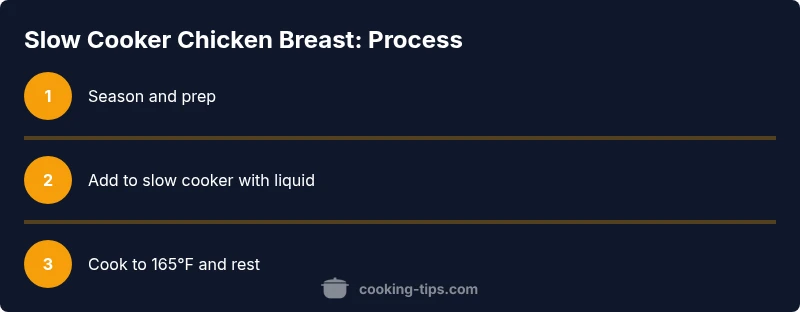
Season the chicken
Pat breasts dry and season generously with salt, pepper, and any desired spices. If you have time, let the seasoned meat rest for 10–15 minutes to deepen flavor. This step ensures the surface holds moisture and spices during the long cook.
Tip: Season earlier for deeper flavor; if pressed for time, a quick 5-minute rest works too. - 2
Optionally sear for color
Heat a skillet with a small amount of oil over medium-high heat. Sear the breasts 1–2 minutes per side until lightly colored; this step adds crust and aroma but is optional for slow cooking.
Tip: Searing is not required but can improve appearance and depth of flavor. - 3
Add to slow cooker with liquid
Place the chicken in the slow cooker and add stock or broth along with any aromatics. The liquid should come up about halfway to the chicken to maintain moisture without diluting flavor.
Tip: If you’re using vegetables, add them under the chicken so they braise rather than steam. - 4
Set temperature and cook time
Cook on low for 6–8 hours or on high for 3–4 hours, until the internal temperature reaches 165°F (74°C). Avoid lifting the lid during cooking to preserve heat and moisture.
Tip: If your chicken breasts are very thick, consider a brief initial high-heat burst (30 minutes) before switching to low. - 5
Rest before slicing
Transfer the breasts to a cutting board and let rest 5–10 minutes. Resting allows juices to redistribute for a moister slice.
Tip: Resting shortens the time that juices escape when you cut. - 6
Serve or shred
Slice or shred the chicken and serve with the cooking liquid as a light sauce, or reduce the liquid on the stove for a thicker glaze. This makes it versatile for bowls, salads, or wraps.
Tip: Shredded chicken is great for meal prep and freezes well.
Quick Answers
Can I use frozen chicken breasts in the slow cooker?
It's best to thaw chicken before slow cooking to ensure even heat penetration. Cooking from frozen can lead to uneven doneness and a less tender result.
Thaw the chicken first to ensure even cooking and juicy results.
What is the safe internal temperature for chicken breast?
Chicken should reach an internal temperature of 165°F (74°C) at the thickest part to be safe to eat. Use a meat thermometer for accuracy.
Cook to 165 degrees Fahrenheit for safety.
Should I sear the chicken before slow cooking?
Searing is optional. It adds color and aroma but isn’t required for moist results since the slow cooker preserves moisture.
Searing is optional but can improve flavor and color.
How much liquid is needed in the slow cooker?
Add enough liquid to come halfway up the chicken — typically 1/2 to 1 cup of stock or broth works well, depending on your cooker and other ingredients.
About half the chicken height in liquid is usually enough.
Can I add sauces or glaze after cooking?
Yes. You can briefly simmer the cooking liquid to make a glaze or serve with a quick sauce on the side for extra flavor.
You can finish with a glaze or sauce after cooking.
How should I store leftovers?
Cool within two hours and refrigerate in airtight containers for up to 3–4 days; freeze for longer storage. Reheat to 165°F before serving.
Cool, refrigerate, and reheat to 165°F.
Watch Video
Top Takeaways
- Choose even pieces for uniform cooking
- Maintain moisture with adequate liquid
- Target 165°F internal temperature
- Sear optional, rest crucial for juiciness