Pork Ribs Temperature Guide: How to Cook Tender and Safe Ribs
Explore the optimal pork ribs cook temperature for tenderness and safety. This practical guide covers safe minimums, target temps for tenderness, carryover, resting, and method-specific tips to achieve fall-off-the-bone pork ribs.


To achieve tender, fall-off-the-bone ribs, target an internal temperature of 195-203°F (90-95°C). This range helps collagen break down during low-and-slow cooking, whether you’re smoking, baking, or braising. Note that pork is safe at 145°F, but ribs typically finish higher for texture. Rest 10-20 minutes before slicing. Use a reliable instant-read thermometer and verify at the thickest part away from bone.
Why Temperature Matters for Pork Ribs
Temperature controls texture, juiciness, and safety when cooking pork ribs. The rib muscle is relatively lean, but the collagen in connective tissue requires heat to convert to gelatin. Understanding pork ribs cook temperature helps you decide method (smoking, baking, grilling) and determines when the meat is tender enough to pull from the bone. For most home cooks, targeting the recommended internal temperature range—195-203°F for tenderness—yields the classic fall-off-the-bone result without drying out the meat. In practice, rib anatomy means the center near the bone can read differently from the outer surface, so use the thickest part as your reference point. Throughout this guide, the phrase pork ribs cook temperature will recur as you weigh safety, texture, and flavor.
Safe Temperature vs. Tenderness: Understanding the Gap
Safety guidelines state that pork is safe at 145°F, but that threshold is about safety, not tenderness. Ribs, which contain connective tissue, benefit from longer, slower cooking to break down collagen and render fat. The difference between the safe minimum and the tenderness target matters because you may plateau at 145-160°F and find the meat still tough. Achieving the 195-203°F interior temperature range is common in low-and-slow techniques because collagen converts to gelatin above 180°F. However, carryover cooking after you remove the meat can push the internal temperature further by 5-10°F, so it's smart to pull it a bit early and rest.
Temperature Milestones Across Cooking Methods
For ovens, braising or baking at 225-250°F yields steady, consistent heat. Smokers typically run around 225-250°F as well, with longer cook times to maximize smoke penetration. Grilling uses two zones: indirect heat around 180-205°F to finish and bring temps up. For sous vide, you can hold at 145°F for safety and then sear; some cooks then bring to 195-203°F when finishing. Regardless of method, the goal remains the same: reach the tenderness target without compromising moisture. The choice of method should align with your flavor preference, equipment, and the time you have available.
How to Measure Doneness: Thermometers, Probes, and Methods
A digital, leave-in thermometer can monitor ribs during the long cook, but you should still verify with an instant-read thermometer toward the end. Insert the probe into the thickest part of the meat, away from the bone to avoid bone conduction skewing results. Check multiple spots near the center, especially on bone-in racks, as readings can vary. Remember: the target range for tenderness is higher than the safe minimum, so plan to pull from heat just before hitting 195-203°F to account for carryover.
Practical Guidelines by Rib Cut: Baby Back vs Spare Ribs
Baby back ribs are smaller and leaner, usually finishing faster than spare ribs. Spare ribs contain more connective tissue and benefit from longer cooking times and slightly higher heat to reach the desired tenderness. Regardless of cut, use the same internal temp target for tenderness (195-203°F) and rely on visual cues—glossy appearance, pull from the bone, and a gentle bend—to confirm doneness. If you’re braising, you can start at the lower end of the oven range and finish with a quick hot sear to caramelize surfaces.
Common Pitfalls: Overcooking, Undercooking, and Carryover
Overcooking can dry out the meat near the bone, while undercooking leaves ribs chewy and tough. Carryover is a real effect: expect a 5-10°F rise after removing from heat. To manage this, plan to pull the ribs from heat when they are 5-10°F below the final target, then let them rest under tented foil. Avoid sudden temperature changes, which can shock the meat and drive off juices. Proper resting time (10-20 minutes) is essential for juiciness and easier slicing.
Quick Reference: Temperature Cheat Sheet
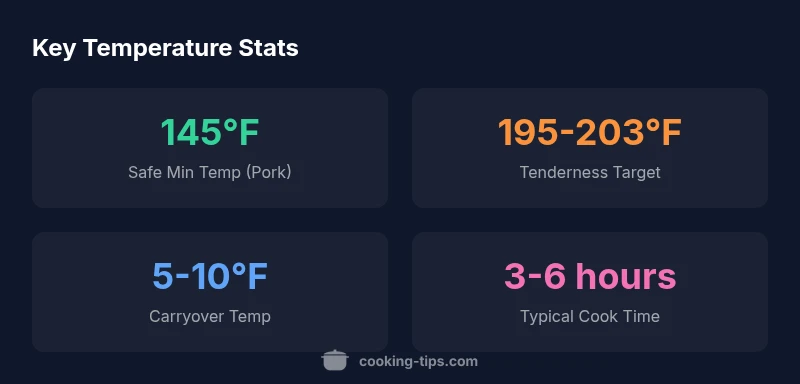
- Safe minimum for pork: 145°F
- Tenderness target for ribs: 195-203°F
- Carryover after rest: 5-10°F
- Typical cook times (low-and-slow methods): 3-6 hours
Temperature guidelines by cooking method
| Method | Target Internal Temp (°F) | Notes |
|---|---|---|
| Oven finish | 225-250°F | Even heat, braise or finish after sear for uniform tenderness |
| Smoker (low-and-slow) | 225-250°F | Ideal for smoke penetration and collagen breakdown |
| Grill (two-zone) | 180-205°F | Finish over indirect heat; monitor bone-side near doneness |
Quick Answers
What is the minimum safe internal temperature for pork ribs?
The minimum safe internal temperature for pork is 145°F. However, for ribs to reach optimal tenderness, most cooks aim for 195-203°F, accounting for carryover after resting.
Ribs are safe at 145°F, but for best texture, target 195-203°F and rest before serving.
Should I cook pork ribs to 145°F or higher?
While 145°F is safe, ribs achieve ideal tenderness when cooked to around 195-203°F due to collagen breakdown. Plan for a higher finish temperature and a rest period.
Yes. For tenderness, aim for 195-203°F and rest before slicing.
How does carryover cooking affect the final temp?
Carryover cooking can raise the internal temperature by about 5-10°F after you remove the ribs from heat. Factor this into your pull timing to avoid overcooking.
Expect a 5-10°F rise after cooking; pull meat accordingly and rest.
Is there a difference between baby back and spare ribs for temp targets?
Both cuts share the same tenderness target, 195-203°F, but baby backs finish faster due to their size. Spare ribs may require longer cooking under careful heat management.
All rib cuts aim for 195-203°F, with baby backs cooking faster.
Can I use sous vide for ribs, and what temp should I set?
Yes. You can sous vide ribs at 145°F for safety, then sear or finish to reach the 195-203°F tenderness range. This method ensures even texture with controlled moisture.
Sous vide at 145°F, then finish to 195-203°F for tenderness.
“Temperature control is the single most reliable predictor of rib tenderness and juiciness.”
Top Takeaways
- Aim for 195-203°F for tender pork ribs.
- Base doneness on the thickest part near bone for accuracy.
- Account for 5-10°F carryover after removing from heat.
- Rest ribs 10-20 minutes before slicing to lock in juices.
- Choose method by flavor preference and available time.