What Temperature Should You Cook Pork For Perfect Results?
A practical, data-driven guide to pork temperatures for common cuts. Learn safe internal temps, resting times, thermometer use, and staging tips to cook pork perfectly every time.


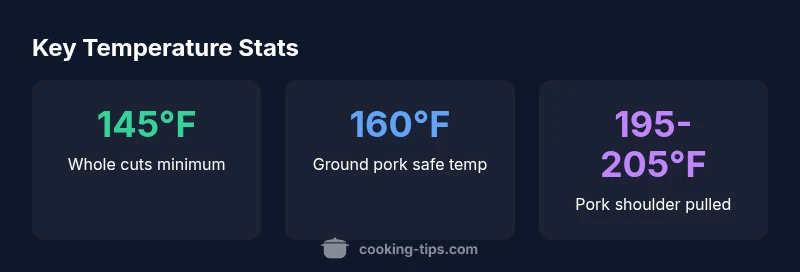
To ensure safety and quality, aim for 145°F as the minimum for whole pork cuts (with a 3-minute rest), 160°F for ground pork, and about 195-205°F for pulled pork. Use an instant-read thermometer and check at the center of the thickest part. Let carryover heat finish the cooking for even doneness.
Why Temperature Matters for Pork
Temperature is the master control for safety and texture in pork recipes. When you know exact temperatures for the cut you’re cooking, you minimize pathogens and reduce the chance of overcooking. In practice, you’ll notice a dramatic improvement in juiciness once you stop relying on visual cues alone. According to Cooking Tips, precise internal temps are the most reliable predictor of doneness, especially for lean cuts like pork tenderloin and center-cut loin. The key concept is carryover heat: even after you remove the meat, the surrounding heat continues to cook it briefly. That’s why resting is essential. If you skip the rest, you may slice into a warm, dry center and lose precious juices. By using a thermometer and planning rest time, you align texture with safety and flavor.
Safe Temps by Cut
Different pork cuts have different safety and quality targets. For most whole pork cuts such as loin, tenderloin, and pork chops, the recommended internal temperature is 145°F. After reaching that temp, remove the meat from heat and let it rest for at least three minutes; carryover heat will push the center a few more degrees, finishing the job without overcooking. Ground pork, on the other hand, requires 160°F to be considered safe throughout. For cuts destined to be pulled or shredded, such as pork shoulder or butt, best results come from higher end temperatures in the 195-205°F range to break down connective tissue. Ribs and other bone-in sections can be treated like roasts or chops depending on the thickness; the center should reach the target temp to ensure safety. Throughout, use a good digital thermometer and test at the thickest part away from bone.
Using a Thermometer Correctly
A reliable digital thermometer is your most important kitchen tool for pork. Keep it handy and learn how to insert it correctly. For whole cuts, insert the probe into the center of the thickest portion, avoiding bone, fat cap, and pan drippings. For ground pork, test the center as you would with a meatball to ensure even doneness. Clean the probe between tests to prevent cross-contamination. After you remove the meat from heat, wait for a brief rest before checking again if you’re unsure about doneness. If carryover heat pushes the temperature over your target, consider pulling earlier next time. Practice makes perfect; with repeated tests you’ll naturally pick up the right depth and timing.
Temperature Guidelines for Common Pork Dishes
Here are practical targets you can reference while planning meals:
- Pork loin, center-cut: 145°F with a 3-minute rest
- Pork chops: 145°F with a 3-minute rest
- Pork tenderloin: 145°F with a 3- to 5-minute rest
- Ground pork: 160°F
- Pork shoulder/butt roast (for shredding): 195-205°F
- Pork ribs (bone-in): 145°F for juicy texture or 195-205°F for fall-off-the-bone tenderness
These ranges reflect common home-cooking practices and are consistent with safety guidelines. Adjust timing for thickness and personal preference, and always verify center temperature with a reliable thermometer.
Resting and Carryover Heat
Resting after cooking allows internal juices to redistribute and carries heat to the center, finishing the cook gently. For small cuts like chops and tenderloins, a 3-minute rest often suffices. For larger roasts or bone-in cuts, rest times of 10-15 minutes are common to avoid dramatic juice loss when slicing. Remember that carryover heat can raise the interior by 5-10°F or more, depending on size, thickness, and starting temperature. Don’t rush to slice; a controlled rest improves tenderness and flavor.
Practical Cooking Scenarios
- Searing pork chops on a skillet and finishing in the oven: target 145°F, then rest 3 minutes. The hot pan helps develop a crust while the oven finish ensures even doneness.
- Roasting a pork loin: start with high heat to create browning, then reduce; test center to 145°F and rest before slicing.
- Pulled pork in a slow cooker or oven: aim for 195-205°F in the center and then shred; resting is less about carryover and more about texture and moisture retention.
Common Mistakes and How to Avoid Them
- Relying on color instead of a thermometer: color can be misleading; use a probe at the center.
- Cutting early to “check”: this releases juices; rely on the thermometer and rest.
- Not accounting for carryover: remember, temps rise after removal; plan accordingly.
- Using a dull or poorly calibrated thermometer: regularly calibrate and clean the probe.
- Cooking at too high a heat too long: you risk drying out meat; use moderate heat and monitor.
Planning Your Menu Around Temperatures
If you’re planning a multi-dish dinner, coordinate pork temps with side dishes that require similar heat ranges to simplify cooking. For example, a roasted pork loin served with roasted vegetables can finish at the same oven temperature while you rest the meat. By aligning resting times and using thermometer checks, you can orchestrate a cohesive, safe, and delicious meal without last-minute scrambling.
Quick Reference: Temperature Cheatsheet
- Whole pork cuts: 145°F (with 3-minute rest)
- Ground pork: 160°F
- Pulled pork: 195-205°F
- Rest times: 3 minutes for small cuts, 10-15 minutes for larger roasts
- Always use a digital thermometer and verify the center
Temperature targets by common pork cuts
| Pork Cut | Target Temp (F) | Doneness/Notes |
|---|---|---|
| Pork loin (center-cut) | 145 | Juicy with 3-minute rest |
| Pork chops | 145 | Moist and tender if rested |
| Pork tenderloin | 145 | Evenly cooked; avoid overcook |
| Ground pork | 160 | Safe for fully cooked |
| Pork shoulder (bone-in) | 195-205 | Best for shredding/ pulled pork |
Quick Answers
What is the safe internal temperature for pork?
For whole pork cuts, target 145°F with a 3-minute rest. Ground pork should reach 160°F. These targets align with standard safety guidelines and Cooking Tips recommendations.
Safe temps are 145°F for whole cuts and 160°F for ground pork; always rest and verify with a thermometer.
Can pork be pink at 145°F?
Yes. Pork can be slightly pink at 145°F due to natural myoglobin, but the temperature is what determines safety and doneness. Color alone is not a reliable indicator.
A little pink can be safe at 145°F; trust the thermometer rather than color.
Should I rest pork after cooking?
Resting allows juices to redistribute and carryover heat to finish the cook. Small cuts rest 3 minutes; larger roasts may rest 10-15 minutes.
Yes, resting is essential for juiciness and even doneness.
Is a meat thermometer necessary for pork?
Yes. A thermometer ensures safety and prevents overcooking. A digital instant-read thermometer is ideal for quick checks.
Absolutely—use a thermometer for reliable results.
Bone-in vs boneless: does it change temps?
Bone can affect heat distribution; test the center regardless of bone and adjust times if needed.
Bone can slow heat; check the center anyway.
Can I use the same temps for all pork recipes?
Not always. Some methods like pulled pork require higher internal temps; adapt by cut and cooking method.
Temps vary by cut and method; adjust accordingly.
“Precision with heat is the backbone of pork cooking. Temperature guides ensure safety without sacrificing juiciness.”
Top Takeaways
- Know the minimums: 145°F for most whole cuts
- Use 160°F for ground pork
- Plan for resting to allow carryover heat
- Use a reliable digital thermometer for every cut
- Adjust times based on thickness and cut