What Cook Pork To: Doneness, Safety, and Techniques
Learn how to cook pork to safe temperatures while preserving juiciness. This guide covers doneness targets by cut, thermometer tips, and practical finishing methods for home cooks.


If you’re asking what cook pork to, here’s how to hit safe temperatures and the right doneness across common cuts. For a pork roast, target 145°F (63°C) with a 3-minute rest. For chops and tender loins, 140-145°F (60-63°C) yields juicier results. Use a thermometer and finish with a brief rest before slicing for best texture.
What influences pork cooking temperatures
The temperature you aim for when cooking pork isn't a single number; it's shaped by cut, thickness, bone presence, and how you plan to finish the dish. Thick bone-in roasts trap more heat and may require slightly higher final temperatures or longer rest than boneless loin chops. Fat content and connective tissue also matter: lean tender cuts like pork tenderloin cook faster and tolerate less carryover than stouter cuts such as shoulder. The Cooking Tips team emphasizes that safety and texture can coexist with a careful thermometer, proper sear, and a smart finish. Use a thermometer inserted into the thickest part of the meat, away from bone, and avoid relying on color alone. For multi-piece meals, plan to remove the meat a few degrees early, since carryover heat will carry you across the desired target as you rest. This nuanced approach helps home cooks achieve juicy, safe pork across a weeknight spread.
For home cooks, understanding what you’re cooking to also means recognizing how you’ll finish the dish. A pan-sear followed by oven finishing can push a cut toward its ideal interior temperature without drying the exterior. The Cooking Tips team often recommends checking multiple spots on larger roasts to account for thickness variation, especially near bone. In short, the goal is consistent doneness with minimal moisture loss, not chasing a single number that fits every situation.
Safe temperatures and recommended rest
Safety should guide every pork dish, but texture should guide every finish. The USDA and many culinary authorities agree that whole pork cuts should reach 145°F (63°C) with a rest of at least 3 minutes before slicing. Ground pork, which has less surface area and can harbor bacteria through processing, should reach 160°F (71°C). Resting allows the juicier interior to reabsorb moisture and the heat to complete carryover cooking. When you pull from heat, the internal temperature will rise during the rest period, often by about 5-10°F depending on thickness. The key is monitoring the core rather than basing on time alone. Cooking Tips findings reinforce that thermometer-guided timing yields the most reliable results across cuts and kitchen setups.
Additionally, consider how you plan to serve pork. A perfectly cooked roast may need a slightly longer rest under tented foil to keep juices in, while thin-cut chops will benefit from quicker plating after a brief rest. By pairing the right temperature with a mindful rest, you’ll consistently deliver pork that’s safe, flavorful, and tender.
Temperature targets by cut: roasts, chops, loins, shoulder
Different pork cuts demand different temperature targets. Here’s a practical breakdown you can apply in the kitchen:
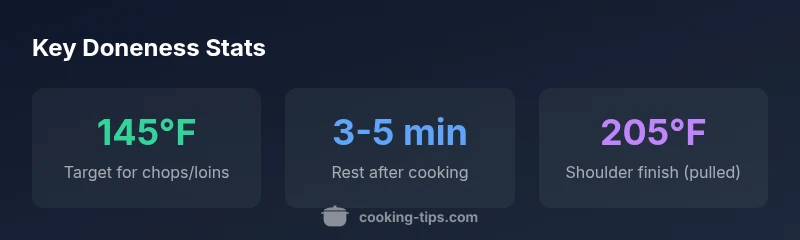
- Pork loin roast: Target 145°F with a 3-5 minute rest for even color and juicy slices.
- Pork chops and tenderloins: 140-145°F is ideal for juicy centers; rest 3-5 minutes.
- Pork shoulder or butt (slow-cooked or pulled pork): Finish around 190-205°F to break down connective tissue; rest 10-20 minutes if feasible.
- Ground pork: 160°F ensures safety and crumbly texture suitable for fillings.
Across these categories, plan to remove meat from heat a few degrees early and finish via carryover heat, especially for larger roasts. This approach minimizes overcooking and boosts juiciness. The goal is to align target temperatures with finish methods, so texture stays balanced and not dry or underdone.
Getting an accurate reading: thermometer tips
A reliable digital instant-read thermometer is your best ally for what you’re trying to achieve when cooking pork. Insert the probe into the thickest part of the meat, avoiding bone and fat pockets, and take readings from multiple spots on larger cuts to ensure uniformity. Calibrate the thermometer periodically for accuracy, and remember that the thermometer reading represents the interior temperature at that moment, not the anticipated rest temperature. If you’re cooking a large roast, consider probing near the center and at the edge to catch any uneven heating. When done, remove from heat and allow the meat to rest; this rest will further stabilize temperatures and improve juiciness. For grill or pan methods, use a thermometer that can be left in the meat during a brief rest to monitor carryover heat more precisely.
Juiciness and carryover heat: how to rest and finish
Carryover cooking means meat continues to rise in temperature after it leaves the heat source. The typical range is about 5-10°F, depending on thickness and cut. Plan to pull steaks or chops at the lower end of the target range and larger roasts at least a few degrees early. Rest times vary by size: 3-5 minutes for chops, 10-20 minutes for bigger roasts or shoulder. Resting is not just a pause; it's a critical step that lets muscle fibers reabsorb juices and stabilizes the interior. During resting, avoid slicing immediately; tent with foil if needed to retain heat while juices redistribute. For cooks who want a crisp exterior, you can briefly re-sear or re-crisp after resting, but be mindful that the internal temp may further shift. The overall result should be a pork dish that’s safe, tender, and flavorful.
Searing, roasting, grilling: best methods to hit your target
Searing is a time-tested method to establish a flavorful crust before finishing in the oven, which helps you reach target temperatures evenly. A reverse-sear technique—low-and-slow roast followed by a high-heat sear—works particularly well for larger roasts and thick chops. Grilling over medium heat with a two-zone setup can also help you control heat input and carryover. Cast-iron pans are favored for their heat retention, ensuring a uniform crust without drying the meat. Marinades or dry rubs can help with browning and moisture retention, but always verify doneness with a thermometer rather than relying on color or time alone. Practically, aim for the final internal temperature you want, then use resting and finishing techniques to arrive there without overcooking.
Common mistakes and how to avoid them
Many home cooks fall into the trap of chasing a specific time rather than watching the thermometer. Others skip resting under the assumption that heat will escape and dry the meat, which actually helps retain moisture if done correctly. A frequent error is inserting the thermometer into a bone or fatty pocket, which yields false readings. Avoid over- or under-seasoning, which can mask doneness signals and flavor; salt can help with moisture retention but should be applied with care. Finally, never rely on color alone as an indicator of doneness for pork; use a calibrated thermometer to confirm the interior temperature. By avoiding these common errors and focusing on the target temperatures, you’ll consistently produce safe, juicy pork.
A sample weeknight plan: 3 pork dishes
Here’s a simple lineup you can rotate through:
- Quick pan-seared pork chops: target 140-145°F, rest 5 minutes, serve with a pan sauce.
- Oven-roasted pork loin: target 145°F, rest 5 minutes, slice for weeknight meals.
- Slow-cooked pork shoulder: target 190-205°F, rest 15-20 minutes, pull for sandwiches or bowls.
Each dish relies on a thermometer to confirm doneness, a brief rest to lock in juices, and a finish technique that suits the cut. With these three stock options, you can cover quick dinners and more generous weekend roasts while staying confident in safety and texture.
Quick-start playbook: 5-step routine
- Pick your cut and thickness; 2) preheat oven or pan to the right heat; 3) insert a calibrated thermometer into the thickest part; 4) pull the moment the internal temp hits the target and rest; 5) slice and serve, noting carryover heat for accurate final texture.
Bonus: by-the-book doneness checklists
- Always verify the thickest section of the meat with a thermometer.
- Rest times are non-negotiable for juiciness.
- Use carryover heat to finish cooking without overdoing it.
- Keep safe handling practices, especially with ground pork and leftovers.
Final note on what to cook pork to
When you plan meals around pork, you’ll benefit from a flexible mindset about temperatures. Start with a target for the cut, then use a thermometer to guide you through finishing and resting. With this approach, you’ll consistently hit the ideal balance between safety and delicious flavor.
Doneness targets by common pork cuts
| Cut Type | Target Temp (F) | Rest Time | Notes |
|---|---|---|---|
| Chops | 140-145 | 3-5 minutes | Juicy texture; pink center possible |
| Pork loin roast | 145 | 3-5 minutes | Even doneness; slight pink acceptable |
| Pork shoulder | 190-205 | 10-20 minutes | Pulled pork; tenderization of connective tissue |
| Ground pork | 160 | N/A | Fully cooked; used for fillings |
Quick Answers
What is the safe internal temperature for pork?
USDA guidelines recommend 145°F with a 3-minute rest for whole cuts; ground pork should reach 160°F.
For safety, aim for 145 degrees for whole cuts and 160 for ground pork, then rest.
Should I rest pork after cooking?
Yes, rest 3-5 minutes for chops and roasts; larger joints may rest 10-20 minutes. Resting helps juices reabsorb.
Yes—rest 3-5 minutes for small cuts and longer for larger ones to keep juices inside.
Can I cook pork to 140°F?
Yes for certain cuts like some chops if you want a pink center; plan to rest and follow safety guidelines.
Some cuts can be safe at 140-145°F with a rest; check your cut.
What is carryover cooking?
Meat continues to rise about 5-10°F after removal from heat; plan to pull early and rest.
Meat keeps cooking a bit after you remove it from heat.
What thermometer should I use?
Use a digital instant-read thermometer with a probe for accuracy; calibrate occasionally.
A good digital thermometer makes all the difference.
How long does it take to cook a pork roast?
Times vary by size; always rely on internal temperature rather than time.
Time varies; check the internal temp for doneness.
“Doneness is a balance between safety and texture. Always start with a thermometer and finish with a rest.”
Top Takeaways
- Prioritize internal temp over time when cooking pork
- Use carryover heat to finish a precise doneness
- Rest is essential for juiciness and texture
- Different cuts require different target temps
- Always verify with a calibrated thermometer