How to Remove Cooking Grease from Clothes: A Practical Guide
Learn proven methods to remove cooking grease from clothes. This step-by-step guide covers pre-treatments, detergents, washing temps, and fabric care to prevent setting stains.


To remove cooking grease from clothes, start with a fast pre-treatment, then wash using a grease-fighting detergent. Treat the stain with dish soap, apply hot water where safe for the fabric, and air-dry. For stubborn spots, repeat the treatment or finish with a second wash. This step-by-step approach works on most fabrics.
Understanding grease stains on fabrics
Grease stains come from cooking oils, butter, or fat residues that cling to fibers. The oily molecules penetrate the fabric’s surface, often spreading if rubbed. The key to successful removal is acting quickly and choosing treatments that break down oil without harming the fabric. According to Cooking Tips, prompt pre-treatment combined with a proper washing routine dramatically improves odds of complete stain removal. This section explains how colorfast fabrics differ from delicate ones and why pretreatment matters for cotton, synthetics, and blends alike.
Quick pre-treat options for different fabrics
Different fabrics demand different pretreatments. For cotton and most blends, a simple dish soap rub works effectively because these fibers tolerate mild agitation and warm water. Synthetics like polyester tolerate more aggressive pretreatment, but always follow care labels. Delicate fabrics—silk, wool, or some wool blends—require gentler action and often a dedicated stain remover or professional care. Always test pretreatment on an inconspicuous area first to avoid color loss or fiber damage. The goal is to emulsify oil without soaking the fabric deeply or weakening fibers.
The dish soap method: First line of defense
Dish soap is designed to cut grease, making it an excellent first step. Apply a small amount of clear dish soap directly to the stain and gently work it into the fibers with your fingers or a soft brush for 1–2 minutes. Let it sit for 5–10 minutes, then rinse with cold water from the backside to push the grease out of the fabric rather than deeper into it. After rinsing, proceed with a wash using your regular detergent. This method works well for most everyday fabrics and is a reliable starting point.
Enzyme-based detergents and why they matter
Enzyme-based detergents break down fat molecules more effectively than standard cleaners. They are particularly helpful for set-in grease on cottons and blends. Use the hottest water allowed by the care label and thoroughly dissolve the detergent before adding the garment. If possible, pre-dilute the detergent in water to maximize contact with the stain. For best results, avoid mixing with chlorine bleach on colored fabrics, as color loss can occur.
Absorbing excess grease with baking soda or cornstarch
If grease is fresh, absorbent powders like baking soda or cornstarch can reduce the amount absorbed by the fibers. Sprinkle a generous layer onto the stain, press gently, and let it sit 15–20 minutes. Shake or vacuum away the powder, then repeat pretreatment with dish soap or detergent. This step helps keep the stain from spreading while you prepare to launder. It’s a simple, low-cost tactic that buys you time before washing.
The temperature question: Water temperature and fabric care
Water temperature matters. Most grease stains respond well to warm water when the fabric tolerates it, but delicate fabrics may require cold water to prevent shrinkage or color fading. Always consult the garment’s care label. Enzyme detergents work well with warm water for cottons and blends, but delicate fibers often benefit from cooler cycles. If unsure, err on the side of cooler water and longer wash times to protect fabrics.
Repeat treatments: When to try again
Some stains resist initial attempts. If a grease stain persists after washing, do not dry the garment. Repeat the pretreatment and wash sequence, and consider an optional stain remover applied according to label directions. Air-drying is safer than tumble-drying when a stain remains, because heat can set the stain. For stubborn cases on sturdy fabrics, a second application of enzyme detergent and a gentle cycle can often remove what first passes could not.
Special fabrics: Silk, wool, denim, and blends
Delicate fabrics require special care. Silk and wool blends may need professional cleaning or a mild detergent designed for delicates, followed by air drying flat. Denim can often withstand more aggressive pretreatment and warmer water, but test a hidden seam first to avoid fading. Blends like cotton-polyester respond well to dish soap pretreatment and a standard wash, but always respect the label. When in doubt, start with the gentlest method that addresses the stain.
Drying tips and post-wash checks
Never tumble-dry a garment with a visible grease stain. Heat can set the stain permanently. After washing, inspect the stain under good light while the garment is damp. If you still see oil, repeat the pretreatment and washing steps before drying. Once the stain is gone, you can finish with a normal dry cycle. For white fabrics, you may consider a whitening-safe detergent if the fabric allows it, but avoid over-bleaching colored fabrics.
Common mistakes to avoid
Rubbing grease aggressively can push oil deeper into fibers, making stains harder to remove. Using hot water on fabrics that aren’t heat-tolerant can set the stain. Skipping the pre-treatment or using the wrong detergent type can also reduce effectiveness. Finally, drying a stained garment without confirming removal increases the chance of a permanent stain. By following the prescribed sequence, you minimize these risks and improve your odds of success.
Authoritative sources and further reading
For further guidance on stain removal and fabric care, consult university extension resources and major publications. Examples include university extensions and government consumer safety information. Always cross-check with care labels on individual garments to tailor the approach to your fabric type.
Stain removal flowchart: quick reference
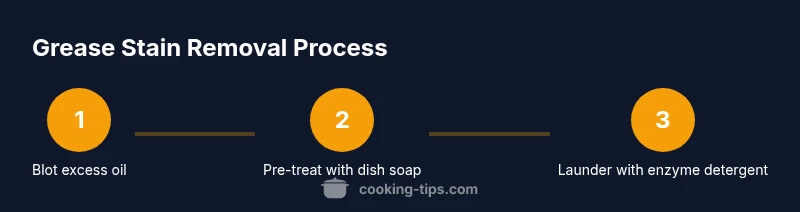
- If the stain is fresh: blot (don’t rub) → apply dish soap → gently work in → rinse with cold water → launder using enzyme detergent → air dry and check. If stain persists: repeat pretreatment and wash; otherwise continue with regular care. This quick flow helps you stay organized when a stain appears at mealtime.
Tools & Materials
- Dish soap (clear, grease-fighting)(Apply directly to the stain and work in gently)
- Laundry detergent (enzyme-based)(Liquid or powder, any color-safe formula)
- Stain remover (optional)(Use as a targeted treatment if available)
- Cold water(Rinse from backside to push grease out)
- Warm water (fabric-safe)(Use if care label permits; helps enzyme action)
- Soft brush or cloth(Gently agitate without fraying fibers)
- Baking soda or cornstarch (optional)(Absorb excess oil before pretreatment)
- Towel or white cloth(Blot oils to gauge progress)
Steps
Estimated time: 30-60 minutes per stain (excluding drying)
- 1
Identify and blot excess grease
Lay the garment flat and gently blot visible oil with a clean cloth. Avoid rubbing, which can push oil deeper into fibers. Your goal is to remove as much surface oil as possible before preprocessing.
Tip: For light stains, blotting with a dry white cloth works best to prevent transfer. - 2
Pre-treat with dish soap
Apply a small amount of dish soap to the stain and work it in with fingertips or a soft brush for 1–2 minutes. Let it sit for 5–10 minutes to emulsify the grease. Do not rub hard, which can damage delicate fabrics.
Tip: Test on a hidden area first to ensure colorfastness. - 3
Wash with enzyme detergent
Rinse the fabric and launder the garment with enzyme-based detergent at the highest temperature allowed by the care label. Ensure the detergent fully dissolves in water before adding the garment. This step targets oily bonds at a molecular level.
Tip: Pre-dilute detergent in water if you're washing a large item to maximize contact. - 4
Check stain before drying
Inspect the stained area while the fabric is still damp. If the stain remains, repeat the pretreatment and washing steps before drying. Heat from the dryer can set any remaining grease.
Tip: If you see any greasiness after washing, repeat Steps 2–3 before re-washing. - 5
Air dry or low heat
If the stain is gone, air dry or use the lowest heat setting permitted by the care label. High heat can cause fibers to warp or colors to fade over time.
Tip: For whites or colorfast fabrics, you may use a gentle tumble on low—avoid high heat during stain checks. - 6
Address stubborn stains with care
If grease persists, apply a stain remover per its directions or perform a second wash cycle. For cotton and blends, an oxygen bleach product can help after ensuring colorfastness. Always follow product labels and test on an inconspicuous area.
Tip: Avoid mixing chlorine bleach with ammonia-containing cleaners.
Quick Answers
Can I use bleach on cooking grease stains?
Bleach can cause color loss or set grease in some fabrics. Avoid chlorine bleach on colored garments. For whites, use a oxygen-based whitening product if the fabric tolerates it, and always test first on a hidden area.
Bleach can cause color loss or set grease; avoid it on colored fabrics. Test first on a hidden area on whites if using oxygen bleach.
Is hot water safe for all fabrics?
No. Delicate fabrics like silk and wool can be damaged by hot water. Always follow the garment’s care label, and use warm or cold water when in doubt.
Hot water isn’t safe for all fabrics. Check the care label and use warm or cold water if unsure.
What should I do if the stain remains after washing?
Do not dry the garment. Re-treat the stain with dish soap and/or a stain remover and re-wash. Persistent stains may require a second treatment cycle.
If it’s still there after washing, don’t dry it. Re-treat and re-wash, or try a stain remover.
Can baking soda help remove grease?
Yes, baking soda or cornstarch can absorb fresh grease before pretreatment. Sprinkle, wait, and brush off before continuing with dish soap treatment.
Baking soda can absorb fresh grease before pretreatment—use it as a starter step.
Do dish soaps damage fabrics?
Dish soaps designed for grease are generally safe for most fabrics when used as directed. Rinse thoroughly and avoid harsh, scented products on delicate materials.
Dish soap is usually safe if used as directed and thoroughly rinsed.
How long should I soak stained clothing?
Soak time is usually 10–20 minutes for fresh stains, longer for very set grease only if fabric tolerates it. Do not exceed care-label guidance.
Soak stains for 10–20 minutes if the fabric allows, and never exceed care-label guidance.
Watch Video
Top Takeaways
- Pre-treat quickly for best results
- Dish soap + enzyme detergent are your friends
- Follow care labels for safe washing temps
- Check before drying to avoid set stains
- Repeat steps if needed for stubborn stains