How Much Cooked Pasta Is a Serving? A Practical Guide
Learn practical guidelines for portioning cooked pasta, how to measure servings without a scale, and tips for different shapes and sauces. Use consistent portions for meals, leftovers, and balanced plates.


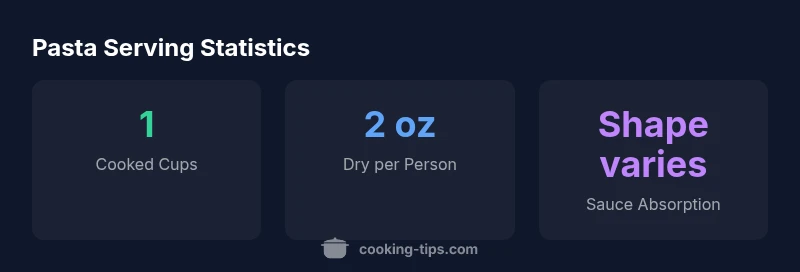
A standard serving of cooked pasta is about 1 cup per person for most shapes, with longer shapes often measured as roughly 2 ounces dry per person (about 1 cup cooked). For children or lighter meals, start at about half to three-quarters of a cup cooked. This guideline helps you portion pasta consistently across meals and sauces. Based on Cooking Tips Analysis, 2026.
Baseline serving sizes and common rules
Portioning cooked pasta is a practical skill for home cooks. The most widely used baseline is that a single serving equals about 1 cup of cooked pasta for an adult. This guideline generally holds for most shapes, including spaghetti, penne, fusilli, and other short varieties. When you measure by weight, a common starting point is roughly 2 ounces of dry pasta per person, which typically yields about 1 cup cooked. Note that density varies by shape: long, thin strands such as spaghetti can pack more volume per ounce after cooking than broader shapes like fettuccine or lasagna noodles. Sauce and add-ins influence perceived portions; a saucier plate may warrant a slightly smaller pasta portion to balance with the sauce and protein.
According to Cooking Tips Analysis, 2026, many households over-portion pasta, leading to leftovers that sit in the fridge longer than desired. Learning to estimate portions with your hands or measuring cups can reduce waste and improve timing. For children, athletes, or people with different energy needs, adjust by halves or thirds of the baseline: half a cup for a light lunch, up to 1.5 cups for heartier meals. The key is consistency: once you settle on a baseline, you can replicate portions across meals and sauces. In practice, using 1 cup cooked pasta per person is a reliable starting point that pairs well with most sauces and proteins.
Shape and density: why one cup might feel different
The volume you measure isn’t the only factor—density matters, too. Long strands like spaghetti or linguine can feel lighter or heavier depending on whether they’re twirled or laid flat on a plate. Short shapes such as farfalle, rotini, or penne trap more air and sauce in their curves, which can subtly alter how full a 1 cup serving feels. This means two people eating the same cup of cooked pasta might perceive portion sizes differently if one prefers a thick sauce or extra mix-ins. For a practical baseline, aim for about 1 cup cooked pasta per person for most shapes, and adjust upward or downward by roughly a quarter cup depending on appetite, sauce density, and side dishes. The Cooking Tips team notes that sauces with cheese or cream can make portions feel more substantial, so you may serve slightly less pasta if the sauce is rich. If you’re feeding kids or guests with higher activity levels, tailor portions accordingly.
Measuring without a scale: practical methods
When a kitchen scale isn’t available, you can estimate portions with simple tools and visual cues. For dry pasta, a 2-ounce serving corresponds roughly to a handful of long shapes (the diameter of a standard four-finger pinch) or about the amount that fits in the palm of your cupped hand. For most shapes, 2 ounces dry yields about 1 cup cooked, making it a convenient rule of thumb. You can also use a measuring cup for cooked pasta—1 cup is a reliable baseline for a single serving. If you’re cooking for two, pre-measure dry portions and adjust based on appetite and sauce quantity. For spaghetti and other long strands, a common method is to wrap dried pasta around your index finger and thumb to form a “bundle” that equals about 2 ounces. With practice, these visuals become quick, repeatable benchmarks in weeknight cooking.
Kids, athletes, and dietary variations
Portioning pasta isn’t one-size-fits-all. Children typically eat smaller portions, about half to three-quarters of an adult serving, depending on age and activity. Athletes or highly active individuals may benefit from larger portions to support energy needs, but even then it’s wise to balance with protein and vegetables rather than simply increasing pasta. For vegetarians, the portion guidelines remain similar, but you may want to increase vegetables on the plate to enhance fullness. Pregnancy, medical conditions, or dietary goals can also influence portions, so consider personal nutrition guidance alongside the baseline. In practice, use 1 cup cooked pasta per person as a starting point for adults, and adjust around it as needed for kids and active lifestyles. The goal is consistent portions that align with the overall meal composition, not strict adherence to a single number.
Sauces, sides, and dietary context
Sauce density and side dishes dramatically affect how much pasta you should serve. A saucy plate (think Alfredo or a chunky marinara) often requires a slightly smaller portion to avoid crowding on the plate, whereas a light olive oil or herb drizzle allows a more generous pasta baseline. When pasta is paired with a high-protein main (meat, poultry, or seafood), you might reduce the pasta portion by about a quarter cup to keep the plate balanced. Conversely, if the sauce is predominantly vegetables and legumes, you can lean closer to the 1 cup mark to ensure the meal remains satisfying. In all cases, remember that leftovers can be safely stored for a short period if cooled promptly and refrigerated. This is important for both reducing waste and maintaining food safety.
Leftovers and meal planning
Leftover pasta is common, especially after family meals or weekend batch cooking. To reheat without sogginess, store cooked pasta separately from sauce in airtight containers and reheat with a splash of water or broth to restore moisture. Reheating pasta with a splash of water helps prevent drying out while preserving texture. For meal planning, consider cooking pasta in 1 cup portions and storing sauce or proteins separately. When you reheat, mix in the sauce at the end to rehydrate the pasta. By understanding baseline portions, you can plan meals so you rarely end up with large bowls of unused pasta. Cooking Tips Analysis, 2026 suggests aiming for consistent portions and using leftover pasta in salads, casseroles, or baked dishes to maximize value.
Practical cheat sheet for quick meals
- Standard baseline: 1 cup cooked pasta per person; about 2 ounces dry for long shapes
- Kids: roughly half to three-quarters of an adult serving
- Sauce guides: rich sauces = smaller portions; light sauces = larger portions
- Measuring without a scale: use a cup for cooked portions; use the 2-ounce dry rule for long shapes
- Leftovers: refrigerate promptly; repurpose into new dishes to avoid waste
With these quick rules, you can quickly plate meals with confidence, adjust portions for sauces, and create balanced plates without weighing every portion.
Common mistakes and fixes
A frequent error is overestimating appetite and serving pasta as a “filler” rather than a component of a balanced plate. This leads to leftovers and waste. Another common pitfall is cooking pasta to be extra soft, which visually exaggerates portion size and makes leftovers less appealing. To fix these issues, start with the baseline of 1 cup cooked pasta per person, taste, and adjust with additional sauce and vegetables rather than extra pasta. Consider aligning servings with standard plate sizes to improve consistency in meal prep. Finally, if you’re serving al dente pasta with heavy sauce, you may want to reduce the pasta portion slightly to keep the plate comfortable and appetizing.
Quick reference by shape and sauce density
- Spaghetti, linguine: 1 cup cooked; 2 ounces dry (long shapes)
- Penne, fusilli: 1 cup cooked; 2 ounces dry (bite-sized shapes)
- Lasagna sheets or lasagna-style pasta: ½–¾ cup cooked per segment in a layered dish
- Sauce density matters: heavy sauces = smaller portions; light sauces = larger portions
This quick guide helps you adjust portions on the fly during busy weeknights, keeping servings practical and satisfying.
Comparison of cooked vs. dry pasta portions by shape
| Pasta Type | Cooked Serving (cups) | Dry Serving (oz) | Notes |
|---|---|---|---|
| Spaghetti (thin) | 1 | 2 | Standard serving; saucing affects perception |
| Penne/Rotini | 1 | 2 | Saucy dishes; similar to spaghetti |
| Fettuccine/Tagliatelle | 1 | 2 | Flat shapes absorb more sauce |
| Orzo | 0.5–0.75 | 1 | Rice-shaped; versatile as side or main |
| Lasagna sheets (broken) | 0.5–0.75 | 2 | Segmented in layered dishes |
Quick Answers
What is the most reliable serving size for pasta?
A practical baseline is 1 cup cooked pasta per person, or 2 ounces dry for long shapes; adjust by appetite and sauce.
A good rule of thumb is one cup of cooked pasta per person, with tweaks for sauce and appetite.
How can I portion pasta without a scale?
Use a measuring cup for cooked portions or the 2-ounce dry rule for long shapes to estimate servings quickly.
Measure by cups when possible or use the 2-ounce dry rule for long shapes.
Should I give kids the same serving as adults?
Children typically eat half to three-quarters of an adult serving, depending on age and activity.
Kids usually eat a smaller portion—about half to three-quarters of an adult serving.
Does shape affect serving size?
Yes. Shape density and sauce retention vary; adjust portions to match the dish and sauce.
Different shapes hold sauce differently, so adjust portions accordingly.
Can I freeze cooked pasta or refrigerate leftovers?
Cooked pasta can be stored 3-5 days in the fridge; reheat with a splash of water to restore moisture.
Leftovers store well for a few days; reheat with a splash of water.
How many servings are in a pound of dry pasta?
A pound of dry pasta typically yields about 4-6 servings when cooked, depending on shape and sauce.
A pound of dry pasta usually serves about four to six people once cooked.
“Portion control for pasta is about balance with sauce, protein, and vegetables, not a single number. Use a practical baseline and adjust to the meal context.”
Top Takeaways
- Start with 1 cup cooked pasta per person as a baseline
- Use 2 ounces dry per person for long shapes
- Adjust portions for sauce density and sides
- Keep portions consistent for better meal planning