How Much Does Cooked Pasta Weigh? A Practical Guide
Learn how much cooked pasta weighs per serving, with practical, shape-aware conversions and simple measuring tips from Cooking Tips to portion pasta accurately every time.


According to Cooking Tips, understanding how much cooked pasta weighs helps with portions, meal planning, and nutrition goals. A typical serving is about 1 cup of cooked pasta, weighing roughly 120–140 g (about 4–5 oz). Weight can vary by shape and density, and whether sauce is included. For precise results in recipes or dieting, weigh portions on a kitchen scale rather than relying on volume estimates.
Understanding cooked pasta weight: what counts and what doesn't
In cooking, the term "weight" typically refers to the mass of pasta after it has been cooked. This guide focuses on cooked pasta weight as a practical measure for portions, meal planning, and nutrition tracking. A common serving is about 1 cup of cooked pasta, which weighs roughly 120–140 g. This range accounts for variations in shape and density; long strands such as spaghetti tend to compact differently than hollow shapes like penne. When you weigh cooked pasta, you gain a direct metric for portion size that translates well to dietary goals because it reflects the actual product you consume, not an estimate based on the dry form.
To keep your measurements consistent across meals, treat cooked weight as the primary reference point for portions, and use dry weight only when you need to plan shopping or batch scaling. This approach helps you compare recipes reliably and reduces guesswork in nutrition labels or meal-prep plans. The key idea is to measure what you eat, not what you think you eat, which makes portion control far easier and more accurate.
Practical serving sizes and conversions
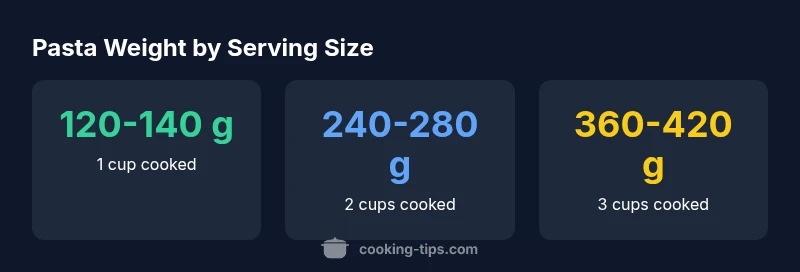
For home cooks, standard serving sizes are a useful starting point. A 1-cup portion of cooked pasta typically weighs about 120–140 g, depending on the shape. If you’re starting from dry pasta, a common rough rule is that about 2 oz (56 g) of dry pasta yields roughly 1 cup of cooked pasta, though the exact cooked weight can vary with shape and cooking time. When planning meals for multiple people, you can scale portions using these rough conversions: 1 cup cooked equals approximately 120–140 g; 2 cups cooked equals about 240–280 g. Shapes with more air in their structure (like bow-tie or shells) may compact a bit more or less, affecting the final weight per cup. For more precise planning, weigh portions after cooking and adjust future amounts accordingly. This nuance—shape-dependent density—helps explain why some recipes seem to yield different portions even when the same dry amount is used.
In applied cooking, you may need to switch between cup-based and gram-based measurements. If you’re following nutrition labels or dietary guidelines, grams are often the most precise, while cups are convenient for quick cooking. Cooking Tips analysis shows that both methods have their place; the best practice is to use grams for tracking and cups for on-the-fly cooking. As you gain experience, you’ll develop a feel for the typical range you prefer for different shapes and sauces.
How to measure weight accurately at home
Accuracy starts with a good scale. Set up a digital kitchen scale on a flat, stable surface. If you’re weighing pasta directly in a plate or bowl, use the tare function to zero the container’s weight before adding the pasta. Here’s a quick routine:
- Place the empty dish on the scale and tare to zero.
- Add dry pasta to the dish and note the weight if you plan to track dry mass.
- Cook the pasta according to the package directions.
- After draining, transfer the cooked pasta to the weighing dish and tare again to measure the cooked mass.
- Record the cooked weight per serving and adjust future portions as needed.
If you don’t have a scale, you can approximate using cups, but be mindful that density and shape can shift the weight. For best results, build a small reference library of weights for your favorite shapes (e.g., spaghetti, penne, fusilli) so you can quickly estimate portions without repeating the full weighing process each time.
From a practical standpoint, weighing cooked pasta directly is the most consistent method for portion control and nutrition planning. The Cooking Tips team recommends keeping a standard target range (e.g., 120–140 g per cup) and adjusting based on your shape preferences and appetite.
Shape, density, and sauce: does weight change with toppings?
The raw pasta weight versus the finished plate weight can look very different once sauce or toppings are added. If you weigh only the dry pasta, you’re measuring what goes into the pot. Weighing cooked pasta gives you a better sense of actual portions served on a plate. If your goal is total dish weight (pasta plus sauce), weigh the finished plate after mixing. Keep in mind that sauces add flavor and moisture but also increase the overall weight. For diet tracking, decide in advance whether you want to count pasta alone or the entire dish as served, and be consistent across meals. This distinction is essential for accurate nutrition logging and recipe scaling.
In practice, most home cooks use cooked-weight portions for plates and dry-weight portions for grocery shopping. This approach balances convenience with precision and is recommended when planning meals for multiple people or when scaling recipes across several servings.
Nutrition, recipe scaling, and practical tips
Weight-based portioning is a reliable way to standardize meals and support dietary goals. When you scale recipes, use cooked-weight portions for plated servings to ensure consistency across the kitchen. If you’re preparing meals in advance, weigh individual portions chilled or frozen to maintain portion control. A practical tip is to establish a personal reference: weigh one portion of your favorite pasta shape, note the weight, and reuse that value to portion future meals. Over time, your sense of proportion will improve, and you’ll need the scale less frequently while still maintaining accuracy for tracking and planning.
Remember that the total weight of a dish can change with the sauce, cheese, herbs, or oil added. If you’re tracking calories or macros, weigh the entire plated dish or be clear about whether you’re counting pasta alone or with sauce. The key is to be explicit about what you’re weighing and to apply the same method consistently across meals and days.
Quick-reference guidelines for home cooks
- Use a digital kitchen scale for precise portions, especially when dieting or tracking nutrition.
- For cooked pasta, aim for roughly 120–140 g per cup as a starting point.
- Dry-to-cooked yields vary by shape; use the 2 oz dry ≈ 1 cup cooked rule as a rough guide.
- Weigh portions after cooking for plate accuracy or weigh dry amounts for shopping planning.
- When adding sauce, decide whether you want to count pasta alone or the finished dish and weigh accordingly.
- Create small reference weights for your most-used shapes to speed up future meal planning.
Typical cooked pasta weights by serving size and their rough dry equivalents
| Serving size (cooked) | Weight range (g) | Equivalent dry measure |
|---|---|---|
| 1 cup | 120-140 | 2 oz dry |
| 2 cups | 240-280 | 4 oz dry |
| 1 plate (about 3 cups) | 360-420 | 6 oz dry |
Quick Answers
What is a typical weight of a single serving of cooked pasta?
A common serving of cooked pasta is about 1 cup, weighing roughly 120-140 g depending on shape. Use a kitchen scale for precision, especially when dieting or following nutrition labels. This provides a consistent reference for meals and recipes.
A typical serving is about one cup, weighing around 120 to 140 grams, depending on the shape.
Does the shape of pasta affect cooked weight per cup?
Yes. Different shapes trap different amounts of water and compress to varying densities, so a cup of spaghetti weighs slightly less or more than a cup of penne. When exactness matters, weigh cooked portions rather than relying on volume.
Shape does matter; a cup of one shape may weigh a bit more or less than another.
Should I measure pasta before or after cooking?
If you track nutrition, weigh cooked pasta for portions. Dry portions are best for shopping or recipe scaling. Decide your tracking method and stay consistent across meals.
Weigh the portion you track—usually cooked for accuracy, or dry for shopping.
How accurate are these estimates across brands and shapes?
Estimates are general guidelines; actual weights vary by brand, shape, and cooking time. Use a kitchen scale for best accuracy, especially when precision matters for diet plans.
There can be variation between brands and shapes; weigh to be precise.
What tools do I need to weigh pasta accurately at home?
A digital kitchen scale is ideal; use the tare function to reset the weight of containers. This simplifies measuring both dry and cooked portions with accuracy.
A digital scale with tare makes it easy to weigh pasta accurately.
Can I weigh sauce separately to calculate total dish weight?
Yes. Weigh sauce separately if you want total dish weight; liquids add weight beyond the pasta. If tracking nutrition, decide whether to count pasta alone or the finished plate.
Weigh sauce separately if you want to know the full dish weight.
“Precise weighing removes guesswork from portion control, making recipes more reliable and nutrition tracking more accurate.”
Top Takeaways
- Measure portions with a kitchen scale for accuracy.
- Expect about 120-140 g per cup of cooked pasta.
- Shape and sauce affect perceived weight when measured by volume.
- Use dry-to-cooked conversion as a rough guide: ~2 oz dry yields ~1 cup cooked.
- Weigh portions when tracking nutrition to stay consistent.