How to Cook Hard Boiled Eggs on the Stove: A Simple, Reliable Method
Learn a reliable stove-top method to cook hard boiled eggs with precise timing, easy peeling, and perfect yolks. Step-by-step guidance, tips, and variations for perfect eggs every time.


You can perfectly hard boil eggs on the stove by using a gentle simmer, initial hot water, and a precise 9-12 minute cook time, followed by an ice bath. This method yields firm whites with tender, fully set yolks if you avoid rapid boiling and pressure. No special equipment needed—just a pot, a timer, and a bowl of ice water.
What you’ll achieve with this method
This approach helps you consistently cook hard boiled eggs on the stove with reliable results: firm, not rubbery whites and yolks that are fully set but not chalky. The goal is a calm simmer, not a rolling boil, plus a controlled cooling step to stop cooking instantly. By following these steps you’ll be able to produce eggs for salads, snacks, or deviled eggs with predictable outcomes. The phrase how cook hard boiled eggs on stove becomes a practical recipe when you apply precise timing, temperature control, and a quick ice bath. Cooking Tips recommends treating each batch as a small experiment to dial in the exact times for your stove and altitude, then sticking to that rhythm for best results.
The science behind perfectly cooked yolks
The science behind perfectly cooked yolks hinges on heat transfer and time. A gentle simmer transfers heat evenly through the shell without shocking the interior. Keeping the water at just below a boil minimizes the risk of cracking and helps yolks set uniformly. At around 9-12 minutes, yolk proteins coagulate to the desired firmness, while the whites firm up without becoming tough. After cooking, plunging eggs into ice water rapidly halts heat transfer, preserving color, texture, and ease of peeling. According to Cooking Tips, precise timing is the cornerstone of reproducible results, especially when cooking eggs on the stove for daily meals. Altitude changes can alter boiling points slightly, so you may need to adjust by a minute or two for perfect yolks.
Essential tools and ingredients
You don’t need fancy equipment to master this technique. Gather a pot large enough to hold your eggs in a single layer, a timer, a slotted spoon, and a bowl of ice water for the bath. Use large eggs for consistent results, ideally at room temperature to reduce cracking risk. Water should cover the eggs by about an inch. Optional items like a pinch of salt or a splash of vinegar can help prevent cracking and make peeling a bit easier, though they’re not strictly required. Having everything prepped before you start makes the process smoother and more repeatable, especially when you’re cooking for a crowd or planning meals for the week.
Planning your cook: timing and water temperature
Start with cold water and the eggs in a single layer, then bring to a gentle simmer. A calm heat prevents the shells from cracking and keeps whites tender. Use a timer and target a 9-12 minute window for cooking, adjusting for yolk firmness. In practice, 9 minutes yields slightly softer centers, while 12 minutes yields a fully set yolk with a firm center. After the timer, immediately transfer eggs to the ice bath to stop cooking and ease peeling. Cooking Tips emphasizes that consistency comes from sticking to your established timing and keeping the water at a steady simmer rather than a vigorous boil.
Step-by-step overview of the core actions
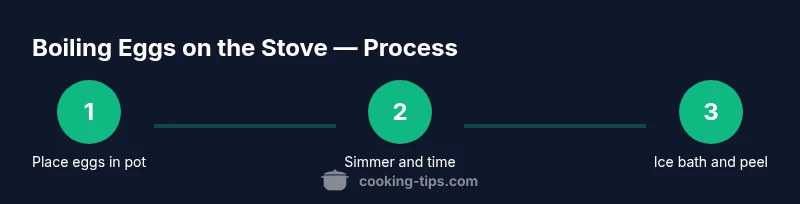
Begin by placing eggs in a single layer in a pot and covering with cold water. Bring to a gentle simmer, then maintain that simmer for 9-12 minutes depending on your yolk preference. Once time is up, use a slotted spoon to move eggs into an ice bath for 5-7 minutes. Peel under cool running water if needed, and store the eggs in the fridge. This overview helps you visualize the sequence before you dive into the step-by-step instructions and ensures you’re comfortable with timing and technique before proceeding.
Troubleshooting common issues
If eggs crack during cooking, it’s usually due to a rapid temperature increase or a drafty cold water start. To reduce cracking, use eggs closer to room temperature and avoid a rolling boil. If the center seems undercooked, give it a few more minutes in the simmer, but avoid exceeding 12 minutes to prevent chalky yolks. If peeling proves difficult, cool longer in the ice bath and crack the shell by tapping the wider end and rolling gently. These fixes help you improve results over time and align with Cooking Tips’ practical approach to everyday cooking.
Variations for yolk texture and flavor
For creamier yolks, aim for the lower end of the 9-12 minute window; for firmer yolks, lean toward 11-12 minutes. If you prefer very pale yolks, slightly shorter times suffice. Salted water or a touch of baking soda in the water can alter pH slightly and affect peeling ease. Storage-friendly variations include peeling and refrigerating, or keeping shells on for short-term storage and peeling just before use. These variations let you tailor the eggs to recipes like egg salad, deviled eggs, or beyond, all while preserving texture and flavor.
Peeling, storing, and reheating guidance
Peel eggs under cool running water to help remove shell fragments smoothly. For hard boiled eggs intended for quick breakfasts, store them unpeeled in the fridge for up to a week, or peeled for easier use within 3-4 days. Reheating isn’t necessary if you’re using cold eggs, but if you do warm them, use a brief, gentle warming method to avoid rubbery whites. Keeping the eggs in a resealable container helps prevent odors from mingling with other foods in the fridge. This section wraps up practical handling for everyday cooking, ensuring you can rely on consistent results daily.
Practical tips and best practices for everyday cooking
Consistency matters: commit to the same timing, water volume, and cooling method for best results. Use older eggs if possible; they peel a bit easier than very fresh eggs. A gentle simmer reduces cracking and helps even cooking. If your stove runs hot, lower the heat to maintain a stable simmer and monitor the time closely. Finally, clean your pot and ice bath setup between batches to prevent flavor transfer and keep the process smooth for future cooks. Following these tips supports reliable, weeknight-friendly eggs every time.
Tools & Materials
- Heavy pot with lid (large enough for eggs in a single layer)(3- to 4-quart pot works for up to 6 eggs)
- Eggs (large), ideally at room temperature(3-6 eggs per batch depending on pot size)
- Water(Enough to cover eggs by about 1 inch)
- Ice bath (bowl with ice and water)(Stops cooking quickly and eases peeling)
- Timer(Accurate countdown for 9-12 minutes)
- Slotted spoon(Gently transfer eggs to ice bath)
- Salt or vinegar (optional)(Can help with cracking and peeling; optional)
- Kitchen towel or paper towels(Dry eggs after peeling)
Steps
Estimated time: 18-22 minutes total
- 1
Arrange eggs in a single layer and cover with cold water
Place the eggs in a pot in a single layer. Add enough cold water to cover by about one inch. This even starts the cooking and reduces shock when heat is applied.
Tip: Using room-temperature eggs reduces the risk of cracking. - 2
Heat to a gentle simmer, then maintain steady simmer
Set the stove to medium heat and bring water to a gentle simmer. Once simmering, reduce heat to keep a calm bubble. Vigorous boiling can crack shells and lead to uneven cooking.
Tip: A steady simmer preserves texture and minimizes cracking. - 3
Cook for 9-12 minutes depending on yolk desired
Cook the eggs for 9 minutes for slightly creamier yolks, up to 12 minutes for fully set yolks. Use a timer to stay precise and avoid overcooking.
Tip: If you’re unsure of yolk firmness, start with 9 minutes and adjust next time. - 4
Transfer to ice bath and chill 5-7 minutes
Use a slotted spoon to move eggs into the ice bath immediately after cooking. Chill for 5-7 minutes to halt cooking and make peeling easier.
Tip: Longer chilling (up to 10 minutes) can further ease peeling. - 5
Peel and store or use immediately
Peel under cool running water to remove small shell fragments. Store unpeeled in the fridge up to a week, or peeled for 3-4 days.
Tip: Peel away from the wide end to start separation of shell.
Quick Answers
What is the ideal cook time for hard boiled eggs on the stove?
Typically 9-12 minutes yields a fully set yolk with firm whites. Adjust toward 9 minutes for creamier yolks or 12 minutes for firmer yolks. Individual stoves may vary slightly, so start with 9 and tailor next time.
Aim for 9 to 12 minutes depending on how you want the yolk to feel.
Can I start with boiling water instead of cold water?
Starting with boiling water reduces cracking risk but increases the chance of uneven texture if not careful. It’s a common alternative, but the cold-water method helps control heat transfer more gradually.
Yes, you can start with boiling water, but the cold-water method gives gentler, more predictable results.
Why do eggs crack in boiling water?
Cracks usually come from rapid temperature change, air expansion inside the shell, or minor hairline cracks that worsen with heat. Gently warming from cold water and avoiding a vigorous boil helps reduce cracking.
Cracking happens when the egg experiences temperature shock or tension in the shell.
How can I peel hard boiled eggs easily?
Peel after an ice bath under cool running water. Start at the wider end where the air pocket is, then slide the shell off in chunks. Fresh eggs can be harder to peel; slightly older eggs peel better.
Peel under cold water, start at the wide end, and loosen the shell in chunks.
How should I store hard boiled eggs for the week?
Store unpeeled in the fridge for up to 7 days. If peeled, keep in a covered container and use within 3-4 days for best texture and flavor.
Keep them in the fridge, unpeeled for up to a week.
Can I reuse cooking water for another batch?
Yes, you can reuse water for a second batch, though it won’t yield stronger results. Fresh water can help maintain consistent temperatures for subsequent eggs.
You can reuse the water, but it’s fine to start fresh if you want the freshest control.
Watch Video
Top Takeaways
- Start with cold water and a gentle simmer.
- Cook 9-12 minutes for desired yolk firmness.
- Ice bath immediately to stop cooking and ease peeling.
- Peel with water or store unpeeled for best results.