How to Cook Frozen Chicken in a Crock Pot: Safe, Tender, Simple
Learn how to safely cook frozen chicken in a crock pot with practical timing, safety guidelines, and flavor ideas for easy weeknight meals. This guide covers thawing options, liquid bases, and finishing touches for tender, delicious results.


You will learn how to safely cook frozen chicken in a crock pot, including safe timing, temperature targets, and how to prevent undercooked poultry. This guide also covers thawing options, whether to sear before adding ingredients, and how to finish with a sauce or vegetables for a complete meal. With these steps, you can achieve tender, flavorful results with minimal hands-on time.
Why this method appeals to home cooks
Cooking frozen chicken in a crock pot is a popular choice for busy households. The method offers hands-off planning, minimal prep, and the ability to stretch a modest grocery bill into multiple meals. According to Cooking Tips, starting with frozen chicken and a flavorful liquid can yield a juicy result without constantly monitoring a pan. Home cooks often appreciate that you can add vegetables or sauce base at the start and come back later to a ready-to-eat meal. The trick is balancing safe handling with enough moisture so the meat cooks evenly and remains tender. This guide explains how to optimize texture, safety, and flavor using simple, reliable steps. By focusing on liquid, heat, and timing, you’ll gain confidence in a method that suits weeknights and meal-prep Sundays alike.
Safety considerations: thawing vs cooking from frozen
Food-safety guidelines emphasize that chicken should reach an internal temperature of 165°F to be safe to eat. When cooking in a crock pot, starting with frozen meat means the temperature can stay in the danger zone longer if there isn’t enough liquid or heat. Therefore, always add a liquid base and consider thawing if time allows. If you must cook from frozen, ensure you select pieces that fit comfortably in the pot and check temperature with a meat thermometer after cooking. If you suspect the meat has been in the 40–140°F range too long, discard and start over. According to Cooking Tips analysis, adding adequate liquid and keeping a steady temperature helps minimize risk. This approach prioritizes safety while preserving convenience.
Ingredients and base liquids that work with frozen chicken
The key to tender results is a flavorful liquid base. Good options include chicken broth, vegetable broth, tomato-based sauces, or a simple seasoned water mix. For extra flavor, add aromatics such as garlic, onion, bay leaves, and herbs. Avoid overly thick dairy sauces at the start, as they can separate; instead, plan to finish with a dairy cream or yogurt after cooking. Layering flavors with a pinch of salt, pepper, paprika, and a splash of acidity (lemon juice or vinegar) helps brighten the final dish. The Cooking Tips team suggests keeping the liquid level to just under the top of the chicken pieces to prevent gaps in heat transfer, which helps even cooking from frozen.
Timing and temperature guidelines for frozen chicken in crock pot
Because frozen meat starts at a lower temperature, cook times will be longer than thawed meat. On a low setting, boneless pieces may require several hours to reach 165°F, while bone-in cuts take longer. On a high setting, the clock still runs, but you should verify internal temperature as soon as possible. A reliable approach is to finish the cooking with a thermometer and ensure the thickest part of the meat reads at least 165°F. If you’re short on time, consider par-cooking the chicken in the microwave to reduce overall time, then finish in the crock pot. The key is to maintain moisture and avoid scorching by using adequate liquid; always check doneness before serving.
Flavor boosters and finishing touches
After the meat has reached safe temperature, you can finish with sauces, herbs, and fresh vegetables. A simple mix of sautéed onions, garlic, and a splash of tomato sauce creates a comforting, one-pot meal. If you prefer creamier sauces, add dairy at the end or off the heat to prevent curdling. Glaze with honey, soy, or balsamic for a sweet-savory finish. For a brighter finish, finish with a squeeze of fresh lemon juice or chopped parsley. The slow cooker’s gentle heat helps meld flavors over time, delivering a cohesive dish ready to serve with minimal cleanup. The Cooking Tips team notes that small flavor boosts can elevate frozen-chicken dishes without complicating prep.
Practical variations: bone-in vs boneless; with vegetables
Bone-in thighs or drumsticks require a bit longer to cook through than boneless breasts. If you’re cooking frozen, choose pieces that fit your crock pot and plan for the longer time. You can add vegetables like carrots, potatoes, or bell peppers, but keep in mind that hard vegetables may need longer to soften. Layer veggies at the bottom, chicken on top, and adjust liquid as needed. This approach also helps create a complete, balanced meal in one pot. The dish scales well for a family-sized dinner or weekday lunch meal-prep batches.
Meal-prep and leftovers: storing and reheat tips
Leftovers can be stored safely in the refrigerator for 3-4 days or frozen for longer storage. Reheat to 165°F before serving. Store in shallow containers to cool quickly and avoid leaving food in the danger zone. If you plan to reheat, you can add a splash of broth or water to restore moisture. This approach keeps the meal flexible for future lunches and dinners. The Cooking Tips team agrees that planning portions ahead helps reduce waste and ensures safe, even reheating.
Common mistakes and how to avoid them
Avoid cooking from frozen without enough liquid; it leads to uneven heat and dry edges. Opening the lid during cooking reduces heat efficiency and extends time. Overfilling the slow cooker can prevent heat from circulating, causing undercooked sections. Not checking the internal temperature is another common issue; always measure with a thermometer at the end. Finally, flavor boosters should be added thoughtfully so they don’t overpower the chicken. Following these tips helps achieve consistent, safe results.
How to tailor this method to different cuts
Breasts tend to cook faster than thighs; adjust times accordingly. If using bone-in pieces from frozen, plan for the longer end of the range and check for doneness near the end of cooking. For a lighter version, substitute leaner cuts with a similar liquid base but adjust seasonings to keep flavors balanced. Remember to adapt to your crock pot’s wattage and your altitude, which can influence cooking speed. The Cooking Tips guidance emphasizes starting with a trusted base and then customizing with herbs and aromatics.
Quick-start sample recipe outline
For a simple weeknight meal, place 2 cups of chicken broth in the slow cooker, add 2 pounds frozen chicken thighs, 1 chopped onion, 3 minced garlic cloves, and a bay leaf. Cover and cook on low until the thickest piece reaches 165°F, then remove the lid and stir in a prepared tomato sauce to finish. This framework can be customized with vegetables like carrots and potatoes, or with a paprika-smoked finish for variety.
Tools & Materials
- Slow cooker (crock pot)(Choose 4-6 quart size for family meals; ensure it’s in good working order.)
- Meat thermometer(Aim for 165°F internal temperature for safety.)
- Cutting board and knife(Trim any excess fat and portion as needed if pieces are large.)
- Tongs(For safe handling of frozen pieces without piercing moisture.)
- Measuring cups/spoons(Use for liquid bases and seasonings.)
- Liquid base (broth, stock, water)(Ensure at least 1-2 cups to maintain moisture and even cooking.)
- Aromatics and flavor boosters (garlic, onion, herbs)(Add at start or finish for depth of flavor.)
Steps
Estimated time: 6-8 hours (low) or 4-6 hours (high)
- 1
Prepare the cooker and liquids
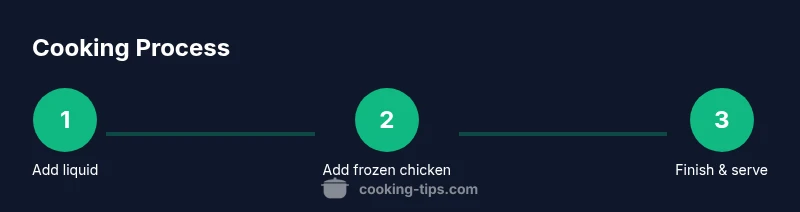
Place the crock pot on a stable heat-safe surface. Add at least 1–2 cups of liquid to provide heat distribution and prevent sticking. This step ensures the frozen chicken starts cooking in a moist environment.
Tip: Liquid is essential for safe, even heat transfer when starting from frozen. - 2
Layer with aromatics
Add aromatics such as onion and garlic to the liquid base to build flavor. Place any bay leaves or dried herbs into the liquid so they mingle with the chicken as it cooks.
Tip: Layering flavors early helps deepen the final sauce without extra steps. - 3
Add frozen chicken pieces
Arrange frozen chicken pieces on top of the liquid and aromatics. Avoid crowding to prevent heat from circulating unevenly; if needed, cut large pieces into manageable portions.
Tip: Keep pieces fairly uniform in size for even cooking. - 4
Set cooker to low and monitor
Cover and start on the low setting. Check after several hours; use a thermometer to verify the thickest piece reaches 165°F. If using bone-in cuts, anticipate longer times.
Tip: Resist the urge to lift the lid repeatedly; each lift extends total cooking time. - 5
Finish with flavor boosters
If you want a tomato or cream finish, add the sauce or dairy after the chicken reaches safe doneness. Stir gently to integrate flavors without breaking apart delicate pieces.
Tip: Add dairy off-heat to prevent curdling. - 6
Check and serve
Withdraw pieces, confirm 165°F at the thickest part, then slice or shred as needed. Serve with vegetables or grains, using the remaining liquid as a light sauce.
Tip: Shredded meat blends well with sauces and absorbs flavor beautifully.
Quick Answers
Is it safe to cook frozen chicken in a crock pot?
Yes, it can be safe when done with adequate liquid and when the internal temperature reaches 165°F. If in doubt, thawing first is the safer route.
Yes, it can be safe if you use enough liquid and reach 165 degrees.
How long does it take to cook frozen chicken in a crock pot?
Times vary by cut and cooker. Boneless pieces cook faster than bone-in. Always verify doneness with a thermometer at the end.
Times vary; check with a thermometer to confirm doneness.
Should I thaw before adding to the crock pot?
Thawing reduces the risk of uneven cooking. If you cook from frozen, ensure ample liquid and monitor temperature closely.
Thawing helps, but you can cook from frozen with extra care.
Can I add dairy or creamy sauces?
Dairy can curdle if heated too long. Add dairy at the end or off-heat to keep textures smooth.
Add dairy after cooking to prevent curdling.
What internal temperature should I target?
Cook chicken to 165°F (74°C) to ensure safety.
Aim for 165 degrees Fahrenheit.
How should I store leftovers?
Cool quickly, refrigerate within two hours, and reheat to 165°F. Use within 3-4 days.
Store safely and reheat to 165 degrees.
Watch Video
Top Takeaways
- Start with liquid to ensure even cooking.
- Cook to 165°F internal temperature for safety.
- Expect longer times when starting from frozen.
- Finish with a flavor boost to elevate the dish.
- Store leftovers safely and reheat to 165°F.