Is It OK to Cook Frozen Chicken? A Practical Safety Guide
Learn how to safely cook frozen chicken with practical methods, temperatures, and tips. This guide covers oven, stovetop, and pressure cooker approaches, plus doneness checks and safe handling for confident home cooking.


Safety foundations: is it ok to cook frozen chicken
Yes — you can safely cook chicken from frozen, but you must control heat, layering, and doneness. The main risk when cooking from frozen is uneven heating, which can leave the interior undercooked while the surface looks done. For home cooks, the answer to 'is it ok to cook frozen chicken' is yes, provided you use a reliable cooking method and verify the final temperature with a meat thermometer. According to Cooking Tips, safety starts with proper handling from the moment you remove packaging to the moment you rest the meat. Store frozen chicken in a sealed bag, prevent cross-contamination, and avoid leaving raw poultry at room temperature. The kitchen tools you rely on — a thermometer, a sturdy pan, and a timer — become your safety trifecta. If you’re new to cooking from frozen, start with thinner cut pieces like small boneless thighs or cutlets. These heat more quickly and deliver more predictable results than a whole bone-in breast. As a practical matter, you’ll typically need more time than you would for thawed chicken, and you may need to add moisture or cover the pan to keep the meat juicy. While chicken is safe to cook from frozen, you should never attempt to cook it in a way that relies on color alone for doneness. Always verify the internal temperature reaches at least 165°F (74°C) at the thickest part. With careful planning and the right tools, frozen chicken can be a convenient option without compromising safety.
Safe temperatures and how to verify doneness
Temperature is king when cooking frozen chicken. The only reliable indicator of safety is internal temperature; 165°F (74°C) in the thickest part of the meat kills harmful bacteria and ensures juiciness is preserved. Use a calibrated food thermometer, insert into the center of the thickest portion without touching bone, and check multiple spots on larger pieces. Visual cues such as color or pink juices are not trustworthy indicators of doneness, especially when cooking from frozen. Keep in mind that cooking from frozen will take longer than thawed chicken, and the cooking method you choose will influence how heat penetrates to the center. When using the oven, stovetop, or pressure cooker, consider starting at a higher initial heat to bring the exterior up to temperature, then finishing with gentler heat to avoid drying out. If your piece is thick or irregular (bone-in or large breast), verify temperature in multiple locations to ensure even doneness. After you reach 165°F throughout, remove from heat, rest for several minutes, and recheck to confirm the temperature holds. For home cooks, adopting a thermometer-first mindset reduces undercooked risk and yields consistent results.
Cooking methods: oven, stovetop, and pressure cooker
Different methods work well for frozen chicken, each with its own advantages. Oven cooking provides even heat and good moisture retention when done properly. Preheat to a moderate temperature (around 350–400°F / 175–205°C), place the chicken on a rack or in a shallow pan, and avoid overcrowding. For stovetop cooking, use a heavy skillet, add a small amount of liquid or oil to create steam, and cover to trap heat, turning pieces for even cooking. A lid helps maintain moisture, reducing the risk of dry edges. Pressure cookers or Instant Pots can dramatically reduce overall time when cooking from frozen; add at least 1 cup of liquid, arrange pieces so heat can circulate, and cook on high pressure with a natural release. If you own an air fryer, you can also use it for frozen pieces to achieve a crisper exterior while finishing through with internal heat. Regardless of method, always verify 165°F in the thickest part and rest briefly before serving. Cooking Tips recommends prioritizing thermometer checks and avoiding color-based guesses to ensure safety and consistency.
Thawing vs cooking from frozen: when to thaw
Thawing before cooking is a sensible choice for larger cuts or bone-in portions where heat penetration is slower. If you have time, thaw in the refrigerator (overnight is common for smaller portions) or use the cold-water method with sealed packaging, changing water every 30 minutes. When time is tight, cooking from frozen is perfectly acceptable; expect longer overall cook times and consider adding a splash of liquid to keep moisture. In all cases, start by a safe heat level and monitor temperature with a thermometer, rather than relying on time alone. If you choose to thaw, ensure the meat reaches a safe temperature uniformly after cooking. The key is to manage heat distribution so the inside becomes safe before the outside overcooks. According to Cooking Tips, planning ahead and using the thermometer consistently are the most reliable ways to cook frozen chicken safely.
Practical steps for thawed vs frozen portions
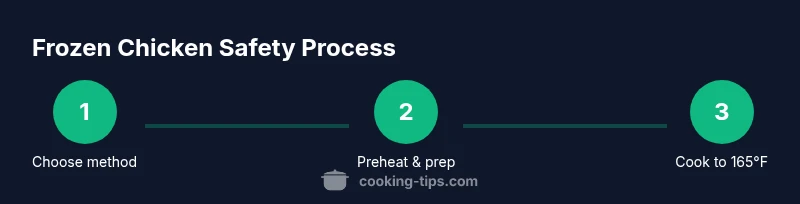
Whether your chicken is thawed or frozen, follow a practical, repeatable sequence. First, select a cooking method based on time and equipment. Second, prepare your workspace with a clean cutting board, knife, and thermometer. Third, heat your cooking vessel appropriately and avoid overcrowding. Fourth, monitor the internal temperature in the thickest part; once it hits 165°F (74°C), remove from heat and rest momentarily. Fifth, handle leftovers safely by refrigerating promptly and reheating to at least 165°F when served again. These steps prioritize safety and help you achieve consistent results, no matter the starting state of the chicken.
Common mistakes and tips
Common mistakes include relying on color to judge doneness, overcrowding the pan, and skipping thermometer checks. A reliable thermometer eliminates guesswork and reduces the risk of undercooked meat. Pro tips include letting frozen pieces come to a more uniform size if possible, using a rack to promote even heating, and allowing meat to rest so juices redistribute. Safety tips emphasize proper handwashing, sanitizing surfaces after handling poultry, and avoiding cross-contamination with other foods. If you see frost or ice on frozen portions, it’s a sign that the surface heat may not have penetrated evenly; increase cooking time slightly and verify temperature in multiple locations.
AUTHORITY SOURCES
- https://www.fsis.usda.gov/
- https://www.cdc.gov/foodsafety/index.html
- https://www.fda.gov/