Can You Freeze Cooked Chicken? A Practical Guide
Learn how to safely freeze cooked chicken for meal prep. This guide covers cooling, packaging, thawing, reheating, and common mistakes to avoid—backed by Cooking Tips for home cooks seeking reliable guidance.


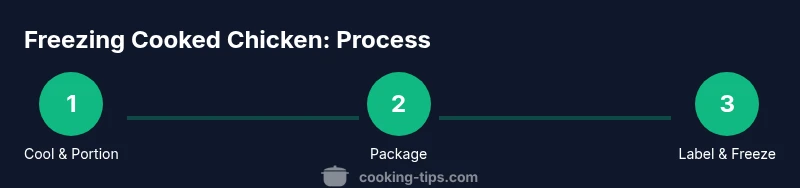
Yes, you can freeze cooked chicken. After cooling it promptly, portion it into meal-sized pieces and seal tightly in airtight containers or freezer bags to prevent freezer burn. Label with the date and use within 3–4 months for best quality. Thaw safely in the fridge or reheat from frozen in dishes that reach a safe internal temperature.
Why freezing cooked chicken is a smart move
Freezing cooked chicken is a practical way to reduce waste, save time, and simplify meal planning. When you cook extra or have leftovers, freezing them extends their life beyond the hustle of daily meals. This approach is especially helpful for busy weeknights, meal prep, and batch cooking. According to Cooking Tips, freezing cooked chicken can preserve flavor and texture if done correctly. The key is to cool it promptly, package to limit air exposure, and store at a constant freezing temperature. By adopting a consistent method, you’ll cut waste and keep a ready-to-use protein in the freezer. This habit supports practical cooking techniques and aligns with everyday meals home cooks strive to master.
Food safety foundations: temperature, cooling, and storage
Maintaining safe handling during cooling and freezing is essential. Bacteria grow rapidly in the 40°F to 140°F range, so cold the cooked chicken quickly and get it into the freezer as soon as possible. Refrigerate at 40°F (4°C) or below within two hours of cooking, then transfer to a freezer environment at 0°F (-18°C) or lower. Label stored portions with content and date. When in doubt, err on the side of cleanliness and separate raw foods from ready-to-eat items to prevent cross-contamination. Reliable freezing practices protect both flavor and safety, a core principle echoed in Cooking Tips content.
When cooked chicken can be frozen vs. when to avoid freezing
Cooking methods and sauces influence freezing results. Plain cooked chicken freezes very well, while chicken with dairy-based sauces can become slightly grainy after thawing. If you plan to freeze chicken with sauces, consider freezing the meat and sauce separately or using sauces that hold up to freezing (such as tomato-based or dairy-free options). Avoid freezing leftovers that show signs of spoilage, and skip freezing if the chicken was left at room temperature for more than two hours. Understanding these nuances helps you decide when to freeze and when to store differently for best results.
How long cooked chicken stays good in the freezer
For best quality, cooked chicken remains optimal in the freezer for about 3–4 months when properly wrapped and sealed. Safety can be maintained beyond that period if the freezer stays at 0°F, but flavor and texture will gradually decline. For best results, use a first-in, first-out approach and avoid refreezing thawed meat once it has been warmed. The goal is not just safety but preserving texture and moisture so reheated portions taste nearly as good as fresh.
How to prep cooked chicken for freezing
Start by cooling leftovers quickly in shallow containers to speed up heat loss. Once cold, cut or shred the chicken into meal-sized portions (roughly 3–6 ounces per portion). Smaller pieces thaw more evenly and reheat faster, helping you avoid overcooking. If you want to freeze a whole sliced chicken breast, portion into single servings and stack in freezer bags. Label each portion if possible. Arranging portions neatly also makes it easier to grab exactly what you need later.
Packaging your cooked chicken for freezer storage
Choose packaging that minimizes air exposure and moisture loss. Use airtight freezer bags or BPA-free containers. For bags, lay the chicken flat and press out as much air as possible before sealing. For containers, fill to the top to reduce air pockets and leave minimal headspace. A light wrap of aluminum foil around containers adds an extra barrier against freezer burn. Always label with the date and contents. If you can, consider vacuum-sealing for the best protection against drying.
Freezer storage methods: bags, containers, and labeling
Flat freezing helps the fastest and most uniform freezing. Place packages on a tray to freeze individually, then stack once solid. Group items by date to ensure you use oldest portions first. Label with the contents and the date; consider noting the portion size to help plan meals. Use a dedicated freezer space to avoid temperature fluctuations from door openings. Thoughtful organization keeps frozen chicken accessible and reduces waste in busy weeks.
Thawing cooked chicken safely
The safest thawing method is in the refrigerator: transfer the portion the night before and allow it to thaw gradually. Small portions thaw within 24 hours; larger amounts may take up to 24 hours per 5 pounds. If you’re in a hurry, submerge the sealed package in cold water, changing every 30 minutes, until thawed. Never thaw at room temperature, which invites bacterial growth. After thawing, reheating should begin promptly to maintain quality and safety.
Reheating cooked chicken after freezing
Reheat until the internal temperature reaches 165°F (74°C) to ensure safety. Use an oven, stovetop, or microwave, but avoid overheating that dries out the meat. Thawed portions reheat evenly when covered and heated slowly. If reheating from frozen, plan for longer cook times and monitor with a thermometer to reach 165°F all the way through. Resting briefly after heating helps moisture redistribute and improves texture.
Common mistakes to avoid
Avoid freezing hot or warm chicken. Air exposure causes freezer burn, so seal tightly. Do not thaw and re-freeze meat, as the texture deteriorates and safety cannot be guaranteed. Don’t mix raw and cooked foods in the same container. Finally, skip labeling leads to forgotten portions that spoil in the back of the freezer. Also avoid letting the freezer run with frequent temperature fluctuations by keeping a steady setting and avoiding frequent door openings during peak times.
Quick-reference freezing times and tips
- Cooked chicken: best quality 3–4 months; safe to eat beyond that if kept frozen. - Thawing: in fridge 24 hours per 5 pounds; in cold water 1–2 hours for small portions. - Reheating: reach 165°F; reheat only once after thawing. - Packaging: use airtight bags or containers; flatten for even freezing. - Labeling: date, contents, and portion size. These practical notes help you plan meals with confidence.
Practical recipes using frozen cooked chicken
Turn frozen portions into quick meals: simmer shredded chicken into soups or stews; mix into salads or wraps after thawing; or toss with vegetables and grains for a one-pan meal. Frozen cooked chicken is convenient for weeknight dinners, reducing prep time while preserving flavor with smart reheating methods. You can adapt many traditional favorites by adding stock, spices, and seasonal produce to tailor to what’s in your pantry.
Tools & Materials
- Airtight freezer bags(Resealable, BPA-free; remove as much air as possible)
- Freezer-safe containers(Clear labeling helps track portions)
- Permanent marker(Label with date, contents, and weight)
- Aluminum foil or parchment(Extra barrier for moisture protection)
- Labeling materials(Waterproof labels or tape for freezer exposure)
- Digital kitchen thermometer(Useful to check thawed/reheated temps)
- Tray or shallow pan(Cool hot leftovers rapidly before packaging)
Steps
Estimated time: 20-40 minutes
- 1
Cool cooked chicken quickly
Spread leftovers in a shallow tray and refrigerate promptly to drop the temperature below the danger zone. Quick cooling helps preserve texture and moisture for freezing.
Tip: If you’re in a hurry, use an ice bath in a larger container to speed cooling. - 2
Portion into meal-sized servings
Cut or shred the chicken into evenly sized portions (roughly 3–6 ounces each) for faster, even thawing and reheating.
Tip: Smaller portions reduce thaw time and prevent overcooking during reheating. - 3
Choose packaging strategy
Decide between freezer bags or containers. Bags save space and freeze flat; containers are sturdy and stackable. Remove as much air as possible.
Tip: For bags, lay flat on a tray to form a compact block before stacking. - 4
Seal and label
Seal tightly, then label each portion with the date and contents. Clear labeling prevents guesswork during busy weeks.
Tip: Use waterproof markers to prevent fading in the freezer. - 5
Freeze flat and organized
Arrange packages flat in a single layer on a tray to ensure fast, uniform freezing. Once solid, transfer to a labeled storage area.
Tip: Keeping a FIFO system helps you use the oldest portions first. - 6
Store away from door to maintain temp
Place chicken behind other frozen items in the freezer to minimize temperature fluctuations from door openings.
Tip: Avoid crowding; air should circulate around packages. - 7
Document and track
Maintain a simple freezer log with dates and portion counts to simplify meal planning.
Tip: Review the log monthly to rotate stock effectively. - 8
Check quality before use
When you’re ready to use a portion, check for off smells or signs of freezer burn. If unsure, discard.
Tip: If partially thawed, recheck internal temperature during reheating.
Quick Answers
Is it safe to freeze cooked chicken that was left out overnight?
No. Do not freeze or consume cooked chicken that was left at room temperature for more than two hours. Bacteria can multiply quickly in the danger zone. Always refrigerate or freeze promptly.
No. Do not freeze or eat chicken left out overnight; discard it to avoid foodborne illness.
Can I refreeze cooked chicken after thawing?
Only if the chicken thawed in the refrigerator and has not been reheated. If you thaw in cold water or the microwave, cook it before freezing again. Safety and quality decline with each cycle.
Refreeze only if thawed in the fridge and not reheated; otherwise cook first before refreezing.
Can I freeze chicken with sauce?
Yes, you can freeze chicken with sauce, but dairy-based sauces may separate. For best texture, freeze chicken and sauce separately or choose sauces that freeze well, like tomato-based options.
You can freeze chicken with sauce, though dairy sauces may separate; separate if texture matters to you.
What’s the best container for freezing cooked chicken?
Airtight freezer bags or BPA-free containers are ideal. Vacuum sealing offers the best protection. Ensure the package is sealed, labeled, and laid flat where possible.
Use airtight bags or containers, and consider vacuum sealing for the best results.
How do I know frozen chicken is spoiled?
Look for off smells, color changes, or excessive freezer burn. If in doubt, discard. Freezing does not guarantee safety if the product shows signs of spoilage before freezing.
Check for unusual smell, color, or heavy freezer burn; when in doubt, throw it out.
Watch Video
Top Takeaways
- Freeze cooked chicken in meal-sized portions.
- Cool quickly and package airtight to prevent moisture loss.
- Label with date; use within 3–4 months for best quality.
- Thaw safely in the fridge or by cold water method and reheat to 165°F.