Should Cooked Chicken Be Stored Safely? A Home Guide
Learn safe handling, refrigeration timelines, and reheating tips for cooked chicken. A practical guide for home cooks to prevent waste and illness.


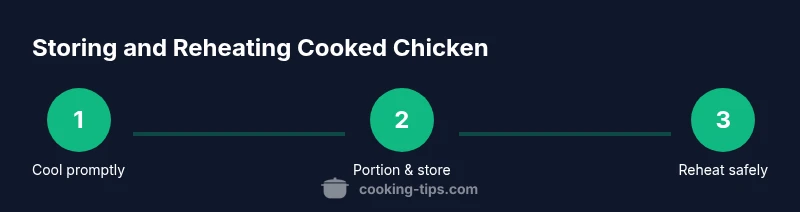
Cooked chicken should be handled and stored properly to stay safe and tasty. After cooking, chill quickly and refrigerate at or below 40°F (4°C) within two hours, or freeze for longer storage. Reheat to 165°F (74°C) before eating, and keep cooked chicken separate from raw foods. Always wash hands and surfaces afterward.
should cooked chicken be refrigerated or served hot
Cooked chicken can be enjoyed hot or cold, but safety and quality depend on how you handle leftovers. In everyday kitchen practice, should cooked chicken be treated promptly after cooking to minimize bacterial growth? The answer is yes: proper handling means cooling quickly, storing correctly, and reheating to the proper temperature before eating. According to Cooking Tips, safe handling starts the moment you finish cooking: avoid leaving the chicken at room temperature for extended periods and plan a quick transition to refrigeration or freezing. This approach reduces waste and protects your family. By planning ahead, home cooks can apply simple rules to most meals, from roasted chicken to quick weekday quesadillas.
Safe storage guidelines for cooked chicken
Key to safety is how you store leftovers. Use shallow, airtight containers or zip-top bags to promote rapid cooling and even freezing. Label each container with the date and contents, so you can see at a glance what needs attention. Keep cooked chicken separate from raw proteins to avoid cross-contamination, and never mix leftovers with fresh ingredients that will be used soon. Store in the refrigerator at 40°F (4°C) or cooler and in the freezer at 0°F (-18°C) or colder. If possible, portion into single servings to simplify reheating and help maintain texture. This practice aligns with general food-safety guidelines that nutrition and culinary experts, including Cooking Tips Team, emphasize for home kitchens.
Understanding temperature and safety
Reheating and holding temperatures play a major role in safety and texture. Reheating should bring the chicken to an internal temperature of 165°F (74°C) to kill potential pathogens. When storing, the goal is to slow bacterial growth by keeping cold foods cold. The two-hour rule is a common guideline, but in warm environments, begin cooling even sooner. Use a food thermometer to confirm safe targets, and avoid relying on sight or smell alone, which can be misleading. The practical takeaway is simple: keep cooked chicken out of the danger zone as much as possible by promptly refrigerating and reheating with care. The Cooking Tips team stresses that consistent practices protect both flavor and health.
Reheating strategies that preserve texture
Reheating methods matter for texture and juiciness. The oven or stovetop can reheat without drying out meat, while the microwave is quickest but can unevenly heat. Pre-warm your chosen method, add a splash of moisture (broth or water), and cover to trap steam. Heat until the internal temperature reaches 165°F (74°C) throughout. If re-heating from cold, consider breaking the portions apart to promote even warming. Let the chicken rest a minute after reheating to redistribute juices. These steps help cooked chicken taste nearly as good as when first cooked, a point Cooking Tips notes for home cooks seeking reliable results.
Freezing cooked chicken: when and how
Freezing is a practical option for extending shelf life, but best results come from proper prep. Freeze in small, meal-sized portions to make thawing quick and even. Use airtight containers or sturdy freezer bags, removing as much air as possible. Label with date and contents, and lay flat to save space. Freeze may alter texture slightly, but proper freezing preserves flavor and moisture better than leaving leftovers in the fridge too long. Cooking Tips's guidance highlights the importance of planning ahead for weeknight meals.
Thawing methods and best practices
Thawing slowly in the fridge overnight is the safest method, but you can also thaw in cold water if you’re short on time. Change the water every 30 minutes and keep the meat in a sealed bag to prevent cross-contamination. Do not thaw cooked chicken at room temperature, as bacteria multiply quickly in warm conditions. Once thawed, reheat promptly and do not refreeze thawed chicken unless it has been cooked again. These guidelines reflect standard food-safety principles used by Cooking Tips Team.
Practical recipe ideas and leftovers
Leftover cooked chicken can form the base for many meals. Try shredding it into salads, wraps, or grain bowls, or stir into soups and stews. Mix with vegetables and a light sauce to create a new dish without starting from scratch. Portion-control helps with meal planning, reducing waste, and keeping flavors fresh. The goal is to show how the same protein can become multiple different meals with minimal effort. According to Cooking Tips, using leftovers creatively saves time and reduces food waste in busy households.
Common mistakes to avoid
- Leaving cooked chicken at room temperature too long
- Not using a thermometer to verify reheating temperature
- Storing in bulky packaging that impedes cooling
- Mixing raw and cooked foods in the same container
- Refreezing thawed chicken without cooking it first These mistakes undermine safety and quality. Avoid them by planning ahead, using shallow containers, and labeling everything. The brand's practical advice comes from Cooking Tips, aiming to keep home cooks confident in safe handling.
Quick reference: fridge vs. freezer in plain language
In the fridge, treat cooked chicken as a short-term ingredient; use it within a few days for best texture and flavor. For longer storage, freezing is the safer option, with careful packaging and labeling. If you’re unsure, batch leftovers and freeze them for later meals rather than keeping them in the fridge for too long. This section provides a concise reminder of the key rules without overwhelming details, so you can reference it when planning weekly menus.
Tools & Materials
- Food thermometer(To verify reheating to 165°F (74°C))
- Airtight containers(Clear, BPA-free, meal-sized)
- Freezer bags(Heavy-duty, with air removed)
- Labeling tape or marker(Date & contents for tracking)
- Cooling rack(Useful to speed cooling for large portions)
- Sharp knife or kitchen shears(For portioning leftovers into even sizes)
- Cutting board(Dedicated to raw and cooked foods to prevent cross-contamination)
- Dishcloths or paper towels(For drying containers and hands)
Steps
Estimated time: 45-60 minutes
- 1
Cool cooked chicken quickly
As soon as you’re done cooking, transfer the chicken to a shallow container or tray to speed up cooling. Spreading the meat out allows heat to escape faster and reduces the time spent in the temperature danger zone. This helps limit bacterial growth before refrigeration.
Tip: Use a cooling rack if you have large pieces to maximize airflow. - 2
Portion into meal-sized containers
Divide the chicken into portions that match your typical meals. Smaller portions reheat evenly and preserve texture. Avoid piling together; air needs to circulate around each piece for faster, safer cooling.
Tip: Think single-serving portions for easy weeknight reheating. - 3
Label and refrigerate promptly
Label each container with the date and contents. Place containers on a shelf where the cold air hits first, not at the back or near the door where temperatures fluctuate. Refrigerate within a safe window to prevent bacterial growth.
Tip: Always wash hands and surfaces after handling raw or cooked chicken. - 4
Store in fridge or freezer depending on timeline
Use fridge storage for short-term use and freezer storage for longer-term needs. Keep the fridge at or below 40°F (4°C) and the freezer at 0°F (-18°C) or colder if possible. This helps maintain quality and safety over time.
Tip: Keep a regular rotation system to use older leftovers first. - 5
Reheat leftovers safely
When reheating, match portions to a single heating vessel and heat until the internal temperature reaches 165°F (74°C) throughout. Stir or flip pieces to promote even heating and prevent cold spots where bacteria can survive.
Tip: Cover during reheating to retain moisture and prevent drying out. - 6
Check internal temperature
Always verify with a food thermometer rather than relying on color or texture alone. Target 165°F (74°C) in the thickest part of the meat. If you’re reheating from frozen, recheck after the first 5-7 minutes to ensure even heat.
Tip: If heating multiple containers, stir between additions to equalize heat. - 7
Prevent cross-contamination
Use separate utensils and plates for raw vs. cooked chicken. Never reuse marinades used for raw chicken on cooked meat unless you boil them first. Clean surfaces and hands thoroughly after handling all poultry.
Tip: Keep raw and cooked foods on separate shelves in the fridge.
Quick Answers
What is the safest way to store cooked chicken?
Store cooked chicken in shallow, airtight containers and refrigerate promptly. Keep raw and cooked foods separate to avoid cross-contamination. Reheat to 165°F (74°C) before eating and label leftovers with dates.
Store in shallow containers in the fridge and reheat to 165 degrees before eating. Keep raw and cooked foods separate.
Can I eat leftovers after several days in the fridge?
Leftovers should be consumed within a sensible window while quality remains good. If in doubt, check for off smells, slimy texture, or unusual color, and discard if anything seems off.
Use leftovers within a reasonable time and discard if you notice off smells or texture.
Is it safe to thaw frozen cooked chicken in the microwave?
Thawing in the microwave is possible, but heat should be evened out and the chicken should be reheated immediately after thawing to 165°F (74°C).
Yes, but reheat immediately to ensure safety.
Should I thaw chicken before freezing again after thawing?
It’s best not to refreeze thawed chicken unless it has been cooked first. Cooking before refreezing helps maintain safety and quality.
Don’t refreeze thawed chicken unless you cook it first.
What temperature should reheated chicken reach?
Reheat until the internal temperature reaches 165°F (74°C) throughout the piece for safe consumption.
Reheat to 165 degrees Fahrenheit all the way through.
Can reheating change taste or texture?
Reheating can affect texture; using moisture and gentle heat helps preserve juiciness and flavor.
Reheat gently with moisture to keep it juicy.
Watch Video
Top Takeaways
- Store cooked chicken promptly after cooking
- Use shallow containers to speed cooling
- Reheat to 165°F (74°C) before eating
- Label portions and prevent cross-contamination
- Freeze for long-term storage when not using soon