Can You Cook When the Power is Out? A Practical Guide for Home Cooks
Discover safe, reliable ways to cook during a power outage using non-electric heat sources, fuel options, and simple recipes. Step-by-step guidance for staying fed and safe when the lights go out.


Yes—can you cook when the power is out? Absolutely, with safe non-electric heat sources and smart planning. This guide covers fuels, gear, and simple recipes so home cooks stay fed, calm, and safe during outages.
Can you cook when the power is out? A practical starting point
When the power goes out, you can still prepare warm meals using non-electric heat sources. The short answer is yes, you can continue cooking with careful planning and the right gear. This article walks you through fuel options, safety considerations, and practical menus so you can feed your household without relying on electricity. According to Cooking Tips, having a simple plan and a small emergency setup makes outages less stressful and more manageable for everyday meals. By understanding your available heat sources and keeping a basic toolkit on hand, you’ll be able to cook confidently even when the lights are off.
Assessing your outage scenario: what you can rely on today
Outages vary by season, location, and infrastructure. Start by inventorying what you have: fuel types (propane, charcoal, wood, Sterno), portable cooking surfaces, safe outdoor spaces, and any safety gear like a CO detector. If your home has a gas stove with electric ignition, you may still be able to cook on the stove if the pilot or manual ignition works, but always prioritize safety and ventilation. The Cooking Tips team emphasizes planning for fuel availability and clear airflow as the foundation of outage cooking. Knowing what’s accessible now helps you choose quick, reliable meals rather than scrambling with improvisation.
Fuel options explained: propane, charcoal, wood, and Sterno
Different heat sources offer different speeds, flavors, and safety profiles. Propane camping stoves are convenient for rapid meals; charcoal and wood provide steady heat and a smoky flavor but require more time to start and manage. Sterno cans offer compact heat for simple pots or pans and can be safer indoors with proper ventilation. A key takeaway from Cooking Tips analysis is to select one primary heat source for a given cook and keep a backup plan in case fuel runs low. This reduces the risk of fuel mismanagement during a stressful outage.
Safety first: ventilation, CO risk, and fire prevention
Never cook inside enclosed spaces with grills or open flames. Carbon monoxide can accumulate quickly, even with doors cracked, so outdoor cooking is preferred when possible. Keep a clear distance from walls, curtains, and flammable items. Always have a working fire extinguisher and a plan to extinguish flames if needed. If you suspect CO buildup, leave the area immediately and call for help. The Cooking Tips team repeatedly stresses that safety is the backbone of outage cooking, and good ventilation minimizes danger while you feed your family.
Cooking techniques by heat source: practical how-tos
With a camp stove, preheat a sturdy skillet, then simmer sauces or vegetables for quick, forgiving meals. On a grill, use direct heat for searing and indirect heat for gentle simmering. A Dutch oven or heavy skillet can cook stews and breads over hot coals—arrange a ring of charcoal beneath and above for even heat. If you have solar oven access or a well-insulated oven alternative, you can finish dishes with passive heat. Adaptability is key: match the technique to your fuel and space, and you’ll maximize flavor with minimal power.
Simple outage-friendly menu ideas to keep everyone fed
Plan meals that rely on shelf-stable ingredients and do not require continuous power. Think lentil stews with canned tomatoes, rice or quinoa cooked in a pot with broth, foil-pack vegetables and sausages, or canned fish tossed with heated beans and greens. Fresh produce that can be eaten raw also helps, and cold snacks like cheese and fruit can carry you through until power returns. For variety, rotate proteins like beans, lentils, canned tuna, or canned chicken and pair with quick-cook grains.
Cleanup, leftovers, and planning for the next outage
After cooking, store leftovers in a cold cooler with ice if refrigeration is unavailable, and label containers clearly. As soon as power returns, transfer perishable items to the fridge to minimize waste. Keep your fuel sources organized and labeled, and regularly inspect them for leaks or damage. With a calm plan and the right gear, future outages feel less chaotic and more like a manageable weekend campout.
Tools & Materials
- Cast-iron skillet(Excellent heat retention; use on both stoves and grills)
- Dutch oven with lid(Versatile for stews and baking over coals)
- Portable propane stove(Main heat source for rapid meals)
- Propane canisters(Stock enough for several meals)
- Charcoal and starter(Alternative heat source if you don’t have propane)
- Sterno fuel cans(Compact heat for small pots)
- Aluminum foil(Foil packets for even cooking and easy cleanup)
- Lighter or long match(Safe ignition with minimal reach)
- Heat-resistant gloves(Protect hands when handling hot cookware)
- Battery-powered flashlight(Lighting during prep and cooking when power is out)
- Water and basic non-perishable ingredients(Hydration and base for meals; stock shelf-stable items)
- CO detector (battery-powered)(Monitor air quality when outdoor cooking near shelter)
- Food thermometer (battery-powered)(Verify safe reheating of leftovers)
Steps
Estimated time: 60-120 minutes
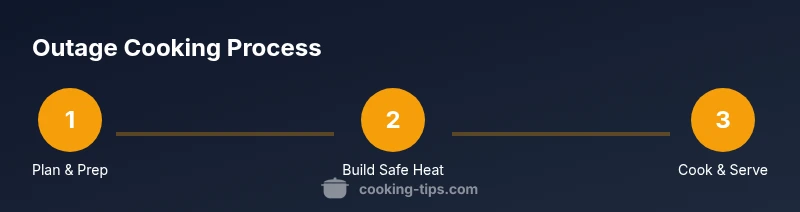
- 1
Gather and plan
Survey available fuels, gear, and space. Decide on a simple menu that uses shelf-stable ingredients and quick-cook grains. Write a quick plan to avoid cross-contamination and ensure everyone gets a hot meal.
Tip: Have a pre-planned menu card ready so everyone knows what will be cooked. - 2
Set up a safe cooking area
Choose an outdoor, well-ventilated area or a kitchen with excellent airflow. Clear flammable materials and place your heat source on a stable, non-flammable surface. Keep children and pets away.
Tip: Use a dedicated, non-slip mat under cookware to prevent accidents. - 3
Light and preheat your heat source
Ignite the stove or grill using a long lighter. Allow it to come to temperature before adding ingredients. Have a timer handy to manage cooking times.
Tip: Test a small amount of oil to gauge heat quickly without burning the pan. - 4
Cook the main dish
Start with items that require longer cooking times (rice, lentils) and use a lid to trap heat. If using a Dutch oven, arrange a two-zone heat setup with charcoal around the pot for even cooking.
Tip: Stir infrequently to prevent scorching; use foil to steam when needed. - 5
Finish and serve
Check for tenderness and adjust seasoning. If serving outdoors, keep hot dishes out of the wind and cover to retain heat. Have ready-to-eat sides or canned vegetables on standby.
Tip: Keep utensils clean and ready for serving to avoid cross-contamination. - 6
Store leftovers safely
If power returns, refrigerate promptly. If not, use a cooler with ice to slow spoilage and label containers clearly. Plan for next outage by noting what worked this time.
Tip: Keep a small travel cooler in a convenient spot for quick turnover.
Quick Answers
Can you cook on a propane stove when the power is out?
Yes. A propane stove can operate without electricity, using manual ignition if available. Keep a backup lighter and always follow manufacturer safety guidelines.
Yes. A propane stove can work during a power outage, but use manual ignition and follow safety guidelines.
Is it safe to grill indoors to cook without power?
No. Grilling indoors creates a serious carbon monoxide risk. Use outdoor spaces with proper ventilation and never seal off a room during cooking.
No. Grilling indoors is dangerous due to carbon monoxide. Use outdoor spaces.
What foods are best to cook during a power outage?
Choose shelf-stable staples, canned goods, dried grains, beans, and root vegetables. Meals should rely on non-electric heat sources and be easy to prepare with minimal steps.
Stick to shelf-stable foods and simple preparations that work with non-electric heat.
How should leftovers be handled when the power is out?
If you cannot refrigerate, use a cooler with ice and consume perishable items promptly once possible. When power returns, refrigerate leftovers promptly and reassess safety.
If you can’t refrigerate, use a cooler and eat perishable items soon after you can.
Should I invest in a generator for outages?
Consider your risks, climate, and budget. A generator can help, but it requires safe use and proper fuel storage. Alternatives like non-electric cooking plans can reduce dependency on power.
It depends on your risk and budget; generators help but require safe use.
Watch Video
Top Takeaways
- Understand which heat sources are safe and reliable for outages
- Plan simple meals using shelf-stable ingredients
- Prioritize safety: ventilation, CO monitoring, and fire prevention
- Store fuels and gear in an accessible, organized way