Can You Cook When Charcoal Is Still Black? A Practical Guide
Explore can you cook when charcoal is still black. This guide covers safe heat control, two-zone grilling, timing, and myths for home cooks using charcoal safely.


Yes, you can cook when charcoal is still black, provided you control heat, airflow, and timing. Use a two-zone setup, sear food quickly over the hottest coals, then move it to cooler areas to finish. Monitor flame ups, avoid long direct exposure, and adjust vents to maintain steady temps. Proper ventilation helps minimize smoke and irritants.
Can you cook when charcoal is still black? What it means
The question 'can you cook when charcoal is still black' comes up frequently among home cooks. In practical terms, charcoal remains black while it is actively burning but not fully gray—this stage delivers high heat, possible flare-ups, and a smoky backdrop that can influence flavor. According to Cooking Tips, understanding this phase helps you decide when to apply direct heat, when to move to indirect cooking, and how to pace your grill session. Grasping these nuances prevents undercooked meals or burned exteriors and sets the stage for consistent results, especially for foods like steaks, vegetables, and skewers. In this article we’ll walk you through safe, reliable methods to work with charcoal in this visible black phase, plus steps to keep temps steady despite the variability of outdoor weather.
Safety first: risks of burning embers and smoke
Cooking on charcoal that’s still black carries distinct hazards. Flare-ups can occur when fat drips onto hot embers, creating brief bursts of flame that char food on the surface. Smoke can irritate eyes and lungs, particularly in enclosed or poorly ventilated spaces. The Cooking Tips team emphasizes wearing a grill glove, keeping a safe distance from the coals, and never leaving the grill unattended during high-heat periods. Before you start, clear the cooking area of flammable materials, have a spray bottle of water for minor flare-ups, and ensure children and pets stay away. Also check local air guidance if you’re cooking with charcoal inside a covered patio; when in doubt, move to outdoor, open-air grilling to maximize ventilation.
Why charcoal remains black: coals transition in stages
Charcoal begins as glowing briquettes that go through a color change as heat and oxygen interact. When the charcoal is still black, many briquettes are in the active, hot phase but haven’t yet reached full gray ash. This means you have intense radiant heat with focused hotspots, ideal for searing, but you must manage airflow to avoid overheating. The Cooking Tips analysis suggests watching vent positions and the pile’s shape to identify where heat concentrates. You’ll notice a ring of lighter gray as the outer layer burns down; this indicates shifting temperatures and helps you decide when to introduce indirect cooking or move food to the cooler zone.
Two-zone grilling setup for hotter and cooler spots
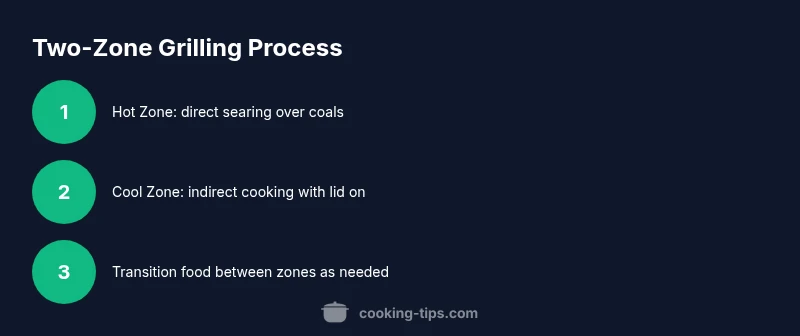
One of the most reliable methods when can you cook when charcoal is still black is to set up two distinct zones: a hot direct-heat area and a cooler indirect-heat area. Push most of the burning coals to one side, or create a two-tier platform using a grill grid and a sturdy heat shield. With this arrangement you can sear on the hot side, then slide the food to the cooler zone to finish without charring the outside excessively. This approach also makes it easier to manage vegetables that cook quickly versus tougher cuts that need longer exposure. Remember to keep the lid on during indirect cooking to trap heat and maintain even temperatures.
Controlling airflow and venting for steady temps
Vent control is the backbone of maintaining stable temperatures when charcoal is black. Open vents widely for high heat, then gradually reduce as you want more control. The goal is to prevent sudden temperature spikes from gusts of wind or shifts in the charcoal bed. Use a thermometer or a reliable grill gauge to monitor ambient heat, and adjust vents in small increments. If you notice a temperature surge, pause direct grilling, close the vents slightly, and allow the coals to rebalance. This disciplined approach can make the difference between a well-seared crust and a burnt exterior.
Starting with a hot sear, then indirect cooking
Begin with a quick, high-heat sear over the hottest coals to lock in juices and create browning. After 1–2 minutes per side for smaller items, move the food to the indirect zone to finish cooking with gentle heat. This sequence minimizes the risk of overcooking on the outside while the interior remains underdone. For meats, use meat thermometers to verify doneness rather than relying solely on timing. For vegetables, a brief roast in the hot zone can caramelize surfaces before finishing on the cooler side.
Timing and cooking times for common foods
Direct, high-heat grilling over black charcoal can cook steak, burgers, and chops with a delicious crust, but thickness matters more than the exact minute. Thin cuts may need only 2–4 minutes per side, while thicker steaks benefit from a 2-step process: a 4–6 minute sear, then a 4–8 minute indirect finish, depending on desired doneness. Vegetables like peppers and zucchini often finish quickly when stirred and turned regularly. Always use a thermometer for accurate results.
Food safety: avoiding carcinogen formation and overheating
Cooking over intense heat raises concerns about charring compounds and potential carcinogens. The best practice is to avoid prolonged direct exposure of seasoned surfaces to flames, trim visible fat to reduce flare-ups, and flip food frequently to minimize scorching. Keeping marinades light and covering foods with a thin layer of oil can help regulate temperature and reduce sticking. Cooking Tips recommends focusing on even browning rather than blackened surfaces, and letting coals reach a stable but not blasting heat level before starting.
Common myths about black charcoal debunked
One common myth is that black charcoal is unsafe to use; in reality, the safe approach is to manage heat, not the color. Another myth claims you must always wait for white ash; skilled cooks know that the right hot zone setup can deliver excellent results with black coals. A third misconception is that hotter is always better—flavor depends on controlled searing and timing, not simply maximum flame.
Practical recipe example: vegetables on black coals
Try a quick vegetable platter: peppers, zucchini, onions, and mushrooms tossed with olive oil, salt, and a touch of garlic. Sear on the hot zone for 1–2 minutes per side, then move to indirect heat for 4–6 minutes until tender. Finish with a light brush of lemon and herbs. This approach showcases how the black charcoal phase can yield vibrant caramelization and depth of flavor.
Cleaning up and storing charcoal leftovers
Let the coals burn out completely, then wait for ashes to cool before handling. Use a metal shovel to spread remaining embers into a metal container if you plan to reuse them, and store the remaining charcoal in a dry, sealed bag or container. Cleaning the grill grates while hot makes residue slide off, while a wire brush helps remove stuck particles. Proper cleanup extends the life of your grill and prevents rust.
Troubleshooting quick checks for next cook
After your session, review what worked and what didn’t: heat control, airflow, and timing. If you struggled to hold temps, adjust vent positions more gradually and ensure your fuel pile isn’t too large for your grill. If foods stuck or burned, consider a longer indirect finish or a tighter lid on your next cook. Small, deliberate adjustments lead to repeatable results when can you cook when charcoal is still black.
Tools & Materials
- charcoal briquettes or lump charcoal(Enough to maintain two-zone setup for 60-90 minutes of cooking)
- chimney starter or lighter(Fast ignition without excessive lighter fluid)
- grill tongs (long-handled)(For safe flipping without getting too close to flames)
- grill spatula(Optional for delicate flips)
- grill thermometer or grate thermometer(Useful for accurate temperature readings)
- heat-resistant gloves(Protect hands during high-heat handling)
- spray bottle with water(For small flare-ups)
- metal grill brush(Clean grates after cooking)
Steps
Estimated time: 60-90 minutes
- 1
Prepare grill and safety gear
Inspect the grill, clean grates, open vents, and gather fuel. Set up for a two-zone cook by planning a hot direct area and a cooler indirect area. Ensure you wear heat-safe gloves and keep a water spray bottle nearby for minor flare-ups. This foundation prevents accidental fires and helps you stay in control from the first minute.
Tip: Light charcoal in a chimney for quick, even ignition. - 2
Ignite the charcoal and establish zones
Light the charcoal and wait until most briquettes are glowing with a light gray ash. Spread them to create a hot zone and a cooler zone. Place a heat shield or use indirect space so you can move food between zones as needed. Begin with a preheat of 5–10 minutes with the lid closed.
Tip: Aim for an even layer of coals for predictable heat distribution. - 3
Set vents for heat management
Open vents wide to reach high heat, then taper gradually to control temperature. Avoid sudden changes caused by gusts; small vent adjustments are more effective than large swings. Use a thermometer to verify the ambient grill temperature and adjust accordingly.
Tip: Make micro-adjustments in 5–10 degree increments. - 4
Preheat and season foods
Season foods while the grill preheats to optimize surface browning. Pat dry to reduce moisture that can hinder searing. If using marinades, keep them light to avoid flare-ups. A short pre-sear period helps create crust without overcooking the interior.
Tip: Pat food dry for better browning. - 5
Sear on the hot zone
Place food directly over the hottest coals to sear, 1–2 minutes per side for small pieces. This step creates the Maillard reaction and a flavorful crust. Monitor closely to avoid burning the surface.
Tip: Don’t move food too often during the sear. - 6
Finish with indirect heat
Transfer the food to the indirect zone to finish cooking with gentler heat. Close the lid to trap heat and maintain a more even temperature. Use a thermometer to check internal doneness rather than relying solely on time.
Tip: Keep the lid on to stabilize the environment. - 7
Monitor doneness precisely
For meats, check internal temperatures with a trusted thermometer. For vegetables, test with a fork to ensure tenderness without losing texture. Avoid overcooking, which dries out foods and dulls flavor.
Tip: Aim for even doneness across all pieces. - 8
Manage flare-ups safely
If flare-ups occur, move food away from the flames and reduce the direct heat. Wipe fat from the surface or adjust ventilation to quiet the fire. Keep a spray bottle handy for controlled extinguishing of small flames.
Tip: Never spray water on an oil-based flare-up. - 9
Rest and serve
Allow cooked meats to rest for a few minutes before slicing to retain juices. Resting improves texture and flavor, especially after a hot-sear finish. Plate with complementary sides for a balanced meal.
Tip: Rest times vary by cut; 5–10 minutes is common. - 10
Clean up while hot
After cooking, scrape grates while warm to remove residue. Clean grates with a stiff brush and wipe down surfaces. Store charcoal in a dry, sealed container to prolong shelf life and prevent moisture.
Tip: A quick post-cook clean makes the next session faster. - 11
Check equipment and reload fuel
Assess how much charcoal remains and whether you need to add more for the next cook. If you plan to reuse embers, arrange them properly in a metal container once cool. Otherwise, safely dispose of ashes.
Tip: Keep a small supply of fresh coals ready for quick relights. - 12
Plan your next cook
Reflect on heat control, timing, and airflow from this session. Note what worked and what didn’t to refine your technique for the next grill-out. Consistency comes from repeating disciplined steps and learning from each cook.
Tip: Use a simple checklist for quick improvements.
Quick Answers
Is it safe to cook on charcoal that is still black?
Yes, it can be safe if you manage heat, ventilation, and fuel properly. Keep flare-ups in check, use two-zone cooking, and monitor temperatures with a grill thermometer.
Yes—it's safe when you manage heat and air flow with two-zone cooking and temperature checks.
How do I control heat when charcoal is still black?
Use the vents to regulate oxygen flow, keep the lid closed for indirect cooking, and move food between zones to avoid scorching. Rely on a thermometer for consistent temperatures.
Control heat with careful vent adjustments and a two-zone setup; rely on a thermometer.
Can I cook directly over black coals, or is indirect better?
Direct heat is great for searing, but use it briefly to avoid burning. Finish with indirect heat to ensure doneness without overcooking. A two-zone approach often works best.
Direct heat is fine for a quick sear; finish with indirect heat for even cooking.
What foods work best when charcoal is black?
Steaks, burgers, chops, and sturdy vegetables like peppers and squash respond well to a hot sear followed by indirect cooking. Delicate proteins may require shorter direct exposure.
Steaks and burgers sear well; finish with indirect heat for even doneness.
Should I relight charcoal during cooking if temps drop?
If temps drop significantly, you can add fresh charcoal to the hot zone or re-light portions of the grill, but avoid drastic changes that shock the system. Plan extra fuel for longer cooks.
If temps fall, add more charcoal and adjust vents; don't overreact.
What safety tips help when cooking with black charcoal?
Keep kids and pets away, wear heat-proof gloves, and have a spray bottle for flare-ups. Grill in a well-ventilated area and never leave the grill unattended during high heat.
Keep safe distances and use gloves; ensure good ventilation.
Watch Video
Top Takeaways
- Master two-zone grilling for versatile heat control
- Manage airflow with incremental vent adjustments
- Sear then finish indirectly to avoid burnt exteriors
- Use a thermometer for precise doneness, not guesses