How to Cook on a Charcoal Grill: A Practical Guide
A comprehensive, step-by-step guide for home cooks on lighting, heating, direct vs indirect grilling, safety, timing, and cleanup to master charcoal grilling with confidence.


Master the skill of how to cook on a charcoal grill by building a two-zone fire, lighting charcoal safely, and managing direct and indirect heat for different foods. This quick answer outlines the essentials: fuel choice, airflow, heat zones, time estimates, and basic safety. With proper setup, you can cook everything from burgers to corn with authentic, smoky flavor.
Why charcoal grilling matters for flavor and control
Charcoal grilling delivers a distinctive smoky flavor and high-heat searing that many home cooks crave. If you’re new to this method and wondering how to cook on a charcoal grill, start with the basics: choose your fuel wisely, establish clear heat zones, and plan timing for different foods. According to Cooking Tips, airflow and even heat distribution determine crust, juiciness, and overall doneness more than any single technique. A two-zone setup — hot direct heat for searing and cooler indirect heat for finishing — gives you versatility without overcooking. In this section we’ll cover setup, fuel choices, and a workable plan for burgers, chicken, vegetables, and even delicate fish. You’ll also learn essential safety habits to keep grilling enjoyable and safe. With consistent practice, you’ll gain confidence in balancing smoky flavor with reliable results, even on weeknights.
The two-zone approach also helps manage flare-ups and wind effects, which are common when grilling outdoors. By understanding heat placement, you’ll make better decisions about when to move food and how long to cook it at each stage. The Cooking Tips team emphasizes that mastery comes from deliberate steps and steady control, not from rushing the fire. As you gain experience, you’ll notice how the aroma of smoke signals the ideal moment to flip, baste, or rest food, and you’ll start to anticipate the texture you want from different cuts.
-1 in the template?
Tools & Materials
- Charcoal (lump or briquettes)(Choose lump for fast heating and strong smoke; briquettes for long, steady burns.)
- Chimney starter(For quick, even lighting without lighter fluid.)
- Long-handled tongs(Grip meat safely and move items away from flames.)
- Instant-read thermometer(Check internal temps to ensure doneness.)
- Heat-resistant gloves(Protect hands during hot flipping and flare-ups.)
- Grill brush(Clean grates before and after cooking to prevent sticking.)
- Spray bottle (water)(Control flare-ups and keep surfaces cool.)
Steps
Estimated time: 60-90 minutes
- 1
Gather ingredients and prep area
Collect all ingredients and lay out a clean, organized workspace. This reduces scrambling during the cook and helps you keep track of temperature zones as you work. Have your thermometers, tongs, and spray bottle within easy reach to maintain smooth workflow.
Tip: Prep everything in advance; kept meats chilled until ready to cook minimizes food-safety risk. - 2
Light charcoal with chimney starter
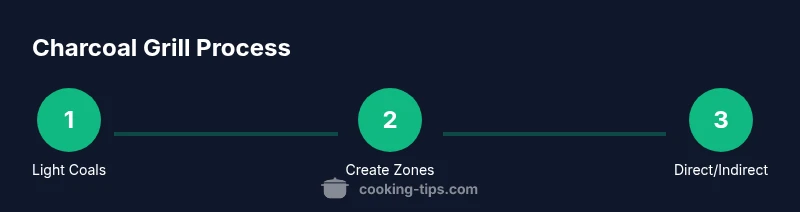
Fill the chimney with dry charcoal and light from the bottom. Allow the coals to ash over, typically 10–15 minutes, then pour them into the grill to form the two heat zones. Let the grill lid stay off briefly during lighting to observe flame behavior.
Tip: Avoid lighter fluid for a cleaner flavor and better smoke control. - 3
Create two heat zones on the grill
Spread hot coals along one side for direct heat and leave the other side cooler for indirect cooking. This setup enables searing and finishing without burning. If your grill has adjustable vents, position them to control airflow and heat.
Tip: A two-zone setup is your main tool for consistent results with varying foods. - 4
Preheat and calibrate temperature
With the lid closed, allow the grill to preheat for 5–10 minutes to stabilize temperatures. Use the vents to gently tune the heat into the target range for your recipe. A steady 350–450°F range covers most weeknight grilling needs.
Tip: Keep a thermometer handy to verify heat and avoid guessing. - 5
Sear foods over direct heat
Place foods that benefit from a crust (steaks, burgers, some vegetables) on the direct heat zone. Sear on each side for a short time, then flip and monitor internal temperatures closely to avoid overcooking.
Tip: A good crust forms quickly; resist the urge to move too soon. - 6
Finish with indirect heat
Move items to the indirect zone to finish cooking through without scorching the outside. This is ideal for larger pieces or thicker cuts that require longer cook times.
Tip: Cover the grill to trap heat and speed cooking. - 7
Check doneness and rest
Use an instant-read thermometer to confirm target temps. Remove from heat and rest for 3–5 minutes (longer for larger cuts) to redistribute juices for a juicier bite.
Tip: Resting is essential; it reabsorbs juices and improves texture. - 8
Clean and store
After cooling, brush grates clean and wipe surfaces. Store charcoal and tools properly for your next session, ensuring the grill is dry to prevent rust.
Tip: A quick post-cook clean extends grill life and performance.
Quick Answers
What is two-zone cooking on a charcoal grill?
Two-zone cooking uses a hot direct-heat area for searing and a cooler indirect-heat area for finishing. This setup prevents scorching while allowing precise doneness across different foods.
Two-zone cooking means searing over the hot part and finishing with the cooler side.
How long should I preheat a charcoal grill?
Preheat for about 10–15 minutes with the lid closed until the grill stabilizes at the target temperature. This helps ensure even cooking from the start.
Preheat for ten to fifteen minutes until it’s steady.
Is it safe to use lighter fluid with charcoal?
Lighter fluid can leave flavors or odors on food. If possible, use a chimney starter for a cleaner burn and better control.
Lighter fluid isn’t ideal; use a chimney starter for a cleaner burn.
What foods are best for direct grilling?
Thin, quick-cooking items like burgers, steaks, chicken cutlets, and veggies do well with direct heat for a crisp exterior and juicy interior.
Direct heat is great for burgers, steaks, and veggies.
How do I control flare-ups?
Move food away from flames, use the grill lid to smother flames, and spray with a little water if needed. Keeping the burn zone under control prevents charring.
Flare-ups happen; move food away and cover to calm the flames.
What are safe internal temperatures for common foods?
Chicken 165°F (74°C), beef and pork 145°F (63°C) with a rest period of 3 minutes. Always verify with a thermometer for safety.
Check with a thermometer: 165 for chicken; 145 for beef or pork with rest.
How do I clean and maintain my charcoal grill after use?
Let the grill cool, remove ash, brush the grates, and wipe surfaces. Regular cleaning prevents buildup and extends grill life.
Cool it, clean it, and store it dry for best results.
Top Takeaways
- Set up two heat zones for versatile cooking
- Light charcoal with a chimney starter for safety
- Direct heat for searing; indirect heat for finishing
- Monitor temperatures with a thermometer for accuracy
- Rest meat before serving for optimal texture