Can You Cook Leg of Lamb in a Slow Cooker? A Complete Guide
Learn how to cook leg of lamb in a slow cooker for juicy, flavorful results. This step-by-step guide covers prep, browning, liquids, timing, and serving ideas from Cooking Tips.


Yes—you can cook leg of lamb in a slow cooker, yielding tender meat with minimal hands-on time. For best results, trim excess fat, sear the roast to develop flavor, and cook with aromatics and liquid. Plan 6–8 hours on low or 3–4 hours on high, then rest before slicing. This method delivers aroma, tenderness, and evenly cooked meat suitable for family gatherings.
Why the slow cooker works for leg of lamb
For home cooks, the question can you cook leg of lamb in slow cooker might seem odd, since many recipes rely on the oven. However, a slow cooker excels at low, even heat and moisture retention, which helps break down connective tissue and render fat without drying the meat. The result is a tender roast with a gentle rosemary-garlic aroma. According to Cooking Tips, slow cookers shine when you choose a leg of lamb that is evenly sized, trimmed of excess fat, and given a quick sear to deepen flavor before it meets the braising liquid. The slow-cooker environment protects the meat from scorching surfaces and maintains moisture through long, steady simmering. When done correctly, you’ll see the interior blush and the surface take on a caramelized edge, echoing the flavors you’d expect from a roasted leg in an oven.
Key considerations: size and cut, pre-searing, the role of fat, and the amount of liquid. Leg of lamb is versatile; whether bone-in or boneless, the method holds as long as you adapt cooking times and verify doneness with a thermometer. The goal is to avoid overcooking while maximizing tenderness. A well-chosen aromatic mix (garlic, rosemary, thyme) complements the meat, supporting a robust, balanced finish rather than a heavy stew-like result. Even with the longer cook, you’ll still want to rest the meat briefly after removal to reabsorb juices.
As you explore, remember that this method is forgiving for home cooks who want a reliable centerpiece without turning on the oven. With proper browning and a thoughtful braise, the leg of lamb becomes a centerpiece that pairs beautifully with potatoes, roasted vegetables, or a simple mint sauce. If you’re following a family-friendly menu, this approach translates well to larger gatherings where you want consistent, hands-off cooking without sacrificing depth of flavor.
Choosing the right leg of lamb and prep
Selecting the right cut is foundational. Can you cook leg of lamb in a slow cooker? Absolutely, but the result hinges on choosing a leg of appropriate size and trimming excess fat. A 2 to 4 pound leg (bone-in or boneless) works best for most 6-quart or larger slow cookers. Boneless roasts cook a bit more quickly and slice easier, while bone-in roasts often yield richer flavor because the bone adds aroma during braising. When prepping, pat the meat dry with paper towels; this helps achieve a good sear and prevents steam blowback in the pan. If the leg is uneven in thickness, you can tuck thinner ends under the roast or tie the roast with butcher’s twine to promote uniform cooking. Season generously with salt and pepper, then rub on minced garlic, chopped rosemary, and thyme. A light drizzle of olive oil helps the surface brown more evenly when you sear. Finally, consider trimming away large pockets of visible fat, but leave a thin fat cap if you want extra moisture for the braise. This preparation stage matters because even fat distribution and surface browning set the stage for a deep, layered flavor profile that holds up to the long cook.
Searing for flavor: browning before slow cooking
Searing is a crucial step that cannot be skipped if you want a robust, roast-like exterior. Can you cook leg of lamb in a slow cooker and still achieve a browned crust? Yes, with a quick browning in a hot skillet before placing the meat into the slow cooker. Heat a heavy skillet—cast iron is ideal—until shimmering. Add a thin coat of oil, then sear the lamb on all sides until the surface develops a rich, brown color and a few crisp edges. This step unlocks Maillard flavor compounds that remain dormant if you skip browning. For large roasts, you may want to sear in batches to avoid crowding the pan, which can cause steaming rather than browning. After browning, let the meat rest briefly while you prepare the braising liquids. If you have time, you can also deglaze the pan with a splash of wine or stock, scraping up the flavorful browned bits to add to the slow cooker. Those browned bits are packed with flavor and will mingle with the braising liquid to create a deeper, more satisfying sauce.
Building flavor with liquids and aromatics
Flavor formation in a slow cooker depends heavily on the braising liquids and aromatics you choose. For a lamb roast, a combination of stock (vegetable or lamb), a splash of red wine, and a little water provides enough moisture without diluting the delicate lamb flavor. Add aromatics such as crushed garlic cloves, fresh rosemary sprigs, and thyme leaves. You can also toss in onion wedges, carrot rounds, and celery stalks for earthy sweetness and natural sweetness. The goal is to create a shallow pool of liquid that comes about one-third to halfway up the roast—enough to braise slowly without boiling. Avoid using overly acidic ingredients in excess; a small amount of lemon zest can brighten the dish without overpowering the meat. In this stage, consider tasting the braising liquid after a couple of hours to calibrate salt and acid levels. A balanced mixture helps the lamb stay tender and juicy as it braises, rather than turning the meat into a dry, stringy texture.
Cooking times, temperatures, and doneness
Timing and doneness are the most critical pieces of the puzzle. When you’re wondering can you cook leg of lamb in slow cooker, you’re looking at a traditional window of 6–8 hours on low or 3–4 hours on high for a 2–4 pound roast. Cooking times vary with size, the thickness of the leg, and the exact model of your slow cooker. The safest and most reliable method to determine doneness is with a meat thermometer. For lamb, aim for an internal temperature of about 135–140°F for medium-rare after resting, or 145–150°F for a more well-done result; the internal temperature will rise by a few degrees during resting. If your roast seems to be finishing early, you can switch to the warm setting to hold it until everyone is ready. Conversely, if the lamb is browning too quickly or the liquid level is low, add a little more stock or water to maintain a gentle simmer. Resting the meat after cooking is essential for redistributing juices; loosely tent with foil and let it sit for 15–20 minutes before slicing.
Resting, carving, and serving ideas
Resting the roast is the final touch that seals in juiciness. After removing the lamb from the slow cooker, tent it loosely with foil and allow 15–20 minutes of rest. This pause helps the juices reabsorb, making carving cleaner and slices more succulent. When you carve, cut across the grain into thin slices to maximize tenderness. Plate the lamb with the braising liquid spooned over the top or reduce the liquid on the stove to make a glossy pan sauce. Side options include roasted potatoes, creamed spinach, or glazed carrots. A mint sauce or gremolata can provide a bright contrast to the rich, savory lamb. If you have guests who prefer sauce on the side, keep a small bowl of the braising liquid for additional flavor adjustments. By following these steps, you’ll deliver a comforting, easy centerpiece that captures the aroma and depth of a traditional roast while leveraging the convenience of a slow cooker. For safety temperatures and best practices, see USDA and CDC guidelines cited in this article.
Quick tip: safety and quality reminders
Always thaw frozen meat before slow-cooking it; cooking from frozen can lead to uneven doneness and prolonged time in the danger zone. Use a thermometer to confirm doneness and remove the roast promptly at target temperature to prevent overcooking. Maintain a clean work surface and wash hands after handling raw lamb to reduce cross-contamination risk. Finally, rest the meat before carving to lock in juices and ensure every slice is juicy and flavorful.
Tools & Materials
- Slow cooker (6-8 quart)(Large enough to fit a 2–4 lb leg of lamb)
- Meat thermometer(To monitor internal temperature for desired doneness)
- Skillet for searing(Cast-iron preferred for even browning)
- Tongs(For safe handling of hot meat)
- Chef's knife(Trim fat and portion after rest)
- Cutting board(Stable surface for prep)
- Olive oil and aromatics(Garlic, rosemary, thyme)
- Lamb or beef stock or white wine(For braising liquid)
- Salt and pepper
- Aluminum foil (optional)(To tent meat during rest if needed)
Steps
Estimated time: 6-8 hours total (prep 25-40 minutes)
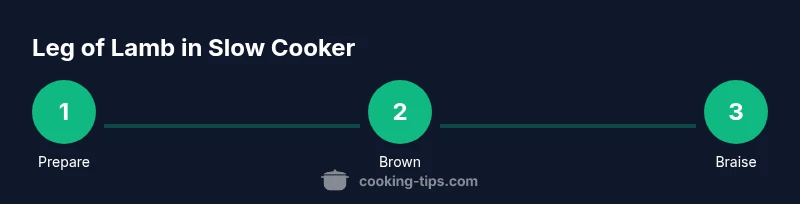
- 1
Prepare and trim the lamb
Pat the leg dry with paper towels. Trim away large fat pockets but leave a thin fat cap for moisture. If bone-in, decide whether you want the bone for flavor or to remove it for easier carving. Tie the roast with kitchen twine to help it cook evenly if needed, then season generously with salt, pepper, and a rub of garlic, rosemary, and thyme.
Tip: Trimming fat too aggressively can dry the meat; leave a thin layer to protect moisture. - 2
Sear the lamb to develop color
Heat a heavy skillet until very hot. Add a thin film of oil and brown the lamb on all sides until a deep, caramelized crust forms. This step enhances flavor and helps seal juices. If the leg is large, do it in two batches to avoid steaming.
Tip: A good crust is worth the extra 5–10 minutes; it adds complex flavor that shines after slow cooking. - 3
Prepare aromatics and braising base
Layer sliced onions, garlic cloves, and fresh herbs in the bottom of the slow cooker. Place the seared lamb on top. Pour in stock and/or wine up to about one-third of the roast’s height. The liquid should braise without pooling around the meat.
Tip: Deglaze the pan with a splash of wine or stock, then add those browned bits to enrich the braise. - 4
Cook on low or high until tender
Cover and cook on low for 6–8 hours or on high for 3–4 hours, depending on roast size. Begin checking doneness in the final 30–60 minutes. The goal is a tender roast with an internal temp around 135–140°F for medium-rare after resting.
Tip: Avoid lifting the lid during the long cook; each peek adds 15 minutes to the total time. - 5
Rest, carve, and finish the sauce
Transfer the lamb to a cutting board and rest for 15–20 minutes. Skim excess fat from the braising liquid and simmer briefly to reduce if a thicker sauce is desired. Slice thinly against the grain and spoon some sauce over the meat.
Tip: Resting is essential; it redistributes juices for juicier slices. - 6
Serve with complementary sides
Pair the lamb with roasted potatoes, root vegetables, or a light mint yogurt sauce. A green salad can balance richness, and a glass of red wine complements the aromatics. If you saved pan juices, drizzle a little over vegetables for a cohesive plate.
Tip: Cut slices slightly thicker for a dramatic presentation and easier dipping in the sauce.
Quick Answers
Can I use bone-in leg of lamb in a slow cooker?
Yes. Bone-in leg of lamb adds flavor, but you may need a slightly longer cook time. Keep an eye on doneness with a thermometer and adjust liquid as needed.
Yes, bone-in works and adds flavor; you might need a bit more time, so check doneness with a thermometer.
Is leg of lamb suitable for slow cooker?
Absolutely. Trim and sear the roast, then braise with aromatics and liquid. The slow cooker keeps it moist, yielding tender, flavorful slices.
Yes, it’s absolutely suitable when browned and braised with aromatics.
What is the safe internal temperature for lamb?
Aim for about 145°F (63°C) for medium-rare after resting, or 160–165°F (71–74°C) for well done. Rest the meat to let juices redistribute.
Cook to 145°F for medium-rare and rest; higher temps for more doneness.
Can I cook frozen leg of lamb in a slow cooker?
Cooking from frozen is not recommended because it can lead to uneven doneness. Thaw the lamb fully before slow cooking for the best results.
It’s best to thaw first; cooking from frozen can cause uneven cooking.
What flavors pair best with slow-cooked lamb?
Garlic, rosemary, thyme, and a touch of lemon zest pair beautifully. Add root vegetables like carrots and potatoes for a complete braise.
Garlic and rosemary are classic; add thyme and lemon zest for brightness.
Watch Video
Top Takeaways
- brown before slow cooking for depth of flavor
- control moisture with proper braising liquid
- use a thermometer to hit desired doneness
- rest the meat before carving for juicier slices