Why Cooked Carrots Are Better Than Raw
A rigorous analysis of cooked vs raw carrots, explaining nutrient bioavailability, digestion, and best cooking methods for home cooks seeking reliable guidance from Cooking Tips.


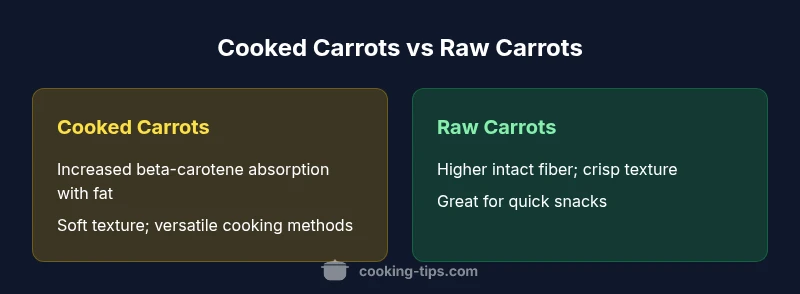
According to Cooking Tips, cooked carrots typically offer higher bioavailability of key nutrients like beta-carotene, along with easier digestion and a sweeter, more approachable flavor profile. This quick comparison sets the stage for understanding when and how to choose cooked carrots over raw for daily meals, supported by practical cooking guidance.
Nutritional Science: How Cooking Changes Carrot Nutrients
Raw carrots deliver fiber, vitamins, and minerals, but the act of cooking shifts nutrient availability in meaningful ways. For home cooks asking why are cooked carrots better than raw, the short answer lies in how heat alters nutrient structures and accessibility. When carrots are heated, some compounds such as beta-carotene become more bioavailable, especially when paired with a small amount of fat. At the same time, heat can degrade heat-sensitive nutrients like vitamin C, so cooking duration and method matter. This section lays the groundwork for broader conclusions about flavor, texture, and digestibility, while keeping the focus on practical kitchen choices.
In everyday cooking, you’ll rarely need to choose strictly raw or strictly cooked carrots. Instead, think about the dish, your guests, and your nutritional goals. For instance, a quick sauté with olive oil can boost carotenoid absorption, while a crisp carrot stick offers sustainment and crunch. The phrase why are cooked carrots better than raw anchors this discussion, but the real answer comes from balancing texture, flavor, and nutrient retention. Cooking Tips’ guidance emphasizes that the most effective approach combines moderate heat with a small amount of healthy fat to optimize nutrient uptake without sacrificing taste.
From a reader’s perspective, raw carrots are excellent for snacking and roughage, but cooking expands the culinary and nutritional toolbox by unlocking hidden flavors and improving digestibility for many people. The key takeaway is that cooking is not a punishment to nutrition; it is a strategic step toward maximizing benefit in everyday meals, a principle our team at Cooking Tips supports with practical, science-backed guidance.
wordCount": 170},
Comparison
| Feature | Cooked Carrots | Raw Carrots |
|---|---|---|
| Taste and aroma profile | Sweeter, more caramelized flavors; aroma enhanced by gentle browning | Crisp, peppery notes; fresh aroma retains raw bite |
| Nutrient availability | Higher beta-carotene bioavailability, especially with fat | Lower fat-use but vitamin C and some water-soluble compounds better preserved |
| Digestibility and texture | Easier chewing and digestion for many people; softer texture | Chewy/crisp texture that can aid fiber intake but may be harder to digest for some |
| Best cooking method | Steaming, light roasting with oil, or sautéing to boost absorption | Raw preparation; quick salads or crudités for crunch |
| Storage impact | Cooked carrots store well in the fridge for several days; nutrient profile remains stable with proper storage | Raw carrots store longer but may dry out; moisture loss affects texture over time |
Benefits
- Boosts nutrient bioavailability with fat-friendly cooking
- Improved texture and flavor for a wide range of dishes
- Easier digestion for some individuals compared to raw
Cons
- Potential loss of water-soluble vitamins with prolonged heating
- Requires time and energy for cooking vs snacking on raw carrots
- Overcooking can reduce texture appeal and some nutrients
Cooked carrots generally offer better nutrient bioavailability and versatile flavor for most meals, while raw carrots excel in crunch and quick snacking.
If your goal is maximizing nutrient uptake and broad culinary use, cooked carrots with a touch of fat are typically the better choice. For urgent, no-cook needs or when texture and freshness take precedence, raw carrots stay a strong option.
Quick Answers
Are cooked carrots more nutritious than raw carrots overall?
Cooked carrots often provide higher bioavailability of beta-carotene, especially when cooked with a small amount of fat. Raw carrots retain fiber and some vitamin C, but heat can reduce certain nutrients. The choice depends on your nutritional priorities and dish.
Cooked carrots can offer better nutrient absorption with fat; raw carrots keep fiber and vitamin C. Your choice depends on goals and dish.
Does boiling carrots destroy vitamin C?
Boiling can reduce some water-soluble vitamins, including vitamin C. Steaming or microwaving with minimal water helps preserve more vitamin C while still delivering the benefits of cooking. Overall, the impact varies with time and method.
Boiling may reduce vitamin C. Steaming or quick microwaving helps preserve more of it.
What cooking method maximizes nutrient absorption?
Steaming or light roasting with a small amount of healthy fat tends to maximize beta-carotene availability while keeping textures appealing. Avoid prolonged boiling, which can leach out water-soluble nutrients.
Steaming or light roasting with a little fat typically best for nutrient uptake.
Are raw carrots better for digestion than cooked?
Raw carrots provide more intact fiber, which can aid digestion for some individuals. However, cooked carrots are often easier to digest for others due to softened fiber and reduced hard textures.
Raw carrots give more fiber; cooked ones are often easier to digest for some people.
Can I cook carrots without losing nutrients?
Yes, by using gentle methods (steaming, quick roasting) and avoiding excessive heat or long cooking times, you can preserve many nutrients while improving taste and bioavailability.
Gentle cooking helps preserve nutrients while improving flavor.
How should I store cooked vs raw carrots?
Raw carrots store well in the fridge for a week or more. Cooked carrots should be refrigerated promptly and consumed within 3-5 days for best quality and safety.
Keep raw carrots chilled; refrigerate cooked carrots and use within a few days.
Top Takeaways
- Opt for moderate cooking with a touch of fat to boost carotenoid absorption
- Choose raw carrots for crunch and quick, no-cook snacks
- Avoid overcooking to minimize vitamin loss and texture degradation
- Pair cooked carrots with healthy fats for best nutrient uptake
- Adjust cooking method to fit the dish and digestion needs